





…as passengers lament
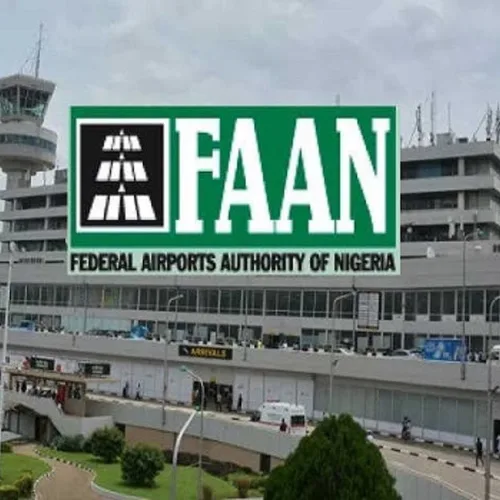
Travellers arriving at Nigeria’s major airports are facing severe vehicle shortages, travel disruptions, and surging transportation costs after the Federal Airports Authority of Nigeria (FAAN) suspended e-hailing giants Bolt and Uber from operating within its terminals.
The suspension has effectively stranded passengers and sparked outrage among ride-hailing operators, particularly at the Murtala Muhammed Airport (MMA) in Lagos and the Nnamdi Azikiwe International Airport (NAIA) in Abuja.
With e-hailing platforms grounded, the few traditional airport cab operators still permitted on the premises have capitalised on the sudden monopoly. Passengers lament that prices have been raised arbitrarily, with cab fares across FAAN-managed airports skyrocketing by over 50 percent since the ban took effect. This development is a double whammy for passengers who are dealing with elevated air tickets while also battling increased transportation costs to move inside and out of the terminals.
The crackdown stems from an official internal directive dated July 30, seen by BusinessDay. The memo, titled “Suspension of Bolt and Uber operators at all FAAN-managed airports” and signed by U.R. Liman, general manager of Commercial Services, ordered an immediate operational freeze pending the execution of formal licence agreements.
“Please be informed that pending the finalisation and execution of licence agreements with Bolt and Uber, the authority has directed Messrs Bolt and Messrs Uber to cease all commercial operations at all FAAN-managed airports immediately,” the letter read in part. “Consequently, you are to ensure that all operators of both Bolt and Uber are suspended until their licence agreements have been finalised and concluded.”
Read also: Aviation strike disrupts flights as NCAA, FAAN move to contain fallout
Beyond the licensing dispute, FAAN has rolled out stricter new compliance protocols for all airport car-hire operators nationwide. Drivers are now required to upgrade their fleets to a minimum vehicle model year of 2012 or 2015—depending on the specific terminal—and must onboard their services directly onto a newly designated FAAN digital booking application.
The enforcement of these rules, marked by task force deployments, police vehicle impoundments, and heavy fines, has crippled the daily income of hundreds of drivers.
Olanrewaju Lukman Bamgbaye, a Lagos-based cab operator, explained that the rigid enforcement at Murtala Muhammed Airport Terminal 1 (MM1) has created significant operational bottlenecks.
“FAAN said they don’t want cab operators that have not upgraded to 2015 models at MM1 to stay,” Bamgbaye stated. “They are also insisting all cab operators register using the FAAN app, but Bolt has refused this arrangement. Because of this, they stopped allowing Bolt drivers into the airport terminal.”
In Abuja, the situation escalates into outright seizures and task force enforcement, according to Prudent Matthew, an Abuja-based Bolt driver.
“On July 27th, we got a notice that Bolt had been suspended from the airport by FAAN,” Matthew said. “They said a new company was coming, and FAAN brought up a new app, demanding Bolt to bring its database to be inserted directly into it. No working, creative business would agree to hand over its database like that.”
Matthew noted that on August 1, over 50 task force personnel were deployed at the Abuja airport, leaving incoming passengers stranded as conventional app-based drivers were turned away.
“The new requirement has forced Bolt and Uber drivers out completely because if you are caught trying to pick up a rider, it’s a N40,000 fine,” Matthew added. “Imagine taking a trip of N18,000 or N20,000, getting caught, and paying N40,000. When you factor in fuel costs, it is deeply frustrating.”
Matthew pointed out that the enforcement has hit drivers’ livelihoods especially hard given current fuel prices, where filling a tank can cost N80,000 and weekly car rental remittances average N40,000.
“Car hire prices have always been higher than ours,” Matthew explained. “When they started the ban, their lowest ride was N35,000. Safety is also a concern—on app platforms, passengers can share trip details, plate numbers, and driver profiles with loved ones to monitor the journey. You don’t get those digital safety features with traditional car hire.”
Arriving passengers across Abuja and Lagos report severe price hikes, long walks to perimeter pickup points, and off-app price negotiations by drivers trying to offset risk and parking fees.
Francis Tochukwu, a frequent flyer who recently travelled from Lagos to Abuja and back, narrated his experience navigating the restrictions at both destinations.
“Upon arriving at Abuja Airport, I was in a hurry and decided to use the airport cab service,” Tochukwu said. “I noticed electric vehicles (EVs) operating at the airport and learned there was an app to book them. But due to urgency, I approached a driver directly. Later, when booking a ride to the airport, my driver explained that ride-hailing drivers were no longer permitted within the premises, and anyone found waiting would be arrested.”
Tochukwu noted that official airport-operated car services in Abuja charge significantly higher rates—often N30,000 or more—compared to e-hailing fares of approximately N20,000 into the city centre.
Read also: Airline operators urge NASS to scrap 5% ticket sales charge, adopt FAAN model
Upon returning to Lagos, Tochukwu encountered similar price surges.
“I booked a Bolt ride from MMA2 to Festac, and the fare displayed on the app was approximately N13,000,” Tochukwu recounted. “However, when I called the driver, he asked me to locate him in a designated parking area outside the main terminal. Once in the car, he explained that the actual fare would be N25,000 because of the risks and costs involved.”
According to Tochukwu, the driver explained that picking up passengers inside the airport premises risked vehicle impoundment, requiring extra payments for parking fees and security clearance.
“The driver explained that conventional ride-hailing platforms are effectively restricted, while passengers are encouraged to use the newly introduced airport EV service,” Tochukwu added. “Official airport-operated services to areas like Festac can cost between N35,000 and N40,000, while trips to distant locations like Ajah or Lekki can reach N50,000 or more.”
A source within the Federal Airports Authority of Nigeria (FAAN), who spoke to BusinessDay on condition of anonymity, said the app was introduced for airport cab operators and e-hailing platforms to address security concerns and improve revenue collection.
“Items frequently go missing at the airport because we don’t know who is entering the premises. We have made registration via the app compulsory so we can track who enters the airport and capture the appropriate revenue,” the source said.
“Operators cannot use our space to pick up passengers without contributing to airport revenue. We want to fully digitise the process to ensure proper revenue capture.”
As negotiations between FAAN and the major e-hailing platforms remain unresolved, travellers navigating Nigeria’s busiest aviation hubs bear the brunt as they continue to face high transportation costs, limited commute options, and travel disruptions.


Ifeoma Okeke-Korieocha is the Aviation Correspondent at BusinessDay Media Limited, publishers of BusinessDay Newspapers. She is also the Deputy Editor, BusinessDay Weekender Magazine, the Saturday Weekend edition of BusinessDay. She holds a BSC in Mass Communication from the prestigious University of Nigeria, Nsukka and a Masters degree in Marketing at the University of Lagos. As the lead writer on the aviation desk, Ifeoma is responsible and in charge of the three weekly aviation and travel pages in BusinessDay and BDSunday. She also overseas and edits all pages of BusinessDay Saturday Weekender. She has written various investigative, features and news stories in aviation and business related issues and has been severally nominated for award in the category of Aviation Writer of the Year by the Nigeria Media Nite-Out awards; one of the Nigeria’s most prestigious media awards ceremonies. Ifeoma is a one-time winner of the prestigious Nigeria Media Merit Award under the 'Aviation Writer of the Year' Category. She is the 2025 Eloy Award winner under the Print Media Journalist category. She has undergone several journalism trainings by various prestigious organisations. Ifeoma is also a fellow of the Female Reporters Leadership Fellowship of the Wole Soyinka Centre for Investigative Journalism.
Comments
Start the conversation about this story.