






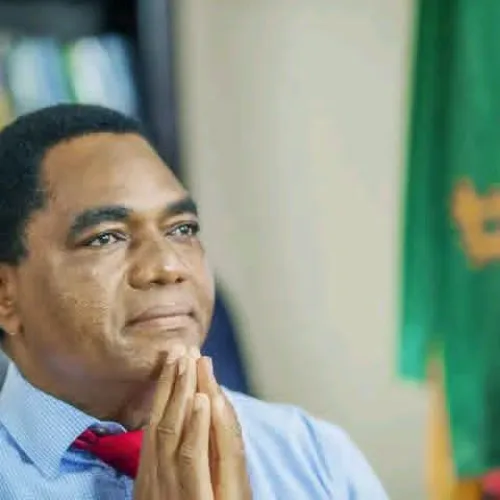
Zambian President Hakainde Hichilema has been declared the winner of the country’s presidential election, securing a second five-year term after a closely watched vote that was overshadowed by violence, disruptions to vote counting and arrests of opposition officials.
The Electoral Commission of Zambia announced Hichilema’s victory in the early hours of Tuesday confirming that the incumbent had secured about 60% of the presidential vote.
His main challenger, opposition leader Brian Mundubile, received approximately 38%, according to the electoral commission. The result gives Hichilema a clear mandate to continue leading the southern African country after his first election victory in 2021.
The election, however, was far from the peaceful contests Zambia has traditionally been known for since the return to multiparty democracy in 1991.
Vote counting was temporarily suspended after election officials were attacked and marked ballot papers were reportedly stolen. The process later resumed after authorities said the security situation had been brought under control.
Tensions escalated further on election night when law enforcement officers raided a property linked to the opposition. Gunshots were fired during the operation and 11 opposition officials were arrested over allegations of plotting an armed insurrection.
Mundubile denied the allegations and his camp questioned aspects of the electoral process, including the handling of results. Opposition concerns have added to scrutiny of an election that had already been marked by accusations of political repression and an uneven campaign environment.
Despite the tensions, the election did not descend into widespread unrest. The European Union’s observer mission described the poll as largely peaceful while raising concerns about restrictions on freedoms and an uneven playing field during the campaign.
Hichilema’s victory gives him another five years to pursue his economic agenda, including efforts to attract investment and expand Zambia’s mining sector.
The country is one of Africa’s major copper producers, making its economic direction particularly important to international investors. Hichilema’s first term was marked by efforts to restructure Zambia’s debt after its historic 2020 default, while his government also pursued reforms backed by international lenders.
However, the president enters his second term facing pressure to ensure that economic gains translate into better living conditions for ordinary Zambians. High living costs, unemployment, poverty and electricity shortages remain major concerns despite improvements in some economic indicators.
Hichilema has also set ambitious targets for Zambia’s copper industry, with his administration seeking to significantly increase production as global demand for critical minerals grows.
His re-election therefore gives the president both political continuity and a fresh challenge: turning economic reforms and increased investment into broader prosperity while addressing concerns about democratic freedoms and political tensions.
For Zambia, the next five years will test whether Hichilema can build on his economic record while restoring confidence in the country’s electoral and democratic institutions.
Comments
Start the conversation about this story.