





…Economy, insecurity, debt crisis dominate as campaigns begin today
…Tinubu, Atiku, Obi lead crowded presidential race
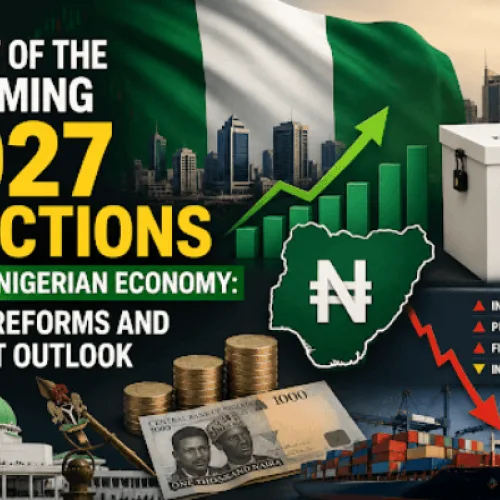
Nigeria’s 2027 presidential race is shaping up as a referendum on President Bola Tinubu’s economic reforms, with the ruling party defending a painful overhaul while opposition candidates seek to turn the cost of living into a case for change.
As campaigning begins today, Tinubu’s government can point to reforms aimed at stabilising public finances, the currency and the broader economy, while households continue to judge the administration by the prices of food, fuel, transport and other essentials. The tension between those two realities is likely to define the contest.
The political battlefield is expected to be dominated by debates over the economy, insecurity, unemployment, debt, welfare, governance and accountability, according to multiple political analysts polled in a BusinessDay survey.
The contest is shaping up as competing perspectives over the true nature of Nigerian realities.
Read also: Keeping fuel subsidy could have cost Nigeria N53trn, NRS chair says
While the ruling All Progressives Congress (APC) is expected to defend President Bola Tinubu’s macroeconomic reforms and campaign on the gains of his Renewed Hope agenda, opposition parties are positioning the election as a referendum on the administration’s handling of national security and the soaring cost of living.
President Bola Tinubu of the All Progressives Congress (APC), Atiku Abubakar of the African Democratic Congress (ADC) and Peter Obi of the Nigeria Democratic Congress (NDC) have emerged as the dominant frontrunners in the presidential race.
Behind this trio is a crowded field of 16 other contenders. The broader race includes Sandy Onor (PDP), Omoyele Sowore (AAC), Donald Duke (PRP), Okwori Ada Elizabeth Frederick (NDP), Chukwu Anita Zugwai (YPP), Rufai Adekunle Omoaje (AA), Adenuga Sunday (Boot Party), Memeh Samuel (DLA), Nwanyanwu Daniel Danerechukwu (ZLP)
Others are Okereke Sunday Chibuzor (LP), Okereke Iken Esther (NRM), Abbas-Bin Aliyu (ADP), Dikwa Suleiman Mohammed (NNPP), Adebayo Adewole Ebenezer (SDP), Seyi Makinde (APM), and Yusuf Kabiru (APP).
APC stakes campaign on reforms, Renewed Hope agenda
Bala Ibrahim, APC national director of Publicity, said the party’s detailed campaign strategy would remain confidential, insisting that political parties do not disclose the mechanics of their campaigns.
“Campaign strategy is something that shouldn’t be disclosed to the public,” Ibrahim told BusinessDay in a telephone interview.
He, however, said the APC would campaign on the Renewed Hope agenda, focusing on citizens’ welfare, democratic dividends, and the consolidation of the achievements of the Tinubu administration.
According to him, the party would emphasise policies capable of bringing “succour to the people” while seeking to win the election freely and fairly.
Analysts say the APC’s biggest challenge, however, will be translating its macroeconomic narrative into a message that resonates with households and businesses confronting high food prices, transportation costs, electricity and energy expenses, unemployment and declining purchasing power.
The party is expected to sustain its argument that reforms such as fuel subsidy removal, tax reforms and efforts to attract investment are necessary to rebuild the economy, increase government revenues and create the foundation for sustainable growth.
On the other hand, Peter Ameh, NDC senatorial candidate, said opposition parties would seek to turn widespread dissatisfaction into a demand for political change. “Nigerians are hungry; this government has failed,” Ameh said.
Ameh, a former chairman of the Inter-Party Advisory Council (IPAC), pointed to the recent Osun governorship election as evidence that voters could reject the ruling party when they believe their interests are not being adequately served.
For the NDC, he said, the campaign would focus on presenting an alternative leadership built around competence, integrity, compassion and responsible governance.
Read also: Nigeria’s economic recovery yet to reach households
Insecurity, jobs and welfare take centre stage
Beyond the economy, insecurity is expected to become one of the most consequential issues of the campaign. Persistent killings, kidnappings, banditry, terrorism and communal conflicts across the country have continued to influence perceptions of government performance, particularly across parts of northern Nigeria.
Opposition parties have consistently questioned the government’s ability to protect lives and property, while the APC is likely to point to military operations, security investments and institutional reforms as evidence of its response to the crisis during the campaigns.
The African Democratic Congress (ADC) is seeking to broaden the debate by making institutional reform and the cost of governance central elements of its campaign.
Bolaji Abdullahi, the national publicity secretary of the ADC, presented the party’s 25-page governance principles and code of ethics, The Orange Book, in Abuja a few days ago.
The document proposes a job-led, opportunity-driven economy based on shared prosperity, while promising to dismantle monopoly and cronyism, strengthen public institutions and widen economic opportunities.
The ADC is also proposing the abolition of opaque security votes and wants security expenditure subjected to legislative approval, oversight and audit. It advocates restrictions on official travel, smaller government delegations, and an end to the use of public assets for private purposes.
By describing the looting of public resources as “a form of banditry”, the ADC is signalling its intention to make corruption, accountability and responsible management of public resources major campaign themes.
The party is further promising stronger institutional independence for the judiciary, legislature, and Independent National Electoral Commission (INEC), improved whistleblower protection and greater opportunities for young people, women and persons with disabilities.
Debt, borrowing as major opposition weapons
Fiscal management is emerging as another major fault line, with Atiku Abubakar, ADC presidential candidate and former vice president, repeatedly challenging the Tinubu administration over borrowing, debt accumulation and the management of government revenues.
In July, Atiku questioned why the federal government continued borrowing heavily despite what he described as an estimated N7.98 trillion oil revenue windfall arising from crude prices above the 2026 budget benchmark. He argued that Nigerians deserved greater transparency over the additional revenues.
Atiku’s criticism intensified after the Budget Office of the Federation disclosed that the federal government’s fresh borrowing in 2024 reached N12.62 trillion, N4.79 trillion above the N7.83 trillion originally budgeted. The report also showed that an additional N3.19 trillion classified as “budget support” was obtained despite no such provision existing in the approved budget, with no clear disclosure of its source.
Atiku accused the administration of fiscal recklessness and questioned why Nigerians were being subjected to higher taxes and painful reforms while government borrowing continued to rise.
His criticism has provided the opposition with a potent campaign argument that the Tinubu administration’s promise that reforms would improve fiscal sustainability has yet to translate into reduced dependence on debt.
The government, however, has defended its borrowing programme, arguing that it must be assessed against revenue shortfalls, fiscal deficits and the financing requirements of the national budget, rather than viewed in isolation.
Omoyele Sowore, African Action Congress (AAC) presidential candidate, is expected to approach the economic debate from a more populist direction, particularly over fuel subsidy and the cost-of-living crisis.
Sowore has promised to restore petrol subsidy if elected, arguing that its removal has contributed to higher transportation costs and increased pressure on household incomes.
Read also: Economic statecraft: The next doctrine for Nigerian foreign policy
The subsidy question is likely to generate one of the sharpest ideological battles of the campaign, with opposition candidates emphasising immediate relief and the APC defending the need to avoid returning to the fiscal burdens associated with the former subsidy regime.
Ultimately, the 2027 campaign is shaping up as a contest between continuity and change, reform and relief, economic stability and immediate welfare, as well as security and accountability.
As the campaign season opens, parties will therefore be under pressure to move beyond slogans and present Nigerians with credible answers to the questions that most directly affect their daily lives, including how to reduce the cost of living, create jobs, secure communities, manage public debt, and ensure that the country’s resources are transparently deployed for the public good.
For investors and businesses, the big question ahead of the crucial 2027 election is whether Nigeria will stay the course on reforms that have reshaped the economy since Tinubu took office, or whether political pressure will force a shift toward measures offering faster relief to voters.


Comments
Start the conversation about this story.