





By Emma Ujah, Abuja Bureau Chief & Emmanuel Iheaka
The Minister of Finance and Coordinating Minister of the Economy, Prof. Taiwo Oyedele, has said federal allocations alone cannot guarantee prosperity for states, urging them to develop sustainable sources of revenue and drive economic growth.
He also said Nigeria recorded estimated savings of N15.8 trillion from the removal of fuel subsidy and the liberalisation of the foreign exchange market between June 2023 and December 2025, but insisted that the reforms did not leave the Federal Government (FG) with a huge pool of cash as widely believed.
The minister equally said the Federal Government’s wage bill was much more than that savings received from subsidy removal, even as he insisted that the reforms of the government has helped to reduce borrowing burden, Speaking at the 2026 National Council on Finance and Economic Development, NACOFED, conference in Owerri, Imo State, yesterday, Oyedele stressed the need for states to look beyond federal allocations and develop their productive capacities to achieve sustainable economic development. He called for stronger fiscal federalism, improved revenue generation and economic diversification to strengthen Nigeria’s resilience to economic shocks. Nigeria must move from an allocationdependent economy to one driven by production, investment and job creation,” he stated. According to him, recent economic reforms , including the removal of fuel subsidy and the unification of the foreign exchange market, have increased tremendously the revenue available for distribution through the federation account. He said monthly federation account allocation, which was between N300 billion and N600 billion before 2023, is now above N2 trillion.
According to him, of the N15.8 trillion realised from the reforms, the federal government received N5.43 trillion, while state governments got N6.52 trillion and local government councils, N3.88 trillion. He disclosed that the federal government generated an additional N20.4 trillion during the period from subsidy savings, increased revenues and borrowing, but spent N30.64 trillion on wages, debt servicing, infrastructure, electricity subsidy and other obligations. “The figures tell a financing story, not simply a savings story,” Oyedele said. He explained that the subsidy savings merely eased fiscal pressure and reduced the amount the government would otherwise have borrowed. “The N15.8 trillion commonly described as subsidy savings was not retained by the FG alone. It was shared across the federal, state and local governments, as well as other statutory beneficiaries. “When combined with N3.12 trillion in other incremental revenues and N11.85 trillion in incremental borrowing, the FG had about N20.4 trillion in incremental resources. “Over the same period, additional expenditure amounted to approximately N30.64 trillion. Subsidy removal, therefore, did not create one large pool of cash available to the federal government. It simply reduced a major fiscal burden and the amount of borrowing that would otherwise have been required.”
Wage bill exceeds subsidy savings Oyedele also disclosed that the FG spent N9.39 trillion on wages during the review period, driven largely by the new national minimum wage, wage awards, allowances and other personnel costs. He added that N9.37 trillion was spent on servicing external debt, reflecting the higher naira cost of meeting foreign currency obligations, following exchange rate depreciation. According to him, N6.47 trillion was invested in strategic infrastructure, including transport, housing, agriculture and security projects, while an additional N3.14 trillion was spent on electricity subsidy to cushion the impact of higher tariffs on consumers. Why government still borrows The minister said the FG has continued to borrow because its revenue remained inadequate to finance its expenditure. Oyedele said: “Subsidy removal resulted in less borrowing than would otherwise have been required, rather than eliminating the need to borrow’’.
How the funds were deployed Oyedele said resources generated through the reforms had been channelled into programmes aimed at improving citizens’ welfare and supporting economic growth. According to him, the funds have helped financed salary increases, prompt payment of salaries and pensions, settlement of pension arrears and gratuities, expansion of the Nigerian Education Loan Fund, NELFUND, as well as affordable consumer and SME credit schemes. He listed major infrastructure projects funded during the period to include the LagosCalabar coastal highway (N2.23 trillion); SokotoBadagry super highway (N1.11 trillion); TransSahara super highway (N489.2 billion); and the Road Emergency Intervention Project (N366 billion). Abu Dhabi loan to diversify funding sources Responding to questions on the FG’s loan arrangement with First Abu Dhabi Bank, the Director-General of the Debt Management Office, DMO, Ms. Patience Oniha, said the facility was part of efforts to diversify Nigeria’s funding sources and secure financing on more favourable terms. She said the transaction followed due process, having received National Assembly’s approval and complied fully with the relevant provisions of the Fiscal Responsibility Act.
In his remarks, Imo State governor, Senator Hope Uzodimma, said his administration was investing in agriculture, the digital economy, power and infrastructure as part of efforts to diversify the state’s economy. Uzodimma, who was represented by his deputy, Dr Chinyere Ekomaru, said states must be deliberate and intentional about diversifying their economies. Me a nwh i l e , Presidential Candidate of the opposition African Democratic Congress ADC, Atiku Abubakar, has challenged President Bola Tinubu to account for approximately N30 trillion in Federation revenues, deductions, savings and transfers requiring transparent reconciliation, saying the latest July 2026 Federation Account figures show that the troubling pattern has continued. Atiku, in a statement issued by his Senior Special Assistant on Public Communication, Phrank Shaibu, said the administration must particularly account for the revenues and fiscal gains arising from the removal of petroleum and energy subsidies, noting that Nigerians were specifically promised that the painful reforms would release resources for development. “President Tinubu did not ask Nigerians to endure the agony of subsidy removal so that the proceeds could become unexplained stashed funds beyond public scrutiny. The savings and additional revenues generated by these reforms belong to the Nigerian people.
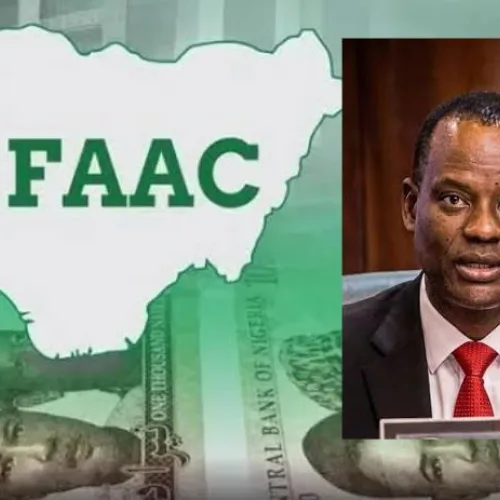
They are not the private reserves of the Presidency or any government agency. Where is the subsidyremoval windfall?” he queried. Such resources, he said, should have been visibly invested in transformative projects that directly improve the lives and productive capacity of Nigerians. Atiku said his earlier reconciliation of published Federation Account figures had identified approximately N28 trillion requiring explanation up to June 2026, but the July figures have raised fresh questions and pushed the cumulative amount requiring proper public accounting towards N30 trillion. “The question President Tinubu must answer remains painfully simple: Where is the money?” Atiku said. He said for July 2026, gross statutory revenue stood at N4.359 trillion, while the Federation Account Allocation Committee approved a total distribution of N3.007 trillion to the Federal Government, 36 states and 774 local government councils. Atiku said the July figures were further evidence that Nigerians deserve a comprehensive reconciliation of the enormous revenues flowing into the Federation Account and the deductions made before distribution.
Comments
Start the conversation about this story.