





The United States (US) has made efforts to expand institutional funding and protect creative revenues in Nigeria’s fast-growing music sector.
These were discussed as the US Consulate General in Lagos, alongside key IP regulatory bodies, during a three-day strategic framework workshop aimed at reinforcing intellectual property (IP) protection across the creative value chain.
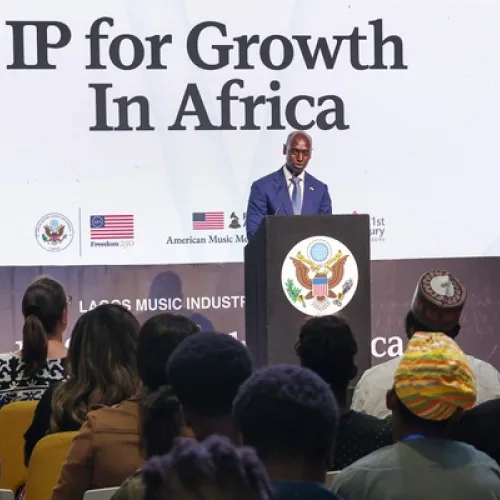
The initiative, titled “IP for Growth in Africa: Lagos Music Industry Workshop,” brought together over 120 IP policymakers, legal experts, music executives, producers, and creative industry stakeholders.
Read also: Copyright reform must reward the entire creative chain, not just the stars
The discussions focused on establishing robust IP enforcement and monetization structures designed to unlock cross-border investment and expand revenue generation for Nigerian creators and foreign partners
Speaking at the event, Brandon Hudspeth, US Consul General, emphasized that stronger legal protections are critical to mitigating risk and building investor confidence for foreign firms entering local joint ventures, licensing deals, and distribution networks.
“The United States sees Nigeria’s music industry not only as a powerful cultural force, but as a significant trade and investment opportunity,” Hudspeth stated. “Strong IP protection gives US investors greater confidence, gives creators greater control over their work, and creates the conditions for businesses on both sides of the Atlantic to invest, partner, and grow.”
Hudspeth highlighted existing commercial deals such as Universal Music Group’s partnership with Mavin Records and EMPIRE’s collaboration with YBNL, as viable blueprints for cross-border scale.
Major global platforms including Sony, Warner Music Group, YouTube, Meta, and Apple Music which continue to leverage these structures to drive global distribution, job creation, and export earnings for the Nigerian economy.
Organized in collaboration with the US Patent and Trademark Office (USPTO), the US Mission in Geneva, and alumni of the American Music Mentorship Program (AMMP), the initiative runs alongside the Recording Academy, which provided a platform for industry regulators and private sector leaders to map out practical legal solutions.
Read also:The creative economy requires a landlord
Some key policymakers in attendance included Obi Asika, director general of the National Council for Arts and Culture; John Asein, PhD, Director General of the Nigerian Copyright Commission; Tobi Moody, director of the WIPO Nigeria Country Office, and Folashade Ambrose-Medebem, Lagos State Commissioner for Commerce, Cooperatives, Trade and Investment.
Panel sessions focused on resolving key structural bottlenecks in the local market, including copyright ownership clarity, collective management and royalty administration systems, statutory licensing, contract enforcement, streaming monetization, and international publishing rights.


Ngozi Ekugo is a Senior Correspondent at BusinessDay. She holds a Masters in management from the University of Lagos, an undergraduate from University of Lagos, and is in an alumni of Queen's College. Shes currently an associate member of the Chartered Institute of Personnel Management (CIPM). She has a brief experience at Goldman sachs, London in its Human Capital Management division. She is interested in human capital development and is leveraging her varied experience across sectors to report labour and global mobility trends for stakeholders to make informed decisions.
Comments
Start the conversation about this story.