





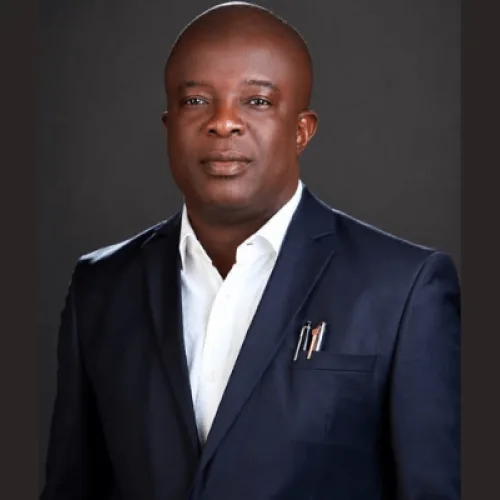
Tony Chinedu Nwulu, an investor, entrepreneur and founder of Azari Luxury Properties, has interests spanning real estate, fintech, security technology, hospitality and digital innovation.
In this interview with BusinessDay’s Saawua Terzungwe, he explains why Rwanda, particularly Kigali, has become central to his investment strategy, the opportunities in its luxury property market, and why he considers the country’s predictability and investment environment more attractive than Nigeria’s. Excerpts:
What motivated you, as a Nigerian, to venture into real estate investment in Rwanda?
My decision was fundamentally investment-driven. I have always believed that African investors need to start looking at Africa as one interconnected opportunity rather than restricting ourselves to the countries where we were born. When I began studying Rwanda more closely, I saw a country deliberately creating the conditions necessary for long-term investment in infrastructure, security, planning, institutional efficiency and a strong commitment to attracting private capital.
Real estate particularly interested me because Rwanda’s development trajectory is creating demand for quality housing, hospitality and professionally managed accommodation. I therefore saw an opportunity not merely to buy property but to build a platform capable of developing distinctive residential and hospitality assets. That thinking ultimately became Azari Luxury Properties Rwanda.
Why did you choose Rwanda over Nigeria and other African countries for your real estate investment?
My strategy is diversification. What attracted me to Rwanda was the combination of stability, administrative efficiency, infrastructure, cleanliness, security and a government that actively communicates that private investment is welcome. The Rwandan Development Board states that there are no restrictions on foreign ownership or capital flows and provides a highly digitalised investment environment and one-stop investor services.
For a developer thinking about capital over 10, 15 or 20 years, predictability matters enormously. Rwanda gives me an opportunity to participate relatively early in the development of a market that I believe still has considerable room to grow.
When did you start investing in Rwanda, and what has your investment journey been like so far?
My serious investment journey in Rwanda is relatively recent and has initially concentrated on market entry, property acquisition and leasing opportunities, establishing Azari Luxury Properties Rwanda, developing our local network and building our development pipeline. Rather than rushing into construction simply to announce projects, we have been deliberate about understanding Kigali neighbourhoods, land values, consumer expectations, planning requirements, construction economics and the hospitality market. We are now moving from market entry and opportunity identification into building a scalable portfolio.
What type of properties are you investing in in Rwanda—residential, commercial, hospitality, land or mixed-use developments?
Our primary focus is premium residential and hospitality-led real estate. Under Azari Luxury Properties, we are evaluating and developing opportunities across luxury residential estates, high-rise residences, branded residences, serviced apartments and hospitality developments. We also look at strategically located land where we believe future development can create significant value. Our philosophy is not simply to construct buildings. We want to create destinations and communities that combine architecture, technology, security, wellness, hospitality and lifestyle. That is what we mean by Africa’s Finest Address.
“Nigeria can potentially offer higher returns in certain situations, but those returns may come with higher operational and macroeconomic risks. Rwanda can offer a different proposition: potentially more moderate returns accompanied by greater predictability. That distinction is important.”
How much have you invested in Rwanda’s real estate sector so far, and do you plan to increase your investment?
We are still in the investment and portfolio-building phase, so I would prefer not to publish a specific consolidated figure until all the transactions and committed projects have reached the appropriate disclosure stage. What I can say confidently is that our ambition is substantial. Our investment is not conceived around acquiring one or two properties. We are building a long-term development platform in Rwanda, and the capital commitment will increase significantly as individual projects move through acquisition, design, approvals, financing and construction. I see Rwanda as a long-term investment destination rather than a speculative market.
What have been the major attractions of Rwanda’s property market for you as a Nigerian investor?
Three things stand out – predictability, organisation and growth potential. Investors value knowing the rules and understanding the process. Rwanda has invested heavily in simplifying business administration. RDB says businesses can be registered rapidly and operates a One Stop Centre covering investment registration and related investor services. Then there is Kigali itself. It is organised, relatively secure and increasingly internationally connected.
Finally, Rwanda is still developing. That creates an interesting opportunity. You can participate in the creation of tomorrow’s premium districts rather than only buying into locations whose major appreciation has already occurred.
How does Rwanda’s real estate market compare with Nigeria’s in terms of property prices, rental demand and returns on investment?
They are very different markets.
Nigeria has an enormous scale. Lagos and Abuja alone contain very deep pools of property demand, and certain segments can generate attractive rental yields and capital appreciation. Rwanda is considerably smaller, but what it offers is greater predictability and a more orderly market environment. Kigali’s premium property prices can be surprisingly strong, particularly in sought-after neighbourhoods. So Rwanda should not automatically be regarded as “cheap”. For me, ROI should also be evaluated beyond headline rental yield. I consider occupancy, currency exposure, maintenance, security costs, regulatory risk, vacancy, ease of exit and long-term capital appreciation.
Nigeria can potentially offer higher returns in certain situations, but those returns may come with higher operational and macroeconomic risks. Rwanda can offer a different proposition: potentially more moderate returns accompanied by greater predictability. That distinction is important.
What are the major challenges you have encountered, particularly regarding regulations, taxation, financing and property registration?
No market is without challenges. In Rwanda, the regulatory system is generally structured, but investors still need competent local legal, tax, architectural and technical advisers. A foreign investor must understand planning regulations, environmental requirements, tax obligations and the legal structure through which property is being acquired or developed. Major developments can also require environmental assessment before implementation. Financing is another consideration. The cost and structure of development finance can materially affect project viability. My approach has therefore been to conduct proper due diligence before committing capital. Efficiency does not eliminate the need for diligence.
What lessons have you learnt from Rwanda’s real estate market that you believe Nigeria could adopt?
The biggest lesson is that predictability itself is an economic asset. Investors can deal with rules, taxes and regulations when they understand them. What capital dislikes most is uncertainty. Digitisation of government processes is another lesson. Rwanda has demonstrated how technology can reduce friction between businesses and government. Urban planning is equally important. Roads, drainage, zoning, public spaces, environmental standards and development controls directly affect property values.
Nigeria has the population, entrepreneurial energy and capital to create some of the world’s most valuable cities. Improving planning, infrastructure and regulatory predictability could unlock extraordinary amounts of domestic and international real estate capital.
Are you seeing more Nigerians showing interest in investing in Rwanda? If so, what is driving that trend?
From the conversations I am having, yes, there is growing curiosity. Nigerian entrepreneurs are increasingly thinking continentally. People are asking where else they can invest, establish businesses, own property and diversify assets. Rwanda attracts attention because its reputation for security, cleanliness, organisation and business friendliness has travelled across Africa. Our intention at Azari is partly to make that journey easier. We want Nigerians and other Africans interested in Rwanda to encounter professionally structured investment opportunities rather than having to navigate an unfamiliar property market alone.
Is Rwanda deliberately positioning itself as an investment destination for Nigerians and other Africans?
Absolutely, although I would describe the strategy as broader than targeting Nigerians specifically. Rwanda is positioning itself as an investment destination for African and international capital. The government’s investment framework explicitly welcomes overseas investors, and real estate and construction are among the sectors promoted for investment. The wider strategy is clear: to make Rwanda an efficient place from which people can invest, establish companies and access opportunities within the region.
How do Rwanda’s economic conditions and population growth affect property demand?
This is one of the reasons I am optimistic. Rwanda recorded very strong economic growth in 2025, with World Bank data putting annual GDP growth at 9.4 percent. Population dynamics are equally important. Rwanda’s 2022 census recorded approximately 13.25 million people, with the population growing at an average of 2.3 percent annually between 2012 and 2022. Kigali and surrounding districts experienced particularly significant population increases. Official projections put the population at about 14.1 million in 2025 and indicate substantial further growth over the coming decades. Economic growth, urbanisation and household formation collectively create demand for housing. The opportunity, however, isn’t simply to build more units. Developers must build the right products at the right price points in the right locations.
What has been your biggest surprise since you started investing in Rwanda?
The biggest surprise has probably been how quickly things can move administratively when documentation is complete. Coming from a larger and more complex market, you naturally expect certain processes to take considerable time. Rwanda’s investment infrastructure is deliberately designed to reduce that friction. For example, RDB’s current procedures state that a completed investment-certificate application can be processed within a maximum of two working days.
The second surprise is the sophistication of Kigali’s premium market. There is already an appreciation for good architecture, quality finishes, security and professionally managed accommodation. That tells me the market is ready for greater product differentiation.
Have you ever lost money or encountered a major setback in the Rwandan market?
Fortunately, we have not experienced a major loss that has altered our conviction about Rwanda. There have naturally been learning curves—understanding pricing, identifying suitable properties, negotiating transactions, evaluating construction costs and learning how the local market operates. I regard those as part of entering any new market. One lesson that has been particularly important is that it never allows enthusiasm about a country’s potential to replace transaction-level due diligence. A good market can still contain a bad investment.
Finally, based on your experience, would you encourage more Nigerian investors to look beyond Nigeria for opportunities in Africa, or should they continue to focus on the domestic market?
Definitely, but not at the expense of Nigeria. One of the changes I would like to see among African entrepreneurs is a stronger continental investment mindset. An American entrepreneur doesn’t necessarily restrict investment to his home state. Europeans invest across borders. African entrepreneurs should increasingly think the same way about Africa. Nigeria should remain an important part of any serious Nigerian investor’s portfolio because the scale of opportunity is extraordinary. But diversification is sensible. Look at Rwanda. Look at Ghana, Côte d’Ivoire, Kenya, South Africa and other emerging opportunities. Understand each country’s strengths and risks. Africa’s future will increasingly be built by African capital moving across African borders.
That is ultimately part of the philosophy behind Azari Luxury Properties. We want to build a truly African real estate company, originating from African entrepreneurship, operating across markets and creating assets capable of competing with the best developments anywhere in the world.


Comments
Start the conversation about this story.