






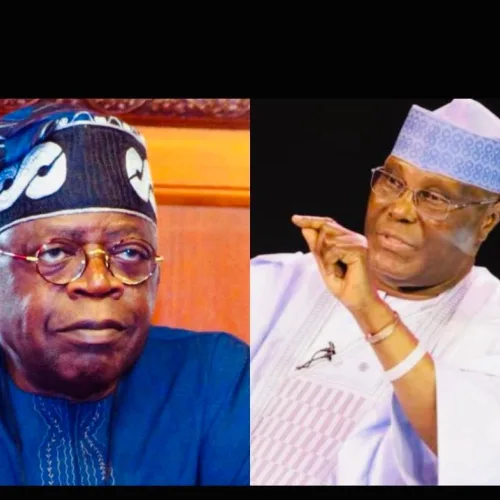
The Presidency and former Vice President Atiku Abubakar have clashed over the latter’s reported proposal to restore petrol subsidy if elected president in 2027, with the federal government warning that the policy could undermine Nigeria’s fiscal stability and emerging domestic refining industry.
Special Adviser to President Bola Ahmed Tinubu on Information and Strategy, Bayo Onanuga, criticised the proposal in a statement issued on Thursday in Abuja, describing it as a major departure from Atiku’s previous position on petrol subsidy. Blueprint reports
Onanuga said Atiku had supported the removal of subsidy during the 2023 presidential election but was now proposing its restoration without adequately explaining how the policy would be financed or implemented.
He suggested that the proposal could be driven more by electoral considerations ahead of the 2027 elections than by a sustainable response to the country’s economic challenges.
Presidency demands details
While acknowledging Atiku’s constitutional right to propose alternative economic policies and seek the support of Nigerians, Onanuga said voters deserved to know the financial and legal implications of returning to a subsidy regime.
“We respect Alhaji Atiku Abubakar’s constitutional right to propose alternative policies, to seek the support of Nigerians and recant a major policy prescription.
“However, Nigerians also deserve to understand what the proposed restoration of subsidy would actually mean, how it would be funded, and whether it is compatible with the legal and structural changes that have taken place in the petroleum sector,” he said.
The presidential aide also rejected Atiku’s reported claim that the Federal Government had accumulated a N30 trillion “subsidy windfall”.
According to him, there was no such fund, explaining that the former subsidy arrangement involved the Nigerian National Petroleum Company Limited selling petrol below its actual cost and absorbing the resulting under-recoveries.
He said the system created huge financial obligations for the government, with subsidy-related liabilities running into trillions of naira.
PIA makes subsidy return complicated
Onanuga said the petroleum subsidy regime had been dismantled as part of reforms under the Petroleum Industry Act (PIA), which established a market-based framework for the downstream petroleum sector.
He said the law had provided for the termination of subsidy by the end of June 2023, while Tinubu’s declaration during his May 29, 2023 inauguration brought the implementation forward by a few weeks.
The presidential spokesman argued that returning to subsidy would therefore require more than a presidential pronouncement.
He said it would require a clear funding mechanism, legislative consideration and administrative arrangements compatible with the current structure of the petroleum market.
Local refining at risk
A major concern raised by the Presidency was the potential impact of subsidy restoration on Nigeria’s growing domestic refining industry.
Onanuga cited the operations of the Dangote Refinery and other local producers, arguing that the development of domestic refining capacity had changed the dynamics of Nigeria’s petroleum market.
He warned that a return to subsidy could distort the emerging market-driven system, weaken smaller domestic refineries and potentially expose the country to renewed dependence on imported petroleum products.
According to him, the previous subsidy regime would have made it difficult for large-scale domestic refining investments to thrive.
He said reversing the current policy could discourage further investment, threaten jobs and reduce the foreign exchange benefits associated with refining petroleum products locally.
The presidential aide also said Nigeria had begun exporting refined petroleum products to markets outside Africa, marking a significant shift from the period when the country depended heavily on imported petrol.
Presidency highlights revenue gains
Onanuga argued that the removal of subsidy had freed resources that could otherwise have been spent financing cheaper petrol.
He estimated that about N15 trillion that might have been borrowed or spent on subsidy had instead strengthened government revenues and improved the fiscal position of the federal, state and local governments.
He cited about N3 trillion reportedly distributed by the Federation Account Allocation Committee in July as an indication of improved public revenue following changes to the petroleum subsidy regime and the foreign exchange system.
According to him, increased revenues had helped states meet salary obligations and execute infrastructure projects.
He maintained that moving from importing refined petroleum products with scarce foreign exchange to processing crude oil domestically would strengthen energy security, conserve foreign reserves, support industrial production and create jobs.
‘Who pays for subsidy?’
The Presidency also challenged Atiku to provide specific details about the proposed pump price under his subsidy plan.
Onanuga asked who would bear the difference between the actual cost of petrol and the price paid by consumers if the subsidy were restored.
“If the subsidy is restored, who pays for it? What will the new pump price be — N200 or N500?” he asked.
He argued that selling petrol significantly below its estimated economic cost, which he put at between N1,200 and N1,300 per litre, would reduce funds available for infrastructure, education, healthcare and other public services.
He added that such a policy could also reduce allocations to states and the 774 local government councils, increase government borrowing, expand public debt and intensify pressure on the naira.
Presidency acknowledges hardship
Despite its defence of subsidy removal, the Presidency acknowledged the hardship caused by high petrol prices.
Onanuga admitted that increased energy costs had placed significant pressure on households, transport operators and businesses.
He, however, argued that sustainable relief should not come through the restoration of what he described as an opaque and financially burdensome subsidy system.
Instead, he said the administration was promoting Compressed Natural Gas (CNG) as a cheaper alternative for commercial vehicles, private cars and distribution trucks.
He claimed that CNG could cost about 70 per cent less than petrol and cited major companies, including Dangote and BUA, as examples of businesses adopting gas-powered trucks.
He urged transport operators benefiting from lower CNG costs to reflect the savings in fares and prices paid by consumers.
Atiku challenged to provide fiscal arithmetic
The presidential aide called on Atiku and other presidential aspirants to present detailed financial calculations alongside proposals capable of addressing the rising cost of living.
He asked the former vice president to disclose the projected annual cost of his subsidy programme, the proposed source of funding and whether the policy would require additional borrowing.
Onanuga also demanded clarification on whether Atiku would seek amendments to the PIA and other relevant regulations if he became president.
He further asked what safeguards would be introduced to prevent the fraudulent claims and abuses that had been associated with the previous subsidy regime.
He said Atiku should also explain which segment of the petroleum value chain would be subsidised, particularly in view of increased domestic refining capacity.
“Political promises must be backed by fiscal arithmetic. Nigeria cannot afford to return to policies whose costs are hidden from citizens until they appear later as debt, reduced government spending on social services and further pressure on the national currency,” Onanuga said.
The Presidency said political parties and presidential aspirants should welcome robust debate on the cost of living and economic policies ahead of the 2027 elections, but insisted that proposals must reflect the realities of Nigeria’s changing petroleum market.
It challenged Atiku to provide Nigerians with the legal, financial and operational details of his plan to restore petrol subsidy.
Comments
Start the conversation about this story.