





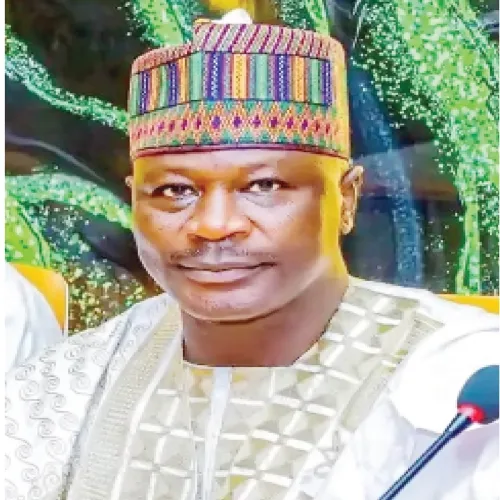
Special Adviser to Governor Ahmed Aliyu of Sokoto State on Security Matters, Col. Ahmed Usman (rtd), in this interview by OLAKUNLE MARUF, speaks on the administration’s investments in security, the persistence of insecurity in some areas, the need for new military strategies, the role of informants, and the proposed Northern Nigeria Security Trust Fund.
You have now spent almost three years in office as Special Adviser on Security Matters. Looking back, what achievements would you say the administration has recorded in the area of security?
It is true that it is now almost three years since I was appointed by Governor Ahmed Aliyu. I was among the first set of appointees because the governor considers security a top priority.
Security is one of the key pillars of the administration’s 9-Point SMART Agenda, and that demonstrates the importance attached to protecting lives and property. When this government came into office, many sectors had deteriorated, and the security sector was particularly affected.
The previous administration had withdrawn most forms of support to security agencies, especially personnel operating in frontline areas. Operational allowances were discontinued, and there was little or no provision of vehicles, equipment, or other logistics required for effective operations.
One of the major gaps we met was the absence of a functional platform where security stakeholders could regularly meet to assess threats and develop coordinated responses.
The first major step taken by this administration was the establishment of a State Security Committee under the chairmanship of the Deputy Governor, Engr. Idris Mohammed Gobir. The committee includes security chiefs, traditional rulers, and other relevant stakeholders. It meets regularly, and its recommendations have guided many of the security interventions implemented by the government.
As a result, the government restored and increased the allowances being paid to security personnel. More importantly, it began addressing the serious shortage of operational vehicles and equipment.
Since the inception of this administration, the state has procured and distributed Toyota Hilux patrol vehicles, Toyota Buffalo vehicles, armoured personnel carriers, motorcycles, protective gear, and surveillance equipment to security agencies.
In the first phase, more than 200 Hilux and Buffalo vehicles and 250 motorcycles were provided. To mark the governor’s third anniversary in office, the administration procured 62 additional armoured vehicles, 320 motorcycles, bulletproof helmets and vests, night-vision devices, thermal imaging equipment, security kits, and other advanced operational tools at a cost of about N27.6 billion. And just last Thursday, Governor Ahmed Aliyu approved N1.7b for the purchase of 1000 Bajaj motorcycles to enhance security across the state.
These materials were distributed to security agencies to strengthen intelligence gathering, improve mobility, and enhance operations against banditry, terrorism, kidnapping, cattle rustling, and other violent crimes.
I believe these interventions represent one of the most significant security investments made by any state government in Nigeria in recent years.
Beyond the procurement of equipment and logistics, we have also recorded concrete operational successes since coming on board. Through coordinated operations involving the military, police, DSS, NSCDC, and local security outfits, 70 kidnapped victims were rescued from January to date, 63 victims were rescued in 2025, while 20 victims were rescued in 2024.
In addition, several rustled animals were recovered and returned to their rightful owners, while a number of bandits and other armed criminals were neutralised during security operations carried out across different parts of the state during the period under review.
These achievements were made possible through improved collaboration among security agencies, intelligence sharing, sustained government support, and the sacrifices of our security personnel who continue to operate under difficult conditions.
So, when you look at the restoration of support for security agencies, the establishment of a functional security coordination mechanism, the massive investment in vehicles and modern security equipment, the strengthening of the Community Guards Corps, the rescue of kidnapped victims, the recovery of rustled livestock, and the neutralization of criminal elements, I can confidently say that this administration has recorded significant achievements in the security sector, even though we still have challenges that require continuous effort and improvement
Despite these efforts, attacks are still being recorded in parts of Eastern and Southern Sokoto. Does this mean the investments have not produced the desired results?
Security is a complex issue; funding alone cannot solve it. Equipment and logistics are important, but success also depends on strategy, intelligence, personnel commitment, and community cooperation.
Our security agencies are making efforts, and we must acknowledge that without their sacrifices the situation could have been much worse. However, there is still a need for greater commitment, faster response, and more proactive operations.
Governor Ahmed Aliyu has repeatedly stated that he is prepared to commit all available resources if that is what it takes to restore peace. His objective is to create an environment where farmers can return to their fields, businesses can flourish, and displaced communities can return home without fear.
One area that requires urgent attention is military strategy. The current security challenge is largely an asymmetric and guerrilla-style conflict, which is different from conventional warfare. The armed forces need specialised counterinsurgency and counter-banditry training tailored to the terrain and operational realities of the North-West.
Even a relatively small number of highly trained personnel with expertise in this type of warfare can have a significant impact on terrorist and bandit networks.
READ ALSO: Army records major gains against banditry in North-West
Another critical factor is synergy. Security agencies must work more closely with local vigilante groups, community leaders, hunters, and residents. Community-based intelligence remains one of the most effective tools in combating rural insecurity.
We also need more personnel, better equipment, improved welfare packages, and enhanced remuneration for security operatives. In that regard, I commend President Bola Ahmed Tinubu for approving an upward review of the salaries and welfare of military personnel. Improved welfare boosts morale and strengthens operational effectiveness.
A major obstacle in the fight against insecurity is the activities of informants who provide intelligence and logistical support to terrorists and bandits.
If the problem of informants is effectively addressed, the security situation in many parts of the North-West would improve considerably. This is why the Sokoto State Government is pursuing legislation that would impose stiffer penalties on individuals found collaborating with criminal groups, particularly those who aid terrorist operations through information sharing.
I believe other states facing similar threats should consider adopting similar legal frameworks.
While military operations remain necessary, governments must also address the root causes of insecurity.
We cannot rely entirely on armed confrontation. We must invest in youth employment, rural development, education, agriculture, and social infrastructure. Creating economic opportunities for young people is essential for preventing recruitment into criminal networks.
Most of the armed groups attacking Sokoto communities operate from forest corridors linked to Zamfara State. Because Sokoto shares borders with Zamfara through areas such as Rabah, Isa, Tambuwal, and Kebbe, criminals often cross into Sokoto, carry out attacks, and retreat through the forests. Sokoto shares borders with Zamfara through areas such as Rabah, Isa, Tambuwal, and Kebbe, and many of the routes they use are inaccessible to conventional vehicles. This is one of the reasons motorcycles were procured for security personnel, to enable them to pursue the criminals through difficult terrain.
The Minister of Defence while commissioning security vehicles procured by the state government recently directed soldiers to neutralize any armed terrorist they encounter without waiting for further orders, warning that failure to do so would attract severe punishment. What is your view on that directive?
I believe it is a good directive. If an armed enemy is attempting to kill you, it makes no sense to say you must wait for another order before defending yourself. That would be unreasonable.
I often feel frustrated when I hear that an attack occurred and security personnel did not respond promptly, especially when the location of the attack is not far from their base. Nigerian security personnel, particularly our soldiers, are known worldwide for their bravery, professionalism, and fighting spirit. They are not known for cowardice. I do not know what has gone wrong in some cases.
This is why I believe that recruitment into the military and other security services should be more rigorous to avoid admitting unsuitable individuals. Military service is not simply a means of making money; it is a profession for patriots who are willing to sacrifice their lives for the protection of their country and its people.
We will continue to monitor developments closely and provide the necessary advice to ensure that insecurity is addressed not only in Sokoto State but across Nigeria as a whole.
Recently, social media has been awash with videos and photographs showing residents fleeing their communities to safer locations due to renewed insecurity. The Sokoto State Emergency Management Agency (SEMA) has also confirmed the influx of internally displaced persons (IDPs) into several towns across the state. What concrete measures is the Sokoto State Government taking to facilitate the safe return of these displaced persons to their communities, or where necessary, provide them with alternative resettlement options?
The issue of internally displaced persons is one that the Sokoto State Government takes very seriously because these are our citizens whose lives and livelihoods have been disrupted by the activities of bandits and other criminal elements. His Excellency, Governor Ahmed Aliyu, has consistently maintained that the protection and welfare of the people remain the administration’s top priority.
Comments
Start the conversation about this story.