






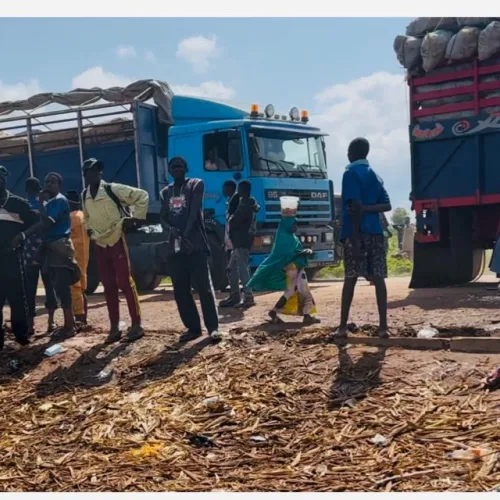
Motorists travelling along the Kaduna-Abuja Expressway were on Saturday morning trapped in heavy traffic as vehicular movement slowed considerably along the Kateri corridor of the highway.
Blueprint.ng correspondent who monitored the situation observed that the gridlock had affected motorists travelling in both directions, with long queues of vehicles building up at different points along the route. Blueprint reports
The situation was particularly difficult for motorists approaching Jere and Abuja where the combination of ongoing road construction, heavy vehicular movement and the presence of articulated trucks contributed to the congestion.
Personnel of the Federal Road Safety Corps (FRSC) and soldiers were seen working to control traffic and create room for vehicles to move through the affected sections.
Heavy trucks compound situation
Apart from the ongoing construction, the large number of heavy-duty trucks using the highway has also emerged as a major factor contributing to the traffic build-up.
Several articulated vehicles were observed along the corridor, with their slow movement and difficulty navigating some of the narrowed sections created by construction adding pressure to an already congested road.
The presence of heavy trucks on the highway has previously been identified as a challenge for traffic management, particularly around the Kateri axis, where construction works and high traffic volume frequently create bottlenecks.
The Kateri-Jere-Zuba stretch is particularly important because it forms part of the first section of the ongoing Abuja-Kaduna-Kano Super Highway project. Reports in April indicated that substantial concrete pavement work had been completed on the Zuba-Jere stretch, although construction activities and traffic management remain ongoing along parts of the broader corridor.
Recurring congestion along corridor

Saturday’s gridlock is not an isolated incident, as the Abuja-Kaduna highway has experienced several major traffic disruptions in recent years.
Motorists during festive periods including weekends are usually subjected to prolonged delays along the highway, with some travellers spending about six hours on a journey that would normally take considerably less time.
These repeated congestion has over time generated widespread complaints from commuters, particularly around the Katari-Jere axis. Reports at the time indicated that road construction and an obstruction involving a heavy vehicle contributed to the traffic crisis.
The FRSC subsequently carried out an emergency operation to clear an obstruction around the Azara Bridge in the Jere axis, restoring movement along the highway.
The recurring nature of such incidents has raised concerns about the vulnerability of the highway to even minor breakdowns or obstructions, particularly when traffic is already being channelled through restricted lanes because of construction.
Jere, Zuba remain major pressure points
The section between Jere and Zuba has increasingly become one of the most sensitive portions of the Abuja-Kaduna corridor.
Zuba is a major entry and exit point for motorists travelling between Abuja and northern states, while Jere serves as an important transit point along the Kaduna end of the corridor.
With thousands of cars, buses, trucks and other commercial vehicles using the highway daily, any obstruction or reduction in available lanes can quickly translate into kilometres of traffic.
Previous reports have also highlighted persistent congestion around Zuba, with road construction identified as one of the factors behind recurring delays.
The situation becomes more complicated when articulated vehicles break down or attempt to manoeuvre through narrow construction diversions.
FRSC, soldiers intervene

As the traffic worsened on Saturday, FRSC officials and soldiers were deployed to assist with traffic management.
The personnel were seen directing motorists and attempting to prevent indiscriminate overtaking, while also working to ensure that available lanes remained open.
Their intervention was aimed at easing the pressure created by the volume of vehicles and allowing traffic to gradually move through the affected sections.
Similar multi-agency interventions have been used during previous incidents on the highway.
In May, the FRSC said its personnel worked with the Nigerian Army and other stakeholders to remove an obstruction around the Azara Bridge after a broken-down articulated vehicle caused a major traffic blockage.
Construction creates narrow passages
The ongoing reconstruction and expansion of the Abuja-Kaduna-Kano highway remains a major factor in the traffic situation.
The Zuba-Jere section has been undergoing major reconstruction, including the introduction of concrete pavement technology.
The project is expected to improve the quality and durability of the highway when completed, but construction activities have temporarily created narrowed sections, diversions and changes in traffic flow.
According to information published during an inspection of the project in April, the contractor had completed about 88 kilometres of concrete pavement from Zuba towards Jere, while work was also progressing on other portions of the corridor.
For motorists, however, the immediate concern remains the difficulty of navigating sections where construction activity coincides with heavy traffic.
Motorists urged to exercise patience
Motorists caught in the latest gridlock have been urged to remain patient and comply with instructions from FRSC personnel and soldiers working along the highway.
Drivers have also been advised against driving on road shoulders or attempting dangerous overtaking manoeuvres in an effort to escape the traffic.
Such actions can further narrow the available passage and potentially create additional obstructions.
Heavy trucks and other articulated vehicles are also expected to exercise caution when approaching construction diversions and other restricted sections.
Calls for better traffic management
The repeated congestion along the Kaduna-Abuja highway has renewed concerns about the need for stronger traffic management while construction continues.
Given the strategic importance of the Abuja-Kaduna highway, authorities may need to strengthen coordination among the FRSC, Army, contractors and other agencies to ensure that breakdowns involving heavy vehicles are cleared quickly.
There are also concerns that without effective regulation of heavy trucks, particularly at construction points, minor incidents could continue to trigger major gridlocks.
The highway serves as a critical link between Abuja and Kaduna and provides access to several northern states, making uninterrupted movement essential to commuters, businesses and the transportation of goods.
Traffic gradually being managed
As of the time of filing this report, FRSC officials and soldiers remained at strategic points along the affected stretch, working to ease the congestion and restore normal traffic flow.
While the immediate gridlock has been aggravated by the high volume of vehicles and heavy trucks, the ongoing construction has also reduced the flexibility available to traffic managers when incidents occur.
The latest development therefore highlights the need for motorists to plan their journeys carefully, particularly along the Jere-Zuba stretch, until construction works are completed and traffic conditions improve.
For now, road users are advised to exercise patience and follow the directions of security and traffic officials as efforts continue to clear the highway.
Comments
Start the conversation about this story.