





… How we digitized affidavits all over Nigeria to enable anybody file from anywhere
…How digitization moved Rivers IGR from N6.2bn to N40bn; revenue of a university moved from N400m to N1.2bn
…Nobody in Ministry of Education, JAMB, NECO, etc, listened to us, then
How a seed that germinated in the midst of campus friends in Port Harcourt, a project aiming to tackle exam malpractice, has exploded into Nigeria’s most innovative education technology with multibillion assets. Asawo Ibifuro, CEO, reveals it all in an exclusive interview with IGNATIUS CHUKWU, showing how they now provide e-governance backbone for most states and agencies in Nigeria.
Kindly allow Nigerians and the tech world know you in relation to CINFORES.
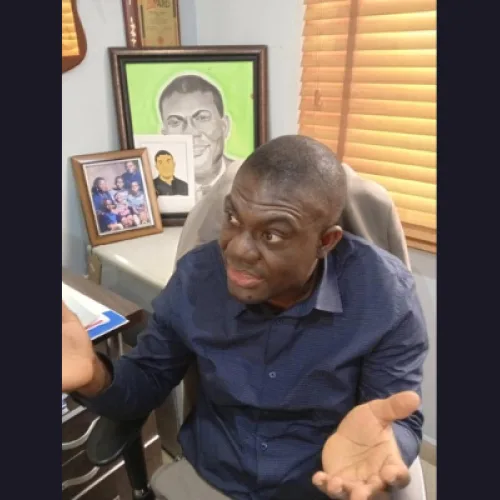
All right. I’m Asawo Ibifuro, the CEO and Co-founder of CINFORES Limited.
Now, can we, for a start, have a brief on the background, origin or history of CINFORES?
CINFORES started as an idea while we were in the University, on campus. We are mainly a campus startup. We came up with the idea of solving exam malpractice issues in our days, as far back as year 2000 when we started mooting that idea. By 2002, when we were in our final year, we were able to make that idea a reality. There was an Academic Staff Union of Universities (ASUU) strike, which, of course, we latched onto, and then we were able to get that done.
So, the software was developed in 2002. We went for the National Youth Service Corps (NYSC) in 2003, in back in 2004. Then we started the business on September 8, 2004, which is now our annual anniversary. Our product was named BrainFriend. So, from BrainFriend, we were able to get other solutions done. We had our e-School, we had our e-Campus, we had our scholarship (electronic scholarship management system), etc. all within the education area until. Later, we had an opportunity to also do things around governance when we were called to manage the ICT infrastructure of Rivers State. From then, we ventured into other solutions: the Court Management Information System (which we deployed for Rivers State). It is now being used in Lagos, Oyo, Osun, Ondo, Ogun, at the FCT, and then many more states to come.
We have the MediTracks, which is being used in health facilities like the Rivers State University Teaching Hospital (RSUTH), which is former BMH, the University of Port Harcourt (UPTH), and then a few private hospitals and a couple of health centers in the state. We also have solutions around tax management, which we use to manage the tax of the state. We also have Town Planner, a solution in urban development. There are many more others.
How did the product actually affect exam malpractice?
It is essentially an e-learning software which is called BrainFriend. It is a combination of questions and answers for every subject that is being offered in the Nigerian curriculum. And, beyond question and answers, we have electronic books, which are like textbooks, and then you have videos for each of those topics that you have in the respective subjects.
We started with senior secondary school because that’s where we thought the exam malpractice issue should actually be handled. Later, we moved to junior secondary and then also covered issues around primary.
As we were evolving, we were doing just books and questions and answers, but later on, we included the videos. The primary school videos were animated, while we have the secondary school videos, both simulation animation and then, having the classroom setting.
Our philosophy is that if the students prepare adequately, they will not need malpractice to pass well. Most times, people engage in malpractice because they are not adequately prepared. So, we feel students should be prepared. And what causes ill preparation? Sometimes it could be the subject teacher and the way the subject is even being taught. So, we’ve taken care of all of those things trying to standardize them, make it in such a way that it’s fun. So, we included games so that you can also be playing, and learning, just to make learning attractive.
TEACHERS ASPECT
Most times we discover that some teachers are not well prepared because they are lazy. So, what we’ve done is that we prepared lesson notes and everything inside that will help the teachers. In fact, if they go through our videos, they are well prepared to go into the classroom to teach. So, that also is another way of helping teachers to prepare themselves adequately, go to class to teach effectively as well.
We also put in things like career guide just to help students understand what they require to read if they wanted to study any particular course. For instance, if you desire to study engineering, you’ll know all the things you need to know about engineering, know the various branches of engineering, know the subjects you need to study hard to pass your five credits in Senior Secondary School Certificate Examination, the Unified Tertiary Matriculation Examination (UTME) courses, then the universities that are likely to offer those courses, just to give you heads-off (guidance).
Based on all what CINFORES can do for a child, does a school need teachers or need CINFORES?
So, definitely, schools need teachers. We are complementing the work of the teachers, and that of parents.
For example, our questions and answers session can help a teach test the students and know their areas of weakness. The marking is done digitally, making teachers not to fear setting tests anymore.
What were the challenge-points and the turning points in the CINFORES journey?
We the founders all studied Engineering, and did not understand how to navigate what business was. We had the solution, but didn’t know how to market it. Also, we had a solution (product), but the market wasn’t ready for it as at then. Next, we didn’t have the financial muscle or the power to even market the solution.
So, we went to banks, banks didn’t answer; we looked for investors, of course, those days you don’t have the kind of vice chancellors like you have today. So, we moved on, but we were very determined and resilient about what we wanted to do. So, we just kept at it, every little way. We bootstrapped, like they would say in entrepreneurship (scraped up and used internal resources). So, we just moved. Then, Total came up with a Science and Tech Fair, the first Rivers State Science and Tech Fair. We participated and won a grant of about N924,000.
By this, we were able to produce and package our software in CDs, add some T-shirts, and then went for an exhibition. Everybody was quite impressed. And then we moved on. There, we met the then Dr BB Fakae (then Rector of the Bori Polytechnic) now Professor BB Fakae. So, we met him there, and, we went to Abuja with the little money (N900,000 +), the balance we had. In Abuja exhibition, government was impressed and promise us N10m. We were very excited, but we never got that money. But two things happened. The then Minister of Petroleum, now late, promised us sponsorship and network. As we started going to Abuja, we started meeting people who began to see our ideas. They weren’t bringing money, but they were willing to move us from place to place. We had that experience in Abuja for one year, and came back to Port Harcourt for another Fair.
Again, Dr Fakae saw us and said, ‘Ah, these young boys. What have you done with that your N10m? We said we didn’t get any money oh. He was shocked, but he asked if we could develop a software to manage the Bori Polytechnic. We said, ‘Why not?’ Our slogan is that if it is conceivable, it’s doable. So we never say no to any project brought our way. So, we showed him a school management system we were doing then for Niger Delta Science School (former the then OMADEC), now at the Captain Elechi Polytechnic. He liked it, but he wanted it to be on the web. So we started struggling, and then, you know, finally we got that.
The major turning point was the project that it landed us, about N27 million, to develop and deploy. So we started deploying ICT solutions there. It became our major product. From the part of the money we got, we invested in our software, the BrainFriend. We also kept on moving, increasing, until the Post-UTME came up as well in the University of Science and Technology (UST), now Rivers State University (RSU).
It was a big challenge because three days to the Post-UTME examination in the university, they had nothing on ground. That was also another major turning point for us. In fact, that was where we made our first N3 million. We did that project before even Prof Fakae gave us this, because from BrainFriend, we were able to get that. And they paid us our first N1 million. It was our first N1 million. That night we couldn’t sleep, you know. And then we were able to execute that N3m project. We used about 700,000 to execute it, and had some profit.
We also learned a very serious lesson from that engagement: how not to keep your money in the hands of government. They held our money for over one year before they gave us the last tranche of N1 million. That exposure was also very good. We conducted the Post-UTME for the school, generated the results at a record time. It became one of the major talks in town. And then that exposed us.
Now, TOTAL, Shell, etc, began to see us as well, and then called us in. So, it became one success story to the other.
UST didn’t listen to us:
Finally, we went to the UST, did a presentation. Dr. Fakae then was still in the Polytechnic. You know, UST didn’t listen to us.
Then all of a sudden, Dr. Fakae was made the Vice Chancellor of the UST. Immediately, because we had been working with him in the Polytechnic, he said, ‘Hey, guys, come over.’ And, it was like we landed our dream job.
This was about going back to our alma mater. It’s a bigger school, more prestigious, and then, you know, it gave us quite a lot of challenge to prove ourselves. Like the new VC told us, he was going to give us his head (hair) to cut. That if we cut it well, people would see it and praise us, and come to us. If we failed to cut it well, people would also see and not come to us. That became our guiding pillar and principle. That mission has been one of the most eventful missions we’ve had. It’s over 15 years now we started that mission, and it has emerged as one of the most rewarding of all our missions because it exposed us.
And then, thereafter in 2017, we were called to come and consult for the Rivers State government. The state had had two failed biometrics exercises. The then governor, Nyesom Wike, called us to handle the biometrics. So, we handled that project again, and were able to make it succeed.
That, too, opened other vistas, and we started developing things: for the court system, for the tax system, and many more. That is our journey, that is our story.
Now, what do people notice as impact where CINFORES enters to work?
It is the human factor. Integrity is one of our core values as an organization. Strictly speaking, we are a Christian organization. Bulk of the things we do hinge on managing data. If you want to effectively manage data, you must have integrity in getting that done. That has helped us greatly.
Even in our campus management, we’ve not dabbled into changing results for students or, because we are collecting school fees on behalf of the school, we want to enrich ourselves. No, we don’t do that.
So, all of this has added flavor to our brand, and has kept us up out there. Also, we are very, very conscious of delivery. We leave everything else out to solve a client’s challenge. That’s our work ethic. Our mission is to improve the efficiency of our clients.
IMPACT:
We want to see the impact of our work anywhere we go; be it the end users or the institutional users.
Since CINFORES came into existence, we’ve created changes in many places. For example, when we got into UST, they were making an annual revenue of about N360 to N400 million (per year). The first year of our deployment, that revenue rose to N1.2 billion, and people were wondering, where did these boys bring out all of this money from.
When we started the tax system in this state, it was about N6.5 billion per month. Today, the state does an average of N40 billion. So, that is the kind of impact. We went to Rivers State University Teaching Hospital (RSUTH), they were doing an average of about N31million in a month. Now as we speak, they do over N400 million per month. So, what do we do? We go to a place, we improve it. So, beyond the revenue side, we are also improving the experience. While we were students in the UST, we weren’t getting our results, sometimes up to final year.
Now, at every end of every session, students are able to see get their statement of results; they have the student transcript. We came up with what is called student transcript; not to wait till they graduated. So, that is what we do wherever we find ourselves.
When we got to the Judiciary, we demystified the way the court system works in the whole country. You can now stay anywhere to get affidavit. We introduced it in the whole of Nigeria, you know, and beyond, how affidavit can be done electronically. We made electronic filing to be very easy and accessible for lawyers as well. All across the country, everybody points at what we’ve done in Rivers State, and then we are getting leads all across the country to do the same for them.
We get into a place, we bring about effectiveness, we bring about efficiency, etc.
And I know we fight with quite a lot of status quo, we face change resistance.
What solution do you have in one major problem in the courts especially in the oil region where there is high corruption is when a party is subtly denied records of proceedings especially by a judge that may have been compromised? Or when the records do not reflect the true proceedings?
There’s a solution called ‘The Scripter’. We’ve introduced this in the courts in Nigeria. It’s used in Benin High Courts now. It’s also used as a pilot in Port Harcourt. We’ll also run pilot in Lagos and they are deploying now. So, ‘The Scripter will record the proceedings live and does the transcription. It works with an AI tool. It will present what everyone said, even interjections.
A CHALLENGE WE’VE TAKEN
What normally would take them weeks to do will take a few hours. This way, parties can have access to those records of proceedings. That is one major thing that is being deployed now across the courts. We are talking to them at the national level as well to deploy it across the courts in the new legal year. We’ve taken that as a challenge to ensure that that is addressed, and that in the next one year, in Nigerian Courts, such problem would be history.
Can you do a brief review of all the legacies, products, and creations of CINFORES? What legacy has Rivers State given to Nigeria in ICT through your work?
We are developing solutions that are innovative, that meet the needs of Nigerians in the ICT world. We are not thinking of bringing what is overseas down here. No, we are looking at tailor-made, customized solutions that meet the needs of Nigerians, problems that we are here to solve.
Our legacies!
NOBODY IN EDUCATION SECTOR LISTENED TO US THEN
Before we started off with our campus management package, we had created BrainFriend. We started BrainFriend and then it took the Joint Admissions and Matriculation Board (JAMB) like 10 years to look at it. So, we were in the forefront. We went to JAMB, they didn’t listen to us. We went to the Minister for Education, they didn’t listen to us. The professors at the National Examination Council (NECO) all felt it was too lofty to go digital.
Now, what they thought would take 30 years, or would not even be possible in Nigeria have become what they began to see and have now embraced. So, we were happy that we’ve launched that out of Port Harcourt. We’re able to see something 10 years before the country could embrace it, and then, we were one of the foremost crusaders regarding electronic testing in this country.
In fact, we ran electronic exams testing before JAMB and the rest of them because we were using it for Total and for PTDF to manage their scholarships. We did all of that many years before this came up. So, we gave Nigeria the innovation.
We took it to a large scale and made people see that this thing is possible. And then, e-learning as well. So, beyond the testing component, there’s the e-learning component which we also have made available. I mean, we’ve run this in all the unity schools in the country. We are partnering with the Universal Basic Education Commission (UBEC) now. You know, we’ve done thousands of licenses for UBEC.
We’re just starting off now. Yesterday, they just approved and we are doing about 10,500 licenses for it on tablets. So, we are just championing this and pushing it across the country.
There is no state in this country now that our software, BrainFriend, has not got to. With the NCC, we have deployed in 218 schools across the country. That is for the first year in 2018. 2019. We did another 110 and then we just keep on doing that. So, our solution, BrainFriend, is like the best-selling e-learning software as far as Nigeria is concerned.
N16.5BN FREE LICENSES TO NIGERIAN CHILDREN:
It’s our legacy to Nigeria. We’ve offered that to this country on a platter of gold. In fact, as part of our 22nd anniversary, we are offering 22 million free licenses for three months. It’s worth over N16.5 billion. So, we are partnering with different agencies trying to see how they can give those to students. So, September is a like a back-to-school pack. September, October, November, students will have it free into the end of the first term. And then from second term, they can actually start subscribing and then effectively also prepare.
We are also doing this so that students will have it on their mobile phones, on phones of their parents, etc. to prepare for WAEC and JAMB next year so that we can also improve the way they perform. So, these are our legacies.
In terms of campus management, before we went in, people were just collecting school fees. We came in and said, “No, campus management is beyond collection of fees. It has to do with registration, it has to do with admissions, it has to do with course, result computation, with transcript generation. It is about the entire value chain: course assignment, course allocation by lecturers, managing the courses, managing what is happening between the National Universities Commission (NUC) and the schools, managing what is happening between JAMB and the schools.
We did all of that and then sanitized and changed the way people perceived campus management. And then we went to primary and secondary schools, did the same thing with our school management solution as well. And then we went to the court and then also changed the way court should actually run in a digital age.
You know, all of these are things that we did all from Port Harcourt, and then gave to the rest of the country.
People are now emulating us, now coming to see what we are doing here. The same thing happened in the health sector where we took a look and saw many loose ends. We have tied up all of those loose areas with our medical solution, which we’ve deployed, and we are gradually seeing results. We are saying to them if you go to the lab, you don’t need to come back to collect your results. Get it by WhatsApp, email, etc. Your doctor can get it straight, too.
We are coming up with new things in that segment such as reminders for your next visit to the hospital. We are sending notifications via the portal. So, there are so many new things that we are bringing on the table. These are things that we think will forever change all of these sectors and ensure that there is improved efficiency in the way the sectors are being run.
Wow! So, this project is work in front, integrity behind?
Correct.
As the task gets larger and round the country, how do you replicate the philosophy within a growing staff team to get same result?
First, we employ like-minds and we pay particular attention to the way we recruit, and then the culture. We talk about our culture every now and then. The first thing you find when you come in is our deep Christian culture and our values, because that’s what has kept us. We didn’t have any godfather. There was nothing, it’s all by chance. Most of us grew up in old Port Harcourt township, and Diobu, without anybody. But God has taken us this far, and we see His hand upon our lives. So, we try to let the young people that are coming in to also know that its been God all the way. So, we need to put God first, and then the values that God expects from us, we need to put first. And when we do that, naturally every other thing will be added to us. And we are seeing it work, and we send the same teaching down. So, every Friday, our office shuts down at a time for worship.
Do you incentivize integrity in your system?
Of course! Of course. So, you can’t grow in this organization if you are not seen to be a person of integrity. Here, if you’re not a person of integrity, you are shoed out. Its not all about technology because many people have technology. People even use technology to do yahoo-yahoo and other odd things. We have chosen our own value for technology; to develop our country, so that we say we pride ourselves that we are an ICT company for development.
Besides, we are aware that the more we get these things done, the more it opens rooms for revenue to us. So, we have reason to stick to that philosophy. So, on every Friday, we shut down the office at about 2:45, and all we do is to talk to ourselves. It’s a normal tradition from when we started. After prayers, we go play together.
WE CAN DELIVER E-VOTING
Think deeply and courageously before answering this phone: Is e-voting possible in Nigeria, and is it within what CINFORES does?
Yes! We have done it. Our e-voting system is being used in the Rivers State University. We have done e-voting for the Ijaw National Congress. We are being recommended everywhere to handle e-voting. In some of the e-elections, people voted from Australia, from London, etc. People who are located around the world all voted.
So, e-voting is possible. So, e-voting is something that is possible if we mean business and want to be transparent.
You mean it is possible even at the national level, in a general election?
(laughs) There’s nothing in it. What’s the volume? The question is, how many people are voting in this country? You won’t have more than 100 million people vote. What are they voting? It’s not a big deal.
It’s something that is possible if we choose to. We’ve got identifiers, unique identifiers that naturally identify all these people. If we put the right infrastructure in place, I think we will get that done.
Now, the Rivers State University where you run e-campus, what kind of university do we envisage in the next five years if they continue on this trajectory of e-development, e-processes, e-campus?
In next five years, the RSU is going to be a fully digital university. In terms of their learning, we’ll move from what they do traditionally to hybrid, and to a solid one in terms of their virtual learning.
In terms of office administration, we’ve put a workflow and a document management system. So they will be fully paperless in the next five years, in all the things that they are doing. Student records will be top-notch, building on this current foundation.
Their revenue should triple. If they continue in this trajectory, they should be able to triple because they will now have virtual courses that people will be able to do from anywhere in the world and be generating quite a lot of revenue.
So, they will not be depending on the physical space they have; they will not be constrained by the physical infrastructure that they are seeing. The digital infrastructure that they are building now will be able to warehouse hundreds of thousands of students, if not millions. They will be in the mould of the likes of Harvard and MIT (Massachusetts Institute of Technology) that are running courses, having millions of people registered for those courses all across the world. I mean, you know, you get into some courses and you’re seeing your own number 567,000, and you’re wondering, and MIT and Harvard and the likes don’t have that kind of space. They are not even as big as RSU in size.
So, these people have been able to use technology infrastructure to expand their reach and to people that are even here in Nigeria, in Africa.
For the RSU, we are expecting that most of the things done in the campus will be digitized, down to their transportation in the next five years.
The innovation hub there will be creating more techies like us that will also sustain the expansion of technological.
So, in the next five years, if they continue, the University will be making massive impact on how things happen in River State. They will be able to support some of the advancement that the state would require at that particular point in time.
Finally, what is the future of exam malpractice in this country?
Exam malpractice is taking new shape and new shade by the day. With the advent of AI now, we are actually going to be liberalizing malpractice as it were. That’s why we are telling schools to come up with their AI policies. We are actually going to draft some for RSU and some of the universities here so that they will begin to look at it. It has gone beyond plagiarism. Now, people are asking what is the percentage of AI content you have in whatever you’re delivering. And lecturers need to also brace up to know how to use AI tools to be able to check all of those.
AI is not bad in itself, it’s basically how it is being used. So, we need to now ethically begin to make people understand how it should be used.
So, in terms of malpractice, I tend to be a little bit objective. I know that the way knowledge is democratized now, we want our students to actually sit, read, and understand, that’s what, and we need, as a country.


Comments
Start the conversation about this story.