






There are people who occupy positions, and there are people who occupy responsibilities. The difference is not in the chair, but in what happens after they sit in it. Some receive an appointment and immediately begin to arrange the furniture around themselves; others receive an appointment and begin to rearrange the circumstances around them. The former inherit offices, while the latter inherit problems.
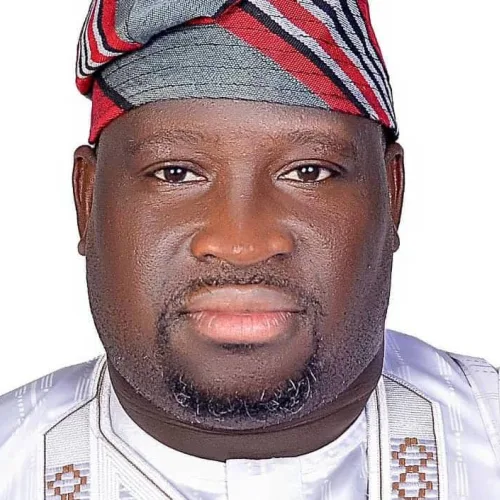
Dr. Abubakar Abdullahi Kuso belongs to the latter category. He appears to have developed an unusual relationship with responsibility: he does not merely accept it; he wrestles with it. When he wrestles with a problem, he seems unwilling to leave until it begins to look like a solution. That is perhaps why his assignment at Niger Tornadoes has become more than a football appointment—it has become another exhibition of his temperament.
Consider the Bako Kontagora Stadium in Minna. For years, Niger Tornadoes, the Ikon Allah Boys, had to wander away from home for their fixtures. A football club whose emotional geography is Minna was ironically forced to borrow other people’s grounds. Home was no longer where the heart was, but wherever the next acceptable pitch could be found.
Then came Kuso.
Appointed as chairman of the management committee of Niger Tornadoes in June 2024, he took charge after Governor Umaru Bago expressed confidence that Kuso could reposition the club through proactive leadership and return it to its glory days. Kuso did not arrive with the luxury of time; he arrived with a problem. Characteristically, he immediately began looking for a solution.
Under his watch, the Bako Kontagora Stadium was put on the road back to relevance. The renovation was designed to bring the facility up to contemporary standards—including a modern synthetic playing surface—allowing Niger Tornadoes to finally return home. That is the part of Kuso’s story that deserves attention: not merely that a stadium was renovated, but that a man took responsibility for a problem that had become accepted as normal.
There is a dangerous word in public life: impossible. It is often used to decorate delay, excuse incompetence, and—when repeated enough—pass off as reality. Kuso appears to operate from a different dictionary, one with fewer impossibilities and more imperatives: Do it. Start it. Finish it.
That disposition is not new. Before Niger Tornadoes, Kuso emerged prominently as national coordinator at BTSO, building a reputation for mobilization, organization, and people-centered engagement. His work placed him in contact with political actors, youth groups, and local communities, giving him a rare understanding of how to unite people around a shared objective.
Perhaps one of the most important chapters in his journey was his federal appointment prior to the Tornadoes assignment. President Bola Ahmed Tinubu appointed Kuso as Executive Director, Planning and Design, of the Upper Niger River Basin Development Authority. In that capacity, he oversaw the planning and design of development projects covering Niger, Kaduna, and the Federal Capital Territory.
That appointment is significant because it proves the leadership now being tested in football did not begin there. Before he was asked to help rebuild a football club, he had already been entrusted at the federal level with infrastructure and regional development planning. The assignments may appear distinct, but they share a common thread: planning, coordination, execution, and delivery. A football club needs those qualities, and so does a development authority. Public leadership, at its best, is ultimately about turning plans into tangible assets people can see, use, and benefit from.
This is why the Kuso story should not be reduced to the recent renovation of a stadium. The arena is merely the latest piece of evidence. Leadership is rarely born in the moment of appointment; an appointment reveals a person rather than creates them. The Kuso seen at Niger Tornadoes is not a sudden invention, but the continuation of established traits: a willingness to mobilize, an instinct to organize, an appetite for responsibility, and a habit of standing with people rather than above them.
His supporters describe him not simply as an administrator, but as a leader who backs people and assumes responsibility strongly. Uncomfortable with passive leadership, his impact has not gone unnoticed by traditional institutions either. In September 2023, during celebrations marking the 20th anniversary of the coronation of the Etsu Nupe, Kuso was conferred with the traditional title of Dan Wadatan Nupe. Traditional titles are not ordinary decorations; in their deepest sense, they acknowledge service, identity, and standing within a community.
The Etsu Nupe saw something worth honoring, the political space saw something worth deploying, the federal government saw something worth entrusting with development, and the football community is now seeing something worth testing.
Governor Umaru Bago deserves commendation for recognising that potential. Appointments should not merely reward yesterday; they should anticipate tomorrow. A leader should be given responsibility because there is reason to believe he can enlarge it, and Bago’s choice of Kuso reflects precisely that calculation.
Niger Tornadoes does not merely need a chairman who can attend meetings; it needs one who can make meetings produce movement. Football is more than ninety minutes between two goalposts—it is administration, infrastructure, youth development, morale, identity, and economics. Kuso appears to understand the assignment.
The mandate given to the management was ambitious: improve the club’s fortunes, push toward the top of the league, and secure a continental ticket. The team moved quickly on the technical side, including hiring experienced coach Kabiru Suleiman Dogo. Yet the stadium remains the most eloquent metaphor for Kuso’s style.
A stadium is more than concrete, synthetic turf, seats, and floodlights—it is a promise. It tells players they can come home, tells supporters their club belongs there, and tells young boys kicking improvised balls in the neighborhood that a proper field awaits their dreams. When the renovated Bako Kontagora Stadium opens its doors again, its significance will extend beyond football. It will mark a victory over the culture of unfinished business—a culture where projects stall, committees are forgotten, and problems become so familiar that people stop expecting solutions.
The real value of figures like Kuso is that they challenge those diminished expectations. They make delivery possible again and remind the public that responsibility should have visible consequences.
A federal appointment, a traditional title, a political assignment, and a football chairmanship are all forms of recognition, but recognition alone means little. The real test is execution. Kuso’s story is still being written, and the renovated stadium is a beginning rather than a conclusion. The club must perform, management must sustain momentum, and Kuso must prove that his operational urgency can translate into lasting sporting success.
That is the harder test, but it is precisely the kind that suits a man whose reputation is tied to action. There are public appointments that consume people, and there are people who consume assignments. Give Kuso a difficult task, and he doesn’t ask why it is hard—he asks where to begin.
That is the difference between a caretaker who preserves what exists and a go-getter who asks what can exist. Niger State needs more of the latter, and so does Nigeria. For Kuso, the stadium is not just a venue, but a statement written in concrete and turf: Give me the responsibility. Let me get to work.
Comments
Start the conversation about this story.