





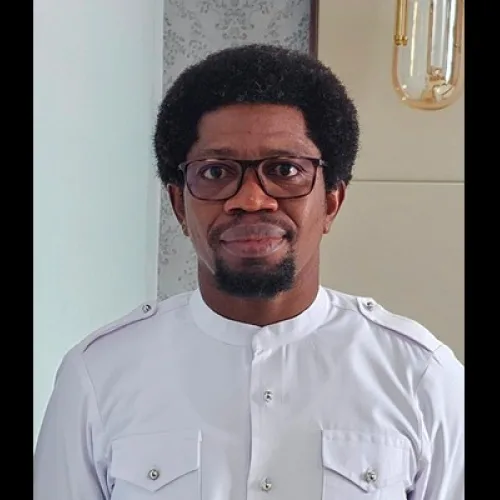
The Petroleum and Natural Gas Senior Staff Association of Nigeria (PENGASSAN) has elected Bosun Olabiyi-Agoro as its new national president, ushering in a new three-year leadership focused on job security, workforce transformation and stronger industrial relations in Nigeria’s evolving energy sector. Agoro emerged unopposed at the association’s Delegates’ Conference in Abuja on Saturday, succeeding Festus Osifo, who completed his two-term tenure as m PENGASSAN president.
Olabiyi-Agoro’s emergence marks a leadership transition within one of Nigeria’s most influential energy-sector unions, following Osifo’s six-year tenure as PENGASSAN president. Osifo, however, remains active in the labour movement as President-General of the Trade Union Congress (TUC), a position he will occupy for another three years.
Most of the national executive positions were also filled without contest, with the exception of National Auditor I. The leadership transition comes at a critical period for Nigeria’s oil and gas industry, as operators accelerate restructuring, automation, digitalisation and investments linked to the global energy transition.
In his acceptance speech, the new president said protecting employment would be at the centre of his administration, particularly as artificial intelligence and new technologies reshape jobs across the energy industry. He said PENGASSAN would pursue agreements that support a “just transition”, including retraining, redeployment and skills development for workers whose roles are affected by technological and structural changes.
“Agreements signed must be agreements kept. Where there is fairness, we will collaborate; where there is injustice, we will resist peacefully, lawfully and powerfully,” he said. Olabiyi-Agoro, a petroleum engineer with the Nigerian Upstream Petroleum Regulatory Commission (NUPRC), also pledged to strengthen collective bargaining and improve engagement between workers and employers. He said the union would regard management as partners where fair labour practices were maintained, but would challenge policies and practices it considers detrimental to workers’ rights.
A major concern highlighted by the new PENGASSAN leadership is the growing use of contract staffing and casual employment arrangements in the oil and gas industry. Agoro warned employers against using outsourcing arrangements to undermine workers’ rights, arguing that employees who have performed the same roles over several years should not continue to be treated as temporary workers.
“The era of exploiting workers through contract staffing is over,” he said. Beyond industrial relations, the new leadership plans to increase investment in digital skills, leadership development and mentorship, while promoting greater participation of women and young professionals in the association’s decision-making structures. Agoro also pledged to make the safety, welfare and dignity of workers central to the union’s engagement with employers and regulators.
Other newly elected PENGASSAN national officers are George Nwoko, Deputy President; Dominic Abang, National Industrial Relations Officer; Amaoge Chukwudi, National Treasurer; Tijani Oyabure, National Financial Secretary; and Lavin Aghaunor, National Publicity Relations Officer. Ada Mbanaso was elected National Chairperson of the PENGASSAN Women Commission, while Chidinma Anyanwu emerged as National Secretary of the commission. Rex Orji and Muhammad Ismail were elected National Auditor I and National Auditor II, respectively.
Olabiyi-Agoro holds a Master of Science degree in Petroleum Engineering from the University of Aberdeen, United Kingdom, a Postgraduate Certificate in Computing from London Metropolitan University, and a Bachelor of Technology degree in Chemical Engineering from Ladoke Akintola University of Technology, Ogbomoso. Before becoming PENGASSAN president, he served as Chairman of the Trade Union Congress, Oyo State Council. His three-year tenure is expected to test the union’s ability to balance workers’ interests with the restructuring needs of an oil and gas industry undergoing significant technological, regulatory and investment changes.


Comments
Start the conversation about this story.