





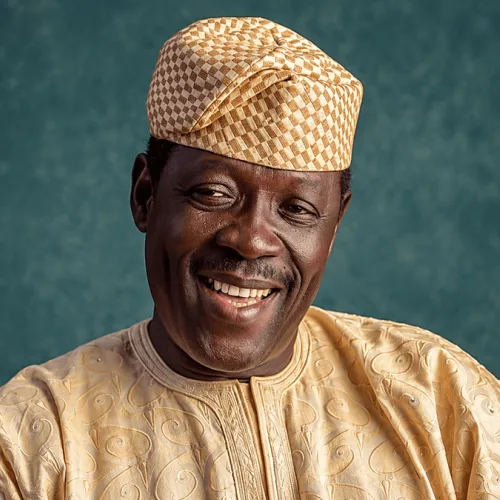
He moved through the frame like a man who had always known the weight of authority. Tall, dark, voice carrying the measured cadence of an oriki chant, Taiwo Hassan, Veteran Yoruba Nollywood actor, filmmaker, producer, director and screenwriter, known to millions simply as Ogogo, has died at the age of 66 after a battle with stage-four cancer.
On screen he was the Alaafin who commanded silence, the chief whose glance settled disputes, the elder whose presence alone suggested that the world still answered to order. Off screen he was a mechanic who had once fixed engines and later fixed scenes, a twin who had outlived his brother, a Muslim who carried the quiet dignity of a man content to let his work speak.
Born on the last day of October 1959 in Ilaro, Ogun State, into a lineage already marked by twins, he grew up knowing both abundance and interruption. School ended early for lack of funds; the technical college and the water corporation followed.
For thirteen years he worked with his hands on automobiles until, in 1994, he set those tools aside and walked fully into the makeshift studios and dusty locations of Yoruba cinema.
He had begun acting more than a decade earlier, almost casually, but once committed he never looked back. Over four decades he appeared in hundreds of films, writing some, producing others, directing when the story demanded it. The nickname Ogogo, drawn from his maternal line, became a byword for vigorous action; street talk still carries the phrase “Action po bi Ogogo.”
Read also: Multiple air strikes kills 38 terrorists in Borno
His characters rarely sought sympathy. They claimed space. In Aníkúlápó he was the Alaafin Ademuyiwa, a king whose presence lingered after the credits. Elsewhere he was the unyielding father, the powerful chief, the man whose silence weighed more than other men’s speeches.
Colleagues remembered a craftsman who arrived prepared, who understood the rhythm of Yoruba storytelling, who could shift from quiet intensity to sudden force without apparent effort. The industry that once filmed on VHS and later on digital cameras found in him a constant: reliable, commanding, never trivial.
Illness arrived late and without ceremony. What the family first treated as an ulcer revealed itself, only weeks before the end, as stage-four cancer. Hospitals reached the limit of what chemotherapy could offer. Daughters spoke publicly of pain and of the search for any remaining door.
Colleagues gathered in prayer; offers of help arrived in the hundreds. On a Sunday in August 2026 the door closed. He was sixty-six.
Those who watched him on screen will remember a man who made authority look inevitable. In the long chronicle of Yoruba cinema, Ogogo stands as one of those figures who did not need to shout to be heard. He simply occupied the space, and the space accepted him.


Anthony Udugba is a seasoned entertainment business journalist at BusinessDay Media, boasting over four years of experience in the creative industry. With a proven track record of delivering insightful analysis and in-depth coverage, he leverages industry data, expert opinions, and stakeholder insights to craft compelling stories that shed light on the dynamic creative ecosystem.
Comments
Start the conversation about this story.