





President Bola Tinubu has directed that all funds recovered by the Economic and Financial Crimes Commission (EFCC) that have been legally cleared and are free from litigation be channelled to the Nigerian Education Loan Fund (NELFUND) to strengthen its financial capacity and expand access to tertiary education.
The President also directed that unclaimed dividends and funds in dormant accounts be considered for transfer to NELFUND, subject to the provisions of the laws governing the funds.
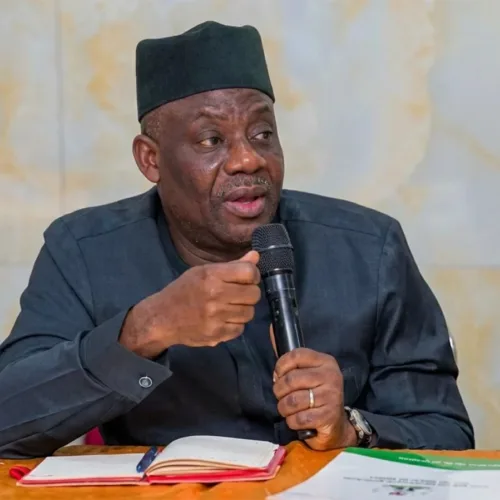
The Minister of Education, Dr. Maruf Alausa who made the disclosure on Monday, said the directive would provide NELFUND with a stronger and more sustainable financial base as the number of beneficiaries of the student loan scheme continues to rise.
Alausa said the directive was part of President Tinubu’s determination to ensure that resources recovered on behalf of Nigerians are put to productive use, particularly in opening up opportunities for young Nigerians.
He said: “As you heard me at the last press briefing following the last Federal Executive Council meeting, Mr. President mentioned that we need to make NELFUND financially buoyant and sustainable into the future.”
The minister explained that during the FEC meeting, the President directed that “all seized funds, unencumbered funds free of litigation, by the Economic and Financial Crimes Commission should be diverted to NELFUND to support the growing obligations of the Fund.”
Alausa added that the President had expanded the funding direction to include other dormant public resources.
“Together with the directives by Mr. President on the seized EFCC funds, which will now be directed to fund NELFUND, Mr. President also directed that all unclaimed dividends from the capital market trust funds, as well as funds in the dormant account trust fund, should also be moved to support the financial sustainability of NELFUND.”
According to him, the Federal Government would not transfer funds arbitrarily, as the process would be subjected to the relevant legal provisions.
He said the Attorney-General of the Federation had been mandated to work with the Ministers of Finance and Education and other relevant institutions to determine how the directive would be implemented within the law.
“During that meeting as well, Mr. President directed the Minister of Finance, myself and the Attorney-General of the Federation to work on the modalities to operationalising this.
“More importantly, the Attorney-General will review the Act setting up the unclaimed dividend trust fund as well as the dormant account trust fund to see how we can be legally compliant in moving those funds.”
The minister said where necessary, amendments would be made to existing legislation to provide a sound legal foundation for the transfer.
“If changes would have to be made to the Act, whatever, the Attorney-General is looking into that,” he added.
Alausa described the development as a major boost for Nigerian students, saying the Tinubu administration was determined to ensure that financial constraints did not prevent qualified young Nigerians from accessing tertiary education.
“This is a time that is great for Nigerian students. You have a President, President Bola Ahmed Tinubu, that believes fervently and benevolently in education and continues to push day and night to ensure that every single Nigerian youth gets the best opportunity to be useful to themselves, useful to their community, to the country and the global world at large.”
The minister also commended Tinubu for the political backing and financial support given to the education sector, saying the administration was pursuing a broad transformation of the nation’s education system.
He said the President’s directive to the Ministry of Education was clear: “every single Nigerian child in this country, every single Nigerian student in this country should have the best quality and the best education that is comparable to anywhere in the world.”
Alausa said government interventions were already producing improvements in the education sector, including the quality of education, services available to students and the welfare of academic and non-academic staff in tertiary institutions.
He added that similar interventions were being extended to basic and senior secondary education as part of efforts to strengthen the entire education value chain.
“We’ve never had it so good in the education sector,” the minister declared, while expressing appreciation to the President for his continued support.
On the sustainability of NELFUND, Alausa said the new funding sources would complement the existing 15 per cent allocation from the development levy and significantly strengthen the Fund’s capacity to meet its obligations.
“But to summarise, NELFUND, beyond the 15 per cent allocation from the development levy, is now positioned to be financially buoyant into the near future, into the distant future and sustainably to eternity,” he said.
The minister disclosed that more than 1.2 million Nigerian students in tertiary institutions are currently benefiting from NELFUND.
As of August 8, 2026, NELFUND had disbursed more than N322 billion in institutional fees and upkeep allowances to beneficiaries across the country.
Established in 2024 following President Tinubu’s assent to the Student Loans Access to Higher Education Act, NELFUND provides interest-free loans to eligible students in tertiary institutions.
Alausa said the new funding arrangement went beyond providing immediate financial assistance to students, describing it as a mechanism for converting recovered national resources into investments in Nigeria’s human capital.
According to him, sustained investment in education remains critical to building the skilled workforce required to drive economic growth, improve productivity and support the country’s long-term development ambitions.
The Federal Ministry of Education, he said, would continue to work with NELFUND and other relevant government institutions to ensure that the new funding arrangements were implemented transparently and in accordance with the law.
He reaffirmed the ministry’s commitment to expanding access to quality education and ensuring that financial difficulties did not prevent qualified Nigerian students from pursuing tertiary education.
Please follow and like us:
Comments
Start the conversation about this story.