





Navigating the path to a temporary U.S. visa often feels daunting. A common worry involves the fear that a consular officer might doubt the intention to return home after the trip.
- What does ‘intent to return’ mean?
- Provide evidence checklist for proving economic ties
- Employment can demonstrate an ongoing commitment
- Business ownership and professional responsibilities
- Family relationships can also matter
- The interview matters as much as the paperwork
- Tell the truth instead of constructing a perfect story
- Do not confuse financial capacity with intent to return
- Avoid unnecessary documents
- Prepare for credibility, not performance
- What to do if close family members live permanently in the United States
- What happens after 214(b) refusal
- Frequently Asked Questions
- What specific financial documents best demonstrate strong economic ties during a visa interview?
- Can an applicant reapply immediately after receiving a rejection based on lack of intent to return?
- How do consular officers view close family members already living permanently in the destination country?
For many nonimmigrant visa applicants, this concern centers on INA Section 214(b). Immigration law generally assumes that anyone applying for a nonimmigrant visa might intend to immigrate unless the applicant can prove eligibility for temporary status.
This does not require finding one “magic document.” Instead, success comes from presenting a clear, honest, and consistent picture of the applicant’s life, the purpose of the trip, and established roots at home. Preparation should focus on understanding what the officer needs to see, rather than just piling up documents.
To secure a nonimmigrant visa, applicants must qualify for temporary admission based on the specific category requested. Under Section 214(b), the applicant must overcome the assumption of immigrant intent by highlighting strong ties to the home country like stable employment, a home, or close family bonds that ensure a return at the end of the trip. These ties are not one-size-fits-all; they vary depending on the applicant’s unique circumstances.
A university student, a busy professional, and a business owner will all have different ways to show their commitment to returning home, so no universal checklist guarantees approval.
What does ‘intent to return’ mean?
Proving economic ties means showing that you have strong commitments outside the United States that give you a reason to return after your trip.
Useful evidence may include current employment documents, recent payslips and a letter from your employer confirming your role. If you own or operate a business, registration documents and records showing your ongoing professional responsibilities can also help.
Proof of property ownership or stable housing, as well as financial records that are consistent with your income and lifestyle, may further support your application.
However, avoid gathering documents simply for appearances. For instance, making a large, unexplained deposit shortly before a visa interview could raise more questions than it answers.
The goal is not to present the largest possible pile of documents, but to show consistency, credibility and genuine reasons to return home.
ALSO READ: Dominate online courses: Time management tips for distance learning students
Provide evidence checklist for proving economic ties
A steady job acts as a strong indicator of an existing professional commitment outside the United States. The most effective employment evidence should accurately mirror the applicant’s true circumstances.
An employment letter typically confirms the position, tenure, salary, and any approved time off. Students might instead focus on continued enrollment and an academic schedule, while business owners can provide registration documents and evidence of ongoing operations. The key factor is whether the applicant’s overall story makes logical sense.
Employment can demonstrate an ongoing commitment
Entrepreneurs and professionals demonstrate ties through ongoing responsibilities at home. Registered companies, active operations, contracts, and professional obligations serve as solid evidence of reasons to return.
This documentation must align with the applicant’s actual role. If a business owner cannot clearly explain the daily operations or the necessity of returning to manage the company, it may cause confusion. It helps to view the interview as a chance to explain reality rather than a performance.
Business ownership and professional responsibilities
Family bonds also play a part. While not every applicant requires a spouse, children, or elderly parents to qualify, these relationships form a significant piece of the puzzle. A parent with children remaining at home, for instance, has a different set of circumstances than a young, single applicant. The assessment always comes back to the individual’s unique situation.
Family relationships can also matter
Having family members in the United States does not automatically mean a visitor visa application will be refused. However, their presence may form part of the consular officer’s overall assessment of the purpose of the trip and the applicant’s circumstances.
The US Department of State generally expects visitor visa applicants to demonstrate strong ties to their home country rather than rely on assurances from relatives in the United States. An invitation letter or affidavit of support, on its own, does not guarantee visa approval.
For this reason, applicants should be honest about relatives living in the US and clearly explain the temporary nature of their visit. Attempting to hide family relationships can create greater problems than simply disclosing them.
The interview matters as much as the paperwork
Submitting documents is only part of the process. Applicants must also be able to explain their circumstances consistently during the interview.
If a parent or relative is paying for the trip, say so. If you recently started a job or business, provide the correct information rather than creating a longer employment history.
The information in the application, supporting documents and interview responses should tell the same story. Inconsistencies can raise doubts about the applicant’s credibility.
Tell the truth instead of constructing a perfect story
Applicants should avoid exaggerating their financial situation, employment history or reasons for travelling.
A person with modest finances can still have a legitimate reason to visit the United States. The important thing is to present their circumstances accurately.
If someone else is funding the trip, that should be stated clearly. Likewise, applicants should not invent property, businesses, jobs or other ties simply because they believe such evidence will strengthen their application.
Do not confuse financial capacity with intent to return
Having enough money to pay for a trip and having strong reasons to return home are two different issues.
Financial records can help demonstrate that an applicant can afford the proposed trip, but a large bank balance does not automatically prove an intention to return. Similarly, having modest savings does not necessarily mean an applicant will be refused if the overall circumstances are credible.
Employment, education, family responsibilities, business interests and other commitments may help demonstrate ties to the applicant’s home country.
Avoid unnecessary documents
More paperwork does not necessarily mean a stronger application. Applicants should focus on relevant documents that support the information provided in their application.
A clear and consistent application is generally more useful than a large collection of documents with little connection to the purpose of the trip.
Prepare for credibility, not performance
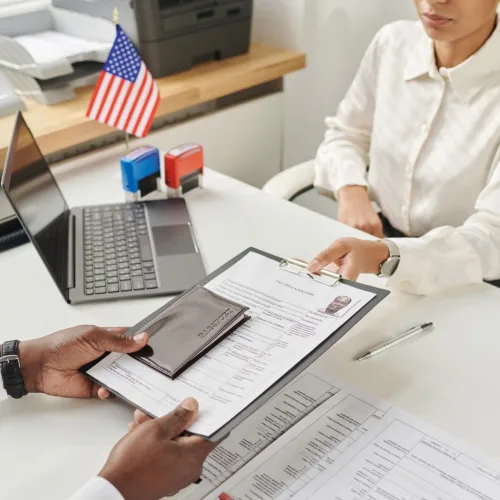
A visa interview is not a competition to see who can present the thickest folder or deliver the most polished speech.
The key is to demonstrate that the proposed trip is genuine, temporary and consistent with the applicant’s circumstances and the requirements of the visa category.
Applicants should understand the details of their application, know why they are travelling, be clear about how long they intend to stay and provide relevant supporting documents where necessary.
Most importantly, they should answer questions honestly and avoid manufacturing evidence or ties that do not exist. Credibility and consistency are more important than trying to present a perfect story.
What to do if close family members live permanently in the United States
Having close relatives in the US may lead to additional questions about the applicant’s plans, but it does not automatically disqualify them from obtaining a visitor visa.
Supporting documents can help provide context, but carrying a large folder of paperwork does not guarantee approval. The consular officer considers the information in the application alongside the applicant’s responses during the interview.
Questions may cover the purpose and duration of the trip, employment or education, who will pay for the visit, previous international travel and plans after returning home.
Applicants should answer clearly and truthfully. There is no need to memorise long speeches, as overly rehearsed responses can make straightforward circumstances appear complicated.
What happens after 214(b) refusal
A refusal under Section 214(b) is not necessarily permanent. An applicant can apply again, but they must submit a new application and pay a new visa fee.
When reapplying, it is important to consider whether there have been meaningful changes in the applicant’s circumstances since the previous application.
For example, a new job, improved financial circumstances, a change in academic status or a different and clearly defined travel purpose may provide relevant new information.
Simply submitting the same application and documents without addressing the circumstances that led to the previous refusal may not improve the chances of approval.
Frequently Asked Questions
What specific financial documents best demonstrate strong economic ties during a visa interview?
There is no universal financial-document package that guarantees approval. Depending on the circumstances, relevant evidence may include employment records, payslips, business records or other documentation demonstrating legitimate income and financial circumstances. The Department of State states that applicants may be asked to provide evidence of their ability to pay trip costs and that employment or family ties may help demonstrate intent to return.
The documents should accurately reflect the applicant’s genuine financial situation.
Can an applicant reapply immediately after receiving a rejection based on lack of intent to return?
An applicant can reapply after a Section 214(b) refusal, but the Department of State recommends being able to present evidence of significant changes in circumstances since the previous application. A new application and visa fee are required.
Reapplying with exactly the same circumstances and evidence may not address the reason for the original refusal.
How do consular officers view close family members already living permanently in the destination country?
Having relatives in the United States does not automatically result in refusal. However, for visitor-visa applicants, the State Department says eligibility is based on ties abroad rather than assurances from U.S. family and friends.
Applicants should therefore disclose relevant family relationships truthfully and be prepared to explain the temporary purpose of the trip and their circumstances at home.
Comments
Start the conversation about this story.