






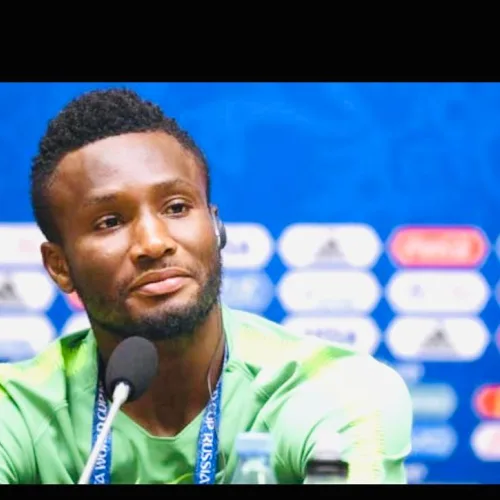
Former Super Eagles captain, John Obi Mikel, has called on the leadership of the Nigeria Football Federation (NFF), led by Ibrahim Musa Gusau, to step down, insisting that Nigerian football needs a fresh direction.
Mikel made the call amid growing criticism of the NFF following a series of disappointing results involving Nigeria’s national teams, including the Super Eagles’ failure to qualify for the 2026 FIFA World Cup. Blueprint reports
Speaking on the Joy Sports Podcast in Ghana, the former Chelsea midfielder said there was an urgent need for changes within the NFF if the country’s football was to grow and return to competing at the highest level.
“We want changes in the Nigeria Football Federation (NFF) because we want to grow our football,” Mikel said.
Mikel demands fresh leadership
Mikel argued that Nigeria could not continue with the same leadership structure after failing to qualify for two consecutive FIFA World Cup tournaments.
The Super Eagles missed the 2022 World Cup in Qatar and subsequently failed to secure a place at the 2026 tournament in the United States, Canada and Mexico.
The former midfielder described the situation as unacceptable for a country with Nigeria’s football pedigree and called for the right people to be put in charge of the sport.
“We haven’t qualified for the past two World Cups, which is a shame. We cannot allow that to happen a third time. We have to ensure we get the right people to run Nigerian football to grow and be better,” he said.
His latest comments add to previous calls for the resignation of the NFF leadership.
In March, following Nigeria’s failure to qualify for the 2026 World Cup, Mikel had similarly demanded that officials running the federation resign, arguing that responsibility for the setback should extend beyond the coaching crew and players.
Pressure mounts on Gusau-led board
Mikel’s call comes at a time of heightened pressure on the Ibrahim Gusau-led NFF board.
The Super Eagles’ World Cup qualification failure has been followed by another major setback, with the Super Falcons failing to qualify for the 2027 FIFA Women’s World Cup.
Several other Nigerian national teams have also experienced qualification setbacks, prompting renewed questions about the administration and technical direction of Nigerian football.
The mounting pressure has triggered calls from former internationals and football stakeholders for a major overhaul of the federation.
Former Nigeria international Richard Owubokiri has also called for the NFF board to resign, saying the country needs a fundamental change in the system governing its football.
NFF board faces possible shake-up
The calls for the board’s resignation have coincided with reports of possible changes within the federation.
Reports indicate that members of the NFF Executive Committee have been considering mass resignation amid pressure for a restructuring of Nigerian football.
According to reports, as many as nine of the 13 members of the NFF board had signalled their intention to resign, potentially paving the way for a normalisation committee to oversee the administration of the game.
However, the situation remains fluid, with reports previously indicating that the board had resisted calls to resign.
The National Sports Commission had also clarified that the Federal Government had not ordered the NFF leadership to resign, although consultations were reportedly ongoing over possible reforms to the administration of Nigerian football.
Mikel questions direction of Nigerian football
Mikel’s criticism goes beyond Nigeria’s failure to qualify for one tournament.
The former Super Eagles captain has repeatedly argued that the country’s football problems are rooted in the administration of the game and the structures responsible for its development.
He has pointed to the progress being made by other African football nations, particularly Morocco, as evidence that Nigeria should be doing much more with its enormous football talent and resources.
Mikel said Nigeria should be leading the development of African football rather than falling behind other countries.
The former midfielder, who won the UEFA Champions League with Chelsea and earned 89 caps for Nigeria, played at the 2014 and 2018 FIFA World Cups.
Calls for wider reforms
Beyond Mikel’s demand for a change of leadership, other stakeholders have called for structural reforms within the NFF.
Football reform advocate Harrison Jalla has also demanded an overhaul of the federation’s structure and electoral system, arguing that the current system requires fundamental changes rather than temporary adjustments.
The growing campaign for reform comes as the NFF prepares for its elective congress, which had been scheduled for September 27 in Lafia, Nasarawa State.
The possibility of a board resignation and the reported consideration of a normalisation arrangement could, however, alter the immediate direction of the federation.
For Mikel, the priority is clear: Nigeria must change the people and structures responsible for running its football if the country is to reclaim its position among Africa’s leading football nations.
The former captain’s latest intervention is therefore likely to add further pressure on the Gusau-led board as stakeholders continue to demand accountability and a new direction for Nigerian football.
Comments
Start the conversation about this story.