





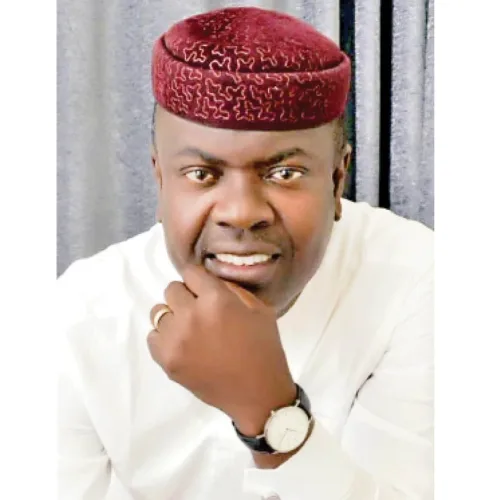
Hon. Victor Kolade Akinjo, is a three-term member of the House of Representatives who represented Ilaje/Ese-Odo federal constituency. He speaks with YINKA OLADOYINBO, on the Ondo APC crisis, reconciliation and the role of Interior Minister, Bunmi Tunji-Ojo in securing and winning the state for President Bola Tinubu and other national issues. Excerpts:
How would you assess the current state of the APC in Ondo State amid reports of growing divisions within the party?
The question is quite complex, but the reality is that the All Progressives Congress (APC) remains a strong political family in Nigeria. At the national level, the party is led by President Bola Tinubu, who, in my view, has demonstrated remarkable leadership, administrative capacity, political dexterity and inclusiveness in managing the affairs of the country and the party.
The APC, as it stands today, remains a party with the strength and structure to win elections. At the national level, the party is united and positioned for electoral success. The question, however, is whether the same level of political management, inclusiveness and accommodation is being replicated in Ondo State by the person who is expected to represent the president and lead the party at the state level, which is the governor. My answer is absolutely no.
The governor, as the leader of the party in the state, is expected to reflect the same qualities of inclusiveness, accessibility and political accommodation demonstrated by the President. He should be seen as a governor for all interests and not for a particular group or faction. That is what democracy is about. It is not enough for people to work for you to become governor and then, after attaining office, you unilaterally run the state without consulting or accommodating the people who contributed to your emergence.
Unfortunately, that same spirit of inclusiveness and political management is not being sufficiently demonstrated at the state level. A governor who is also the leader of the party should be relatable, accessible, fair and open to all stakeholders. But many party members feel excluded. There are complaints about inadequate consultation, lack of patronage, disregard for established party structures and failure to accommodate people who contributed significantly to the success of the party and the administration. The events surrounding the recent party primaries have further exposed these grievances. It is clear that not everybody is happy with the way things have unfolded. While I believe there are mechanisms within the party for reconciliation and I remain hopeful that the issues can still be resolved, the reality is that there is a state of political entropy within the APC in Ondo State. The governor has not, in my assessment, demonstrated sufficient capacity to unite all the interests within the party. Sincerely, I would describe the situation as a political catastrophe because the leader of the party in the state has not demonstrated enough competence and capacity to bring everybody together.
The APC remains a strong party nationally, and there is no doubt about its capacity to win elections. But the strength of the party at the national level must also be reflected in its management at the state level. If the party is to remain united and achieve victory in 2027, all stakeholders must feel that they belong and that their contributions are recognised.
How could the reported divisions within the APC in Ondo State affect the party’s chances in the 2027 elections, particularly President Tinubu’s re-election bid?
The APC remains strong and energised, and members are committed to ensuring that President Bola Tinubu returns to office to continue his developmental and infrastructure agenda. There is no doubt that everybody wants the president to succeed.
However, the issues within the party must not be ignored. In the spirit of democracy, there must be genuine reconciliation because leadership requires inclusiveness and participation, not unilateral decision-making. Nobody should see political leadership as making him a lord over others. Fortunately, there is no strong opposition in Ondo State at the moment. The PDP is no longer as strong, and there is no formidable opposition capable of taking advantage of the situation. What we are witnessing is largely internal commotion, and I believe these issues can still be resolved. The priority should be to reconcile the different interests within the party and ensure that the APC goes into 2027 as a united family.
Do you believe the reconciliation committee headed by Prince Biyi Poroye can resolve the crisis within the APC in Ondo State?
This is a great man. Biyi Poroye is a smart man, a fantastic politician and a political enigma, and I have great respect for him. I support the reconciliation committee, but the governor must give him the authority and resources to work effectively, both as OSOPADEC chairman and as head of the reconciliation process.
Reconciliation is an ongoing process, and Poroye has already started engaging key stakeholders. I have seen him meet with the governor, and I expect him to meet the minister and other stakeholders. His body language shows that he genuinely wants reconciliation because we need unity to win elections.
However, the reconciliation must be genuine and address the root causes of the grievances. There are concerns about lack of patronage and respect, and reports that former political office holders are being pushed aside. Some commissioners are also reportedly unhappy, with offices but inadequate resources and limited freedom to function. People are not unhappy because they want to be; they are unhappy because they feel someone is making them unhappy. Those responsible must address the situation. At the same time, anyone contributing positively to the welfare of the people should be encouraged. The president is bringing resources to the state, while the Minister of Interior, Dr Olubunmi Tunji-Ojo, is also supporting people through food distribution, provision of reading glasses and empowerment programmes. These efforts should be encouraged.
You mentioned individuals supporting and empowering party members. Who are you referring to specifically?
We have three ministers, but not all of them are political. I am referring specifically to the Minister of Interior, Dr Olubunmi Tunji-Ojo, who has demonstrated considerable capacity in reaching out to people and meeting their needs. As for his relationship with Governor Aiyedatiwa, they should return to the period when the governor was deputy governor and later acting governor. Their relationship at that time did not weaken the APC; rather, it contributed to strengthening the party and supporting the governor’s political journey. What we are witnessing now is largely unnecessary rivalry, particularly from the governor. The governor has enjoyed the political loyalty and investment of many of us, including Tunji-Ojo, and he should ask himself whether he has reciprocated that investment. We all have a responsibility to stabilise the APC in Ondo State and give President Tinubu an unprecedented victory in 2027. That is why we cannot remain silent when things are not being done properly. There is no strong opposition in the state at the moment, so the major challenge is managing internal differences. Our political destiny is tied to the APC, and we are stakeholders in the development of the state. The governor must therefore understand the responsibility he carries and avoid creating another crisis while trying to manage the one already at hand.
Do you think the reported crisis is linked to Tunji-Ojo’s alleged ambition to succeed Governor Aiyedatiwa?
I don’t believe the crisis is caused by Tunji-Ojo’s ambition. People are simply reading meanings into his actions because of his generosity, political maturity and the support he gives to people. When someone consistently responds to people’s needs and contributes to their development, they naturally begin to speculate about his political future.
Aspiration is part of life and there is nothing wrong with people aspiring to leadership. What is important is that such aspirations should not become a source of unnecessary rivalry. The governor should focus on governing the state, continue to democratise, relate with the people and serve their interests. He will not remain governor forever. There is also no contradiction between Tunji-Ojo’s possible political aspiration and the development of Ondo State. As for Section 182(3) of the Constitution, the governor is constrained by its provisions, and there is nothing anyone can do about that.
On support groups, they are legitimate expressions of democracy. They are voluntary associations through which people express their political preferences and support individuals or causes they believe in. Nobody can stop people from forming or joining them, provided they operate within democratic norms.
In every democracy, there are gaps, and these groups may be filling some of those gaps. They should therefore be encouraged to contribute positively to democracy. The governor is also free to support or establish as many groups as he wants. People are equally free to support whoever they choose. These groups will continue to emerge and evolve, particularly as we approach the next general election.
What is your position on the controversies over the APC primaries and the subsequent decisions by the National Working Committee (NWC)?
The APC has the constitutional right to manage its internal affairs. If the party conducts a primary and later reviews the process because of complaints and takes a different decision, members should respect that decision. I therefore support the decisions of the APC National Working Committee. I may not be a direct beneficiary of such decisions, but the larger interest of the party must come first. The Supreme Court has, in several cases, affirmed the principle that political parties have substantial control over their internal affairs. If the party leadership has acted within its powers, members should respect the process and seek reconciliation rather than undermine the party. At the end of the day, it is the party that appears on the ballot, not the individual. We must therefore learn to respect the decisions of our political parties and protect the larger interest of the APC.
What is your advice to APC members challenging the NWC’s decisions in court, particularly in the interest of reconciliation and party unity?
They are unlikely to achieve much through prolonged litigation. As a lawyer, I understand the desire to seek fairness through the courts, but I do not see the cases succeeding. I believe they should instead embrace the reconciliation process being pursued by the committee.
Resources being spent on legal battles could be better used to support the people, assist flood victims, improve education, strengthen security, promote economic growth and develop our communities. Political disagreements should not be allowed to distract the party from these priorities.
How do you assess Nigeria’s current economic and security situation?
Nigerians have undoubtedly faced economic hardship, but there are signs of greater stability. Economic stability is the foundation for growth because it allows businesses, investors and households to plan better. President Tinubu’s reforms, particularly the removal of fuel subsidy and efforts to stabilise the foreign exchange market, have laid a foundation for long-term growth, while the economic team continues to work on improving conditions.
In Ondo State, increased federal allocations should translate into tangible development through better infrastructure, industrialisation, economic zones and policies that put more money in the hands of the people. The Lagos-Calabar Coastal Highway is also a major legacy project that could boost economic activities and connectivity, and the state should leverage such opportunities to attract investment and improve residents’ lives.
Comments
Start the conversation about this story.