





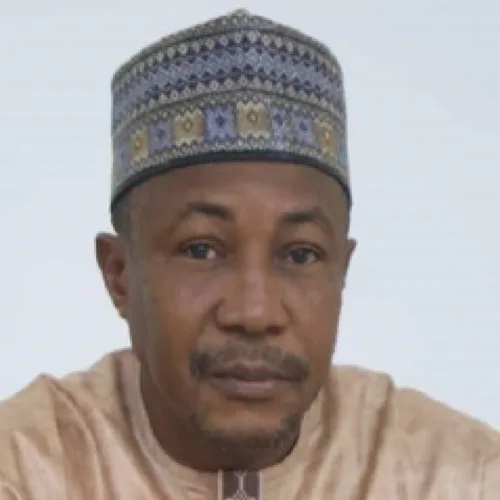
National president of the Medical and Health Workers Union of Nigeria (MHWUN) and chairman of the Joint Health Sector Unions (JOHESU), Comrade Kabiru Ado Sani Minjibir, in an interview with CHRISTIAN APPOLOS, speaks on the 12-year dispute over CONHESS adjustment, the 84-day health workers’ strike, other issues, as well as why presidential candidates should tell Nigerians how they intend to fix the Nigeria’shealth sector challenges.
There have been prolonged agitations in the health sector over welfare and other issues. How has the struggle fared, and what issues remain unresolved?
We have a lot of challenges in the health sector, particularly among the affiliates of the Joint Health Sector Unions (JOHESU) in Nigeria. JOHESU is an amalgamation of all healthcare workers, with the exception of medical doctors and nurses. Although we share the same salary structure with nurses and used to work together, unfortunately, they later left the affiliation. But we are still working with them.
Our major challenges include welfare of workers, lack of equipment in our health facilities and poor working environments. As we all know, healthcare delivery is very critical to the economy. A good working environment facilitates effective and efficient service delivery in the health sector.
But, as the national chairman of JOHESU, the flagship demand I inherited from our members is one that has been before the government for over a decade. The struggle has been on for about 12 and a half years, and that is the issue of CONHESS adjustment.
In 2009, we had two salary structures, which we called CONHESS and CONMESS. The CONMESS circular was basically for physicians, that is, medical doctors, while the CONHESS salary structure was for other professionals in the health sector, ranging from pharmacists, physiotherapists, radiographers, laboratory scientists, community health practitioners, environmental health officers and others.
During the implementation of the two circulars, and when an MOU was signed between the labour side and government, there was a clause that the issue of relativity and parity had been taken care of by the National Salaries, Incomes and Wages Commission. A clause was also included that tinkering with one of the circulars or reviewing it upward would automatically trigger the review of the other. Unfortunately, during the administration of President Goodluck Ebele Jonathan, CONMESS was reviewed upward, leaving CONHESS behind, and the agitation started from there. Along the line, two other major reviews were carried out in favour of CONMESS, while CONHESS was left unchanged.
In summary, CONMESS has been reviewed three times without a single corresponding adjustment to CONHESS. That is the agitation I inherited when I came on board, and the struggle continues.
Last year, precisely on November 15, 2025, we declared an indefinite strike action in the Federal Ministry of Health, shutting down all federal health institutions across the country. The strike lasted for 84 days, making it one of the longest strikes in the history of the health sector in Nigeria. Unfortunately, the government remained adamant, without considering the kind of lives that were lost in federal health institutions during the strike. Health sector delivery is a teamwork. Nobody can monopolise healthcare delivery. Everybody is important.
Even the cleaner, who comes to clean the physician’s office, is important because if that person does not do the job, the physician may not feel comfortable while carrying out his duties.
These categories of workers are very important. We always say it. In my own union, the Medical and Health Workers Union of Nigeria, we have critical workers such as mortuary attendants. Probably, no matter how much you pay someone, he may not want to work as a mortuary attendant. But our members stay there day and night to perform their duties, yet their salaries are meagre.
As a result of the intervention of the two labour centres, the NLC and TUC, we signed terms of settlement with the Federal Ministry of Labour and Employment, stating that the adjustment would be concluded on or before April this year. It may interest you to know that four to five months after the April deadline, the issue is still pending. We reported the matter to the two labour centres, and I know it is already in the public domain.
Just last week, the NLC wrote a letter to the Minister of Labour, reminding him of the government’s promises and warning that there could be another lingering crisis in the health sector if the government failed to do the needful.
We are planning to hold our National Executive Council meeting of JOHESU at the end of this month, and I am quite sure that if nothing is done by the government, we will also serve another ultimatum, and strike action may follow. We hope the government will not put the lives of millions of Nigeria in jeopardy by remaining adamant, refusing to do the needful.
Apart from the CONHESS adjustment, we have other issues, including the outstanding payment of nine months’ arrears of the 25 percent and 35 percent consequential adjustments. We also have outstanding COVID-19 allowances, among others.
But the CONHESS adjustment remains our flagship demand. I want to use this opportunity to call on the government, particularly the Federal Ministry of Health, and other stakeholders, to do the needful.
The Minister of Labour and Employment is the chairman of the CBE committee, while the Minister of Finance is the chairman of the Presidential Committee on Salaries, which is expected to do the needful and pass the CONHESS adjustment through the National Salaries, Incomes and Wages Commission so that this issue can finally be laid to rest. So we are praying and hoping that the government will do the needful to prevent another industrial crisis in the health sector.
Going by the Independent National Electoral Commision (INEC) timeline, campaigns for the presidency have officially begun. What do you expect from the presidential candidates on the health sector?
Of course. Healthcare delivery is one of the most critical sectors in every economy. I believe that the two most critical sectors for development are health and education. It is very unfortunate when you see the kind of “Japa” syndrome we have in the health sector, with healthcare workers leaving the country for Europe and other countries in search of greener pastures. We are losing competent personnel, including physicians, nurses and other healthcare workers. Poor remuneration, inadequate welfare, poor working conditions and lack of hospital equipment are driving our members out of the country.
If you go to rural areas where our members work, you will see situations where a community health extension worker has to use personal resources to provide things in a health facility that should ordinarily be the responsibility of the government. Even in some state hospitals, you find similar problems.
If you go to tertiary institutions and state hospitals, sometimes you will find that they run out of oxygen, which is very critical during emergencies. So, healthcare delivery should be at the forefront of the campaigns. Politicians should put it on their agenda. With state-of-the-art equipment in our health facilities, healthcare delivery in the country will improve. So, healthcare should be at the forefront of the campaigns. And when they win, we will take up the responsibility of reminding them of their campaign promises.
So, you expect presidential candidates to clearly state what they intend to do for the health sector and healthcare workers?
Yes. That is very important. As health workers, we operate all over the country. We work in federal health institutions, at the state level and at the local government level. We are very close to the populace, even at the grassroots.
We have families, and we are the electorates. It is not only politicians or political party leaders who determine who comes into office.
Do you think the government has the capacity and resources to adequately fund the health sector?
First and foremost, it is a matter of priority. The government has to prioritise healthcare delivery.Even if the government says it does not have enough money, it has to start from somewhere. Nigeria’s healthcare sector cannot continue to remain in terrible condition or keep going backwards. With the removal of the fuel subsidy, the government cannot tell us that it does not have money to upgrade the country’s healthcare facilities and operations. Recently, I saw in the news that the government had shared billions of naira accruing from savings from the removal of the fuel subsidy among the Federal Government, states and local governments. Why not deploy part of that money to health, education and other sectors of the economy for the benefit of everybody?
Generally, how would you rate the government’s treatment of workers’ rights, and what should it do to better protect those rights going forward?
The ITUC Global Rights Index publicly reported that, in 2026, Nigeria again falls among the 10 worst countries in terms of trade union rights violations. Without elaborating on that, we are all aware of what is happening to labour leaders and activists in the country day by day in recent times.
So my advice to those holding and wielding political power is, recognise labour leaders and workers as partners in progress, not as enemies of the government. See labour leaders and civil society activists who tell you to do the right thing as partners in the business of a better and progressive Nigeria. That is the path that led developed countries where they are today.
So, I call on the Nigerian government to change its approach in dealing with workers and their leaders. Every worker has rights. We are partners in progress, and the government cannot do without workers, just as we cannot do without the government. We have to work together for the progress and development of our dear country.
Briefly speak on what you know about the situation of the health sector in the States?
Obviously, some states are doing well. They are building more health facilities, taking care of their health personnel, paying salaries as and when due, and some have even improved salaries with allowances such as rural posting allowances.
Recently, there was a circular from the Federal Government on the payment of laboratory and other allowances, and some states have domesticated the circular.
There was also a circular from the Head of the Civil Service on the extension of workers’ retirement age, both in terms of years of service and age. Instead of 35 years in service, it is now 40 years, while the retirement age has been increased from 60 to 65 years.
Some states have already started implementing this because skilled health workers need to be retained so that they can mentor younger ones before retiring from service.
ALSO READ: NOPPMAN lifts suspension on onion exports to Ghana
So, some states deserve to be commended, although they are very few. So I call on state governments to emulate good examples. I equally direct the same call to the Federal government.
I will not mention the states for now because we have plans to tell the public about their performance very soon. Chief medical directors and medical directors of tertiary health institutions, contributions of health workers at the grassroots level are also part of our plan. We will publicise and appreciate those who have performed well. So we are currently monitoring what they are doing at every level.
Comments
Start the conversation about this story.