





By Shola Ogunniyi
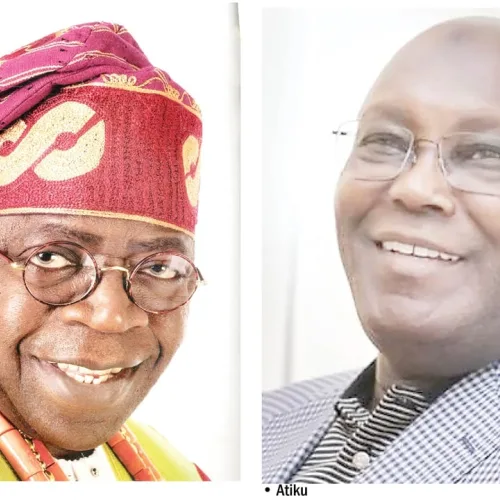
FAROOQ Kperogi’s column of August 22, 2026 in this newspaper, “Why Atiku’s subsidy gambit rattles Tinubu,” is a well-crafted political opinion. Kayode Adebiyi’s rejoinder of 24 August, also in these pages, addressed most of the fiscal errors in Kperogi’s argument. What both pieces left mainly intact, and what this debate urgently needs, is a walk through the actual economics of the oil market: the microeconomics of subsidised commodities, the arbitrage geometry of West African PMS flows, and the second-round effects that turn a nominal fiscal transfer into a much larger financial loss. Without that walk, we are arguing about the colour of a house whose foundation nobody has inspected. Let me first pay the moral debt. The pain of ordinary Nigerians is real. Headline inflation peaked at 34.8 per cent at the end of 2024 before easing to 15.43 per cent in July 2026, according to the National Bureau of Statistics. Food inflation, the number households actually feel, is still 20.31 percent year-on-year. Poverty has climbed from about 40 percent in 2019 to roughly 63 percent, on World Bank counts. That is about 140 million Nigerians living below the poverty line. The ₦70,000 minimum wage is worth about $50 at prevailing exchange rates. Any argument for reform that begins by dismissing this pain has already forfeited its moral standing. Kperogi is largely correct on the discomfort. His error is on the prescription. His prescription, and to a greater extent Atiku’s, would materially worsen Nigeria’s fiscal life.
Now, let us do some arithmetic. Suppose an incoming Atiku administration succeeded in pricing petrol at, say, ₦600 per litre (he may well campaign on a lower figure), which is close to what a realistic AERP-style (Atiku Economic Recovery Plan) production subsidy would deliver once refinery margins and logistics are honestly modelled. The current market-reflective pump price sits between ₦1,200 and ₦1,600 per litre, depending on state and depot. The NBS Petrol Price Watch put the national average at ₦1,596.25 in May 2026. Let us take a midpoint of ₦1,300 for a cleaner analysis. The per-litre subsidy is ₦700. At the Nigerian Midstream and Downstream Petroleum Regulatory Authority (NMDPRA)’s stated consumption of 50 million litres a day, that is ₦35 billion daily, roughly ₦1.05 trillion a month, and ₦12.78 trillion a year. To put ₦12.78 trillion in perspective, it exceeds the combined 2026 federal budget allocations for education (₦3.52 trillion), health (₦2.48 trillion) and infrastructure (₦3.56 trillion), and approaches the ₦15.52 trillion 2026 debt service line.
But this is only the accounting cost. The true economic cost is materially larger, and this is where the oil market’s idiosyncrasy matters. The true cost is what economists call an opportunity cost: the real alternative forgone. The first multiplier is consumption inflation. Subsidised commodities are always over-consumed relative to their economic value. And I am not talking about political theory here but about textbook microeconomics with real-life backing. When petrol sells at less than half its production cost, households run generators longer, businesses do not invest in efficiency, and CNG conversion (which the government has painfully begun to scale) dies overnight because nobody switches away from a fuel that has been politically guaranteed to remain cheap. The NMDPRA’s 50 million-litre figure is itself a post-reform number. Before 2023, reported “consumption” was 66 million litres a day. NNPC itself later admitted that over 20 million litres of that was daily smuggling. Restore the subsidy at ₦600 and reported consumption will climb back toward 70 million litres within a year. That alone pushes the annual bill to about ₦17.9 trillion before any second-round effect is considered. The fiscal bleeding will be substantial.
READ ALSO: Atiku unveils new subsidy model
The second multiplier is cross-border arbitrage. This is the point Kperogi’s column overlooked entirely and Adebiyi’s rejoinder only glanced at. Petrol currently retails at approximately ₦1,900 per litre in Benin Republic (about $1.26 as of June 2026), ₦2,200 in Cameroon (about $1.46 as of July 2026), and in comparable ranges in Niger and Chad. Even at today’s near-parity Nigerian prices, the Nigeria Customs Service still intercepts monthly hauls exceeding a million litres of smuggled petrol at the Seme, Idiroko, Illela and Jibia borders. Now imagine the implication at ₦600 domestic price. The arbitrage against Benin becomes ₦1,300 per litre. Against Cameroon, ₦1,600. In dollar terms, that is between $0.85 and $1.05 of pure smuggling margin per litre on a commodity that moves in 33,000-litre tanker loads. There are very few smuggling opportunities on earth outside narcotics with that margin structure. Every fuel tanker in Ogun, Kwara, Sokoto, Katsina, Borno and Adamawa would become an export vehicle. Nigerian working families would be, quite literally, financing the transport, generator loads and okada fleets of Cotonou, Maradi, Zinder, Garoua and Ndjamena. The economics of oil in a poorly bordered West African market cannot be wished away by clever policy design. Arbitrage will find the border faster than the Customs Service can man it. Historically, whenever the gap has been this wide, more than 20 million litres a day has moved out. There is no reason to expect a different result this time. It will be a dead pattern brutally rejigged.
The third multiplier is fiscal displacement. Where does ₦12.78 to ₦17.9 trillion a year come from? Nigeria’s 2026 budget totals approximately ₦58 trillion. Federally-retained revenue projections are considerably lower. The only three sources capable of funding a subsidy at this scale are: further borrowing on top of the ₦15.52 trillion in debt service already programmed; monetisation through CBN ways-and-means advances, which the Central Bank Act 2007 now caps and which contributed directly to the 2023–2024 inflation surge; or displacement of existing spending on education, health, security and infrastructure. There is no fourth door. Whichever is opened, the common man on the street will pay: through inflation, through the naira, or through gutted social spending. There is no such thing as free petrol; there is only who pays and when.
The fourth multiplier is the refinery capital reversal, and this may be the most under-discussed cost of all. Dangote’s $20 billion refinery, Aradel, and the emerging modular refinery cluster were built on the credibility of a deregulated downstream market. A reintroduction of administered crude pricing three years after the Petroleum Industry Act took effect will re-price the risk on every naira and every barrel of Nigerian downstream investment. Financiers do not lend into policy unpredictability.
The signalling effect of a “production subsidy”, even one dressed in the language of transparency and independent review, is that Nigeria remains a country where the rules of the oil sector change with each electoral cycle. That risk premium shows up in the interest rates Nigerian refiners pay, which shows up in petrol prices, which raises the subsidy bill required to hold pump prices at ₦600, which further strains the fiscal position. It is a self-defeating loop. And it endangers the very domestic refining capacity that Atiku’s AERP claims to want to protect.
The fifth multiplier is naira feedback. Petrol is priced in dollars at the point of refining, whether it is refined in Lekki or Rotterdam. Even Dangote’s crude, sourced increasingly under the naira-for-crude arrangement, is benchmarked against dollar Brent. Any subsidy funded by expanded fiscal deficits pressures the naira. A weaker naira raises the landed cost of crude and refined products, which raises the subsidy bill required to hold pump prices at ₦600, which requires more borrowing or monetisation, which further weakens the naira. This is precisely the loop that pushed the pre-2023 subsidy bill from roughly ₦1.5 trillion in 2019 to over ₦4.5 trillion by 2022 in nominal terms. It will repeat with mathematical certainty.
Stack these five multipliers and the true economic cost of a restored subsidy at ₦600 per litre is not ₦12.78 trillion. It is closer to ₦18 to ₦22 trillion in year one, rising thereafter as the naira weakens and consumption further inflates. This is the number Atiku’s advisors have not run publicly, and the number this debate must confront before another campaign promise crystallises into policy. Though Kperogi faintly questions Atiku’s funding sources, that question sits below his broadside political commentary on Atiku’s proposal.
I would like to add two more viewpoints. First, there is a serious answer to Kperogi’s “every country subsidises something” line, and it is not what the government’s own spokesmen have been offering or debating. Nigeria does still subsidise. The Nigerian Electricity Regulatory Commission (NERC)’s Q1 2026 report shows the Federal Government spent ₦358.32 billion in three months subsidising electricity. Fertiliser is subsidised. Student loans are subsidised. Kperogi’s premise is correct. His non sequitur is the leap from “subsidies exist” to “therefore petrol subsidy should return.” The right question is which subsidy delivers the most welfare per naira to the most vulnerable Nigerian. The World Bank found that the poorest 40 percent of Nigerians captured only about 3 per cent of the pre-2023 petrol subsidy benefit. Ninety-seven per cent went to households wealthy enough to own vehicles or run substantial generators. As targeted assistance to the poor, petrol subsidy was among the worst-designed transfer programmes in the developing world. Rebranding it as a production subsidy does not change who ultimately buys and consumes the fuel. The lawyer in Ikoyi with three SUVs benefits in exactly the same proportion whether the subsidy is applied at the Lekki refinery gate or at a Wuse pump.
Second, the honest opposition critique of this administration is not that it removed the subsidy. It is that it has not fully delivered on what was supposed to come after. The HOPE-CT cash transfer programme has reached 9.2 million households with ₦688 billion between November 2023 and February 2026, against a target of 15 million households in a country with 140 million people in poverty. (See the rest on www.tribuneonlineng.com)
Atiku himself, notably, has cited approximately ₦17.5 trillion in “energy security costs” and petroleum under-recoveries in the audited NNPC accounts. These are legitimate accountability questions and they deserve answers. But they are answered by finishing the reform, not by restarting the hole. Expand the cash transfer to the full fifteen million households and beyond. Continue to fund CNG conversion at national scale, not showpiece scale. Continue to invest seriously in mass transit in Lagos, Kano, Port Harcourt and Abuja. Publish the full reconciliation of the NNPC subsidy-arrears account. Protect the Dangote and modular refinery investment thesis by keeping the rules stable.
Kperogi’s political read is astute. Atiku has found a wound that bleeds. But the medicine he is offering is the disease that caused the bleeding in the first place. Somebody always pays for cheap petrol. In the old regime, the payer was the future itself: through debt, arrears, and a currency that finally broke. Restart that system and the same people pay again. It will not be the households running 100 KVA generators. It will be the woman selling puff-puff at Ojodu Berger who watches her flour price double when the naira collapses and the trader in Onitsha who cannot get diesel because the entire fuel logistics chain has been rerouted overnight to the Cotonou border.
We do not need to bring back the subsidy. We need to make the reform honest. That is the fight worth having in 2027.
•Ogunniyi, a finance and risk advisor, writes in from Lagos.
–
Comments
Start the conversation about this story.