





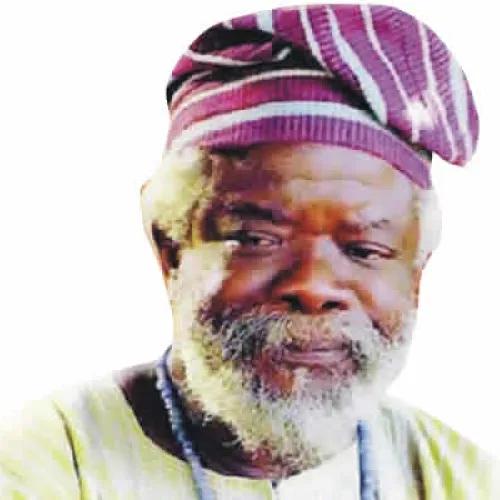
File: Chief Peter Fatomilola
Veteran dramatist and academic, Prof Peter Fatomilola, turned the centenary celebration of the Yoruba Tennis Club, Onikan, Lagos, into a cultural lesson on destiny, identity and the preservation of indigenous knowledge, drawing extensively from Yoruba Ifa philosophy to challenge members to remain connected to the values that shaped the institution.
Fatomilola delivered the lecture, titled “Ayanmo (Destiny),” on Tuesday at the club’s Greetings Hall during its Centenary Cultural Week, using verses, analogies and philosophical traditions from the Yoruba Ifa corpus to explore the relationship between destiny, individual responsibility, choices and communal life.
Rather than treating destiny as a predetermined path absolving individuals of responsibility, Fatomilola’s presentation engaged the audience with Yoruba philosophical ideas about human conduct, character and the consequences of choices.
His lecture formed part of a wider cultural colloquium held under the anniversary theme, “100 Years of Brotherhood, Culture and Continuity,” which brought scholars and cultural figures together to examine the history and values behind an institution that has survived for a century.
Fatomilola urged members to make truth and integrity central to their relationships and institutional life, arguing that the longevity of the Yoruba Tennis Club was inseparable from the values upon which it was founded.
He also called for deliberate transmission of those values to younger generations, stressing that the centenary should serve not only as a celebration of longevity but as an opportunity for members to examine what should be preserved and what should be passed on.
The lecture provided what was, for many in the audience, a cultural immersion in Yoruba philosophy, as Fatomilola moved through passages of the Ifa corpus and traditional analogies to illustrate concepts of destiny and human responsibility.
The emphasis on indigenous philosophy also gave the event a broader historical significance, particularly as the origins of the Yoruba Tennis Club itself are linked to the resistance of educated Nigerians to racial discrimination under colonial rule.
A citation read by Dr Bayo Ayo during the colloquium recalled how young and educated Yoruba elites, including some who had recently returned from overseas, were prevented by colonialists from participating in tennis at existing clubs.
The discrimination eventually contributed to the establishment of the Yoruba Tennis Club, turning exclusion into the impetus for an institution that would later develop into a prominent social and cultural organisation.
The history presented at the event positioned the club’s centenary not merely as a milestone in sporting or social life, but as part of the story of how an emerging African elite challenged colonial assumptions about race, education and institutional capacity.
Professor of History, Habeeb Sanni, who spoke during a panel session, similarly placed the club’s development within the broader history of Nigeria’s early educated elite.
Sanni said the founders demonstrated that Africans were capable of creating and managing institutions despite the colonial belief in European superiority.
“They realised that Europeans who have come to colonise them are not better than themselves,” he said, describing the founders as highly educated Nigerians who used their knowledge to redefine the institutions around them.
According to him, the club subsequently evolved beyond its original sporting purpose, becoming a space where members from different ethnic, racial and professional backgrounds could interact, exchange ideas and discuss issues affecting society.
He noted that several of its early members were prominent figures in education, medicine and law, while others participated in the nationalist movements that contributed to Nigeria’s political development.
Sanni said the club’s history deserved greater academic attention, disclosing that he had commissioned a student to undertake a PhD thesis examining its history and institutional development.
He described the club’s existing historical documentation as “superb” and said it offered scholars important material for understanding the evolution of Lagos society and Nigeria’s early elite institutions.
The historian urged present members to regard themselves as custodians rather than merely beneficiaries of the club’s century-old heritage.
He said members had a responsibility to preserve what previous generations built while ensuring that those coming behind them were encouraged to surpass the achievements of their predecessors.
Comments
Start the conversation about this story.