






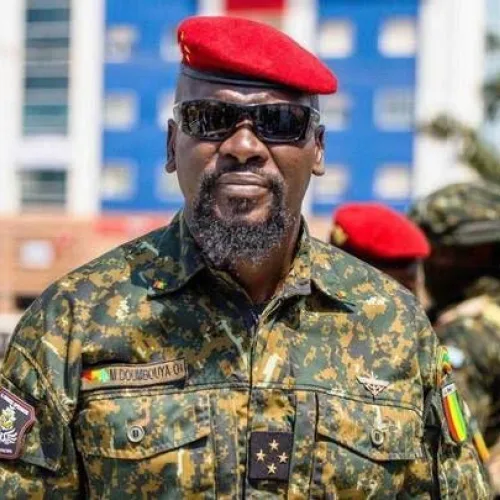
Guinea’s President, Mamadi Doumbouya, has dismissed 173 soldiers from the country’s armed forces for alleged desertion, marking one of the most significant military shake-ups since he seized power in a 2021 coup.
The dismissals were announced in a presidential decree broadcast on state television on Monday, August 24. The decree was read by General Amara Camara, Minister Secretary-General of the Presidency.
Soldiers dismissed over alleged desertion
The decree removed personnel drawn from several branches of Guinea’s armed forces and cited “desertion” as the reason for the dismissals.
However, the government did not disclose when the affected soldiers allegedly abandoned their posts or provide details about the circumstances surrounding the cases.
Among those dismissed was Michel Lamah, a member of the elite Groupement des Forces Spéciales, the Special Forces unit previously commanded by Doumbouya.
Lamah became one of the prominent figures associated with the September 5, 2021 coup after photographs emerged showing him in a military vehicle transporting then-President Alpha Condé following his arrest.
Doumbouya seized power in 2021 coup
The 2021 military takeover saw troops storm the presidential palace and detain Condé, while Doumbouya, who was then a colonel and commander of the Special Forces, announced that the military had taken control of the country.
The coup brought an end to Condé’s 11-year rule, coming a year after he secured a controversial third term following constitutional changes that triggered widespread protests and political tensions.
After taking power, Doumbouya pledged that neither he nor members of the military-led transitional government would contest elections organised to return the country to civilian rule.
He later entered the December 2025 presidential election and reportedly won about 87 per cent of the vote.
Opposition figures excluded from election
The election was, however, marked by the exclusion of major opposition figures, while Doumbouya faced criticism for contesting the election despite his earlier pledge not to seek political office.
His emergence as elected president further strengthened his position within Guinea’s political and military establishment.
The latest dismissals come as Doumbouya continues to consolidate his authority and as the West African country enters an important period in the development of its mining industry.
Mining sector remains key to Guinea’s economy
Guinea possesses substantial deposits of gold, bauxite and iron ore and holds about one-third of the world’s known bauxite reserves.
The country’s mining potential has attracted major international investment, particularly around the Simandou iron ore project, which is backed by China.
The World Bank has described the start of production at Simandou as a major opportunity for Guinea to transform its mineral wealth into wider economic development.
The World Bank estimates that Guinea’s economy grew by 7.4 per cent in 2025 and projects growth of 8.8 per cent in 2026 as increased mining production boosts economic activity.
Dismissals raise questions over stability
While the dismissal of 173 soldiers is not expected to independently change Guinea’s economic outlook, the move could renew attention on political and military stability in the country.
The development may also draw scrutiny to security arrangements surrounding Guinea’s strategically important mining projects as the government seeks to expand production and attract further investment.
Doumbouya’s latest military action underscores the continuing importance of the armed forces in Guinea’s political affairs following the 2021 coup and subsequent transition to elected government.
Comments
Start the conversation about this story.