





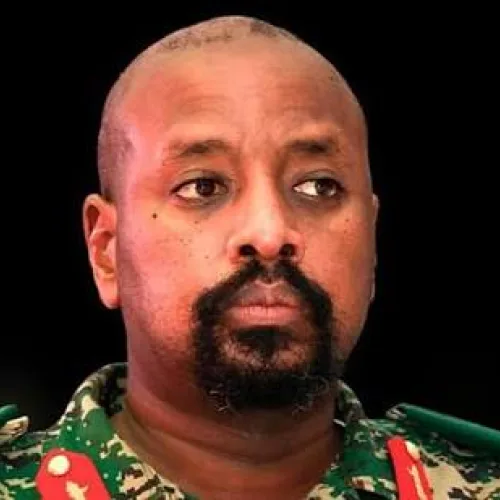
Uganda’s military chief, Muhoozi Kainerugaba, son of long-serving President Yoweri Museveni, has announced his intention to contest the country’s presidential election in 2031, potentially positioning himself as a successor to his father.
Kainerugaba, 52, made the declaration in a series of posts on X on Tuesday, saying he was determined to seek the highest political office in the East African country. His announcement comes as his father continues to dominate Uganda’s political landscape after four decades in power.
“I will stand for the highest office in the land in 2031. And we will win by the grace of Almighty God,” Kainerugaba said.
He also claimed that his father’s support could help him secure a landslide victory, saying, “With my great father, Mzee’s, support I will get 90% in the elections in 2031.”
Kainerugaba steps up succession ambitions
Kainerugaba has for several years been viewed as a possible successor to Museveni, who has governed Uganda since 1986. The military chief heads the Patriotic League of Uganda, a political pressure group that has increasingly featured in national political discussions.
He had previously suggested that he would contest the January presidential election but eventually backed out of the race. Instead, he played a key role in his father’s campaign for re-election.
His role in the campaign attracted attention amid allegations from opposition figures that the government restricted political activities and internet access during the election period. The authorities have faced repeated criticism over their handling of political dissent.
Museveni, who is 81, remains the leader of the ruling National Resistance Movement. He has been in office since 1986, making him one of Africa’s longest-serving heads of state.
Human rights concerns persist
Museveni’s government has been accused by critics and rights groups of human rights violations, including alleged torture, kidnappings and arbitrary detention of opposition figures. The government has consistently rejected such allegations.
Uganda’s opposition has also faced significant pressure in recent years. Main opposition leader Bobi Wine left the country for the United States earlier this year, saying he feared for his safety.
Another veteran opposition politician, Kizza Besigye, has been detained since 2024 and is facing trial on treason-related charges.
Kainerugaba has himself attracted controversy through his social media posts, including threats directed at Bobi Wine. His outspoken online presence has frequently generated debate over his political ambitions and role within Uganda’s power structure.
Museveni’s succession plans remain unclear
Despite Kainerugaba’s declaration, questions remain over whether President Museveni intends to contest another presidential election before 2031.
Government spokesman Alan Kasujja told Reuters that the President and the ruling party would make a decision on the matter when the appropriate time comes.
Kainerugaba’s announcement nevertheless adds a new dimension to Uganda’s political succession debate, particularly as Museveni’s long tenure continues to shape the country’s political system.
His decision to openly declare his 2031 ambition also signals that discussions over the future leadership of Uganda could increasingly centre on the possibility of a transition within the ruling establishment.
Comments
Start the conversation about this story.