





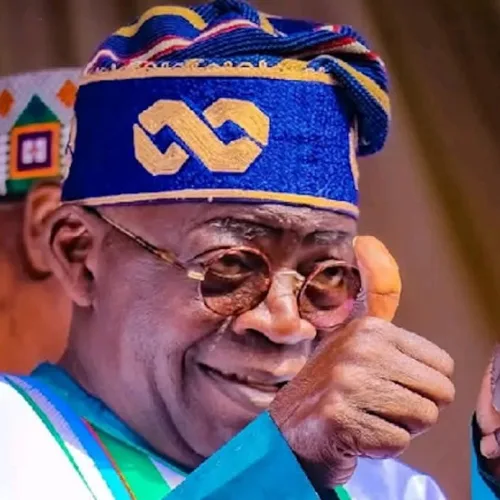
President Bola Ahmed Tinubu recently approved salary increment for personnel of the armed forces in addition to the expansion of the nation’s army divisions from eight to 12. BENJAMIN SAMSON in this report speaks with ex-servicemen and experts on how the development would improve the fight against insecurity.
President Bola Tinubu penultimate week approved salary increases of between 30 and 80 per cent for the country’s armed forces personnel. The Special Adviser to the President on Information and Strategy, Bayo Onanuga, who disclosed that in a statement, noted that the pay package that would benefit approximately 250, 000 personnel would take effect from September 1, 2026.
Onanuga said the graduated structure of the increase scales inversely with rank, with the highest percentage increases going to the most junior personnel.
According to him, under the new arrangement, officers above the rank of colonel, Brigadiers-General, Majors-General, Lieutenant-Generals and Generals will receive a 30 per cent salary increase.
He added that personnel ranking from colonel down to warrant officer would receive a 50 per cent increase, while those from private to staff sergeant would get an 80 per cent increase.
Also, the president in July this year approved the expansion of the army’s structure from eight to 12 divisions.
The Presidency, in a statement, noted that the expansion “builds on the administration’s sustained investments in the Armed Forces, including approval for the recruitment of 28,000 additional personnel, acquisition of critical military platforms, and equipment.”
Ex-servicemen’s commendations
In a reaction, Col. Lawal Adegboye (retd.) of the Engineering Corps (retd.) commended President Tinubu for approving the expansion of the army and the recruitment of 28, 000 additional personnel, saying approving a salary increase for military personnel would significantly enhance their operational efficiency and capacity to tackle insecurity.
He said, “The landmark development forms part of ongoing efforts to strengthen the Nigerian Army’s force structure, expand its operational footprint, enhance command and control as well as improve the Service’s capacity to effectively respond to Nigeria’s evolving security challenges.
“The enhanced remuneration, particularly for junior officers and soldiers, would boost morale, improve operational efficiency, strengthen personnel retention, attract qualified recruits and reinforce the commitment of members of the armed forces to defending the country’s sovereignty and territorial integrity.
“Investing in the welfare of military personnel is fundamental to building a highly motivated, disciplined, and professional armed forces capable of effectively addressing the country’s evolving security challenges.”
Continuing, Col. Adegboye said, “The re-organisation of the army is a strategic milestone that will improve command and control, decentralise operational responsibilities, enhance the rapid deployment of troops, strengthen border security, improve intelligence-led operations, and increase the military’s capacity to combat terrorism, insurgency, banditry, kidnapping, and other forms of criminality across the country.
“These bold reforms represent strategic investments in the men and women who make enormous daily sacrifices to safeguard our country’s peace, unity, and democratic values.
“A well-motivated and properly equipped military remains indispensable to achieving sustainable national security and development.”
Likewise, the chairman, Centre for Crisis Communication (CCC) and former Director of Defence Information, retired Maj.-Gen. Chris Olukolade, said the development was a strategic move that would significantly enhance national security and strengthen the military’s operational capacity.
Olukolade said the decision was both timely and necessary, noting that it “demonstrates the government’s commitment to strengthening the Armed Forces in response to Nigeria’s complex security environment.”
According to him, “The expansion would substantially improve the Army’s ability to tackle the country’s multifaceted security threats through increased operational presence and enhanced force projection.
He said further, “The new force structure will create additional divisions, brigades and battalions, providing greater troop strength and enabling sustained military operations across vulnerable and conflict-prone areas.
“The expansion would be complemented by additional military equipment, combat platforms and operational vehicles, significantly improving the Army’s mobility, firepower and operational reach.”
The retired general observed that the Nigerian Army had remained overstretched for years due to its involvement in multiple internal security operations across various theatres nationwide.
He explained that the creation of four additional divisions would facilitate more regular troop rotations, reduce prolonged deployments, provide personnel with adequate rest and retraining opportunities, and ultimately improve morale and combat effectiveness.
Olukolade said further that the expanded force structure would enable faster military responses to security threats, particularly in remote and ungoverned areas that have remained vulnerable to attacks.
He also said the establishment of more divisional headquarters would strengthen civil-military relations by bringing military leadership closer to communities affected by insecurity.
According to him, the closer engagement would enhance intelligence gathering, improve early warning mechanisms and foster better operational coordination between the military, the Nigeria Police Force, the Nigeria Security and Civil Defence Corps (NSCDC) and other security agencies.
Olukolade expressed confidence that the expansion would strengthen the Army’s ability to respond more effectively to emerging threats while improving overall national security.
‘A welcome devt’
In his view, retired Group Capt. Emeka Ugwu told Blueprint Weekend that the move would boost operational effectiveness of the armed forces.
He said it was long overdue, “considering Nigeria’s size, population, growing security threats and the increasing role of the Army in internal security operations.”
“The Nigerian Army has consistently expanded its capacity over time. The establishment of additional training depots in Oshogbo and Amasiri, Ebonyi state, makes it only logical that this growth should be matched by a corresponding expansion in the Army’s order of battle. This is a welcome development that will undoubtedly strengthen the Army’s operational capability,” he said.
He, however, cautioned that expanding the force involved more than creating new formations.
He said, “There are critical administrative and logistical considerations that must be addressed. While the recruitment of 28,000 additional personnel is commendable, careful attention must be paid to the costs of training, kitting, accommodation and sustainment.
“Many serving soldiers deployed across various theatres of operation are still awaiting adequate accommodation, while the construction of barracks, procurement of equipment, training and armament will require substantial investment.
“There is also the question of force composition. What types of battalions will be established? Will they be infantry, armoured, artillery or composite battalions? Similarly, planners must consider the equipment holdings required for each brigade, including tanks, artillery pieces, Mine-Resistant Ambush Protected (MRAP) vehicles, Armoured Personnel Carriers (APCs) and infantry support weapons.”
He urged the National Assembly to provide expedited approval for any supplementary appropriation required to fund the expansion, adding that “if the Nigerian Army has sufficient boots on the ground across the federation, criminal non-state actors seeking to destabilise the country will be denied the freedom of action they currently exploit.”
Also, Lt.-Col. Sunday Oguntade (retd.) said the president’s action “underscores his unwavering commitment to equipping the Armed Forces to address Nigeria’s evolving security challenges effectively and to strengthen national defence capabilities.”
He said, “The expansion builds on the administration’s sustained investments in the Armed Forces, including the acquisition of critical military platforms and equipment, improvements in troop welfare, and ongoing support for operational readiness and force modernisation.
“The establishment of the new Divisions is expected to improve command and control, decentralise operational decision-making, strengthen border security, enhance the protection of critical national infrastructure, improve counter-insurgency and internal security operations, and ensure faster military response to emerging threats nationwide.”
He continued: “The expansion is a critical response designed to shorten response times and give security forces the numerical and geographic capacity to defeat terrorism and banditry.
“Fortunately, President Tinubu’s decision to create the new Army Divisions came a few days after the U.S. President Donald Trump commended his courage and commitment to tackling terrorism in Nigeria
“The fight against terrorism is not over, but the recent operational successes, the increasing foreign support and the president’s recent bold decisions such as the creation of new Army Divisions a salary increment point to the fact that the battle is systematically being won.”
Further expert views, commendations
For security expert Saidu Adoki, the development “demonstrates a commitment to enhancing the operational capacity of the Armed Forces in response to Nigeria’s evolving security challenges”.
He commended the president, describing the development as a “major strategic step that will strengthen the on-going military operations against terrorism, banditry, kidnapping, and other security threats” across the country.
He expressed confidence that the new salary increment would significantly boost the war against terrorism and contribute to the restoration of lasting peace, stability, and economic development across the country.
“The establishment of the new divisions would improve command and control structures, facilitate faster deployment of troops, and increase the military’s presence in areas vulnerable to attacks by criminal elements.
“The expansion of the Army’s structure is coming at a critical time when security forces are sustaining pressure on terrorists and insurgents in different theatres of operation across the country.
“The additional divisions would provide greater operational flexibility for commanders in the field and improve the coordination of military operations aimed at restoring peace and security in affected communities,” he said.
Continuing, he said, “A stronger military presence across strategic locations would enhance intelligence gathering, improve surveillance capabilities, and support ongoing efforts to dismantle terrorist networks and criminal hideouts.
“The Armed Forces have continued to record notable successes in the fight against insecurity and expressed optimism that the new divisions would further accelerate gains already achieved in various operations.”
Also, a public affairs commentator, Uchenna Obiozor, said the upward review of salaries and allowances for personnel was a major boost to troops’ welfare and national security.
He thumbed up the president, saying the decision would strengthen security operations, particularly in border communities.
He said, “The expansion would improve military presence in more than 3,000 border communities spread across 105 local government areas in 21 states. Many of the communities currently lacking military formations would now receive greater security coverage.
“The president’s decisions is timely and morale-boosting. It is a reflection of the administration’s commitment to the welfare of officers and soldiers who continue to make sacrifices in defence of the country.
“This salary hike sends a strong message to our troops on the frontlines and in barracks across the country that their service is seen, valued, and appreciated. Increasing the take-home pay of our officers and men will not only enhance welfare but also strengthen operational efficiency, retention, and patriotism within the Armed Forces.”
He added, “I equally commend Mr. President for approving the expansion of the Nigerian Army from eight to 12 divisions and the directive for the recruitment of 28,000 personnel. This is a bold and courageous investment that can reset the nation’s Armed Forces.
“A well- motivated military remains critical to defeating insecurity and achieving the objectives of President Tinubu’s Renewed Hope Agenda.”
Comments
Start the conversation about this story.