





Apparently rattled by public outcry over the poor condition of the Benin-Asaba Expressway, in which motorists were trapped for days, the federal government has recognized and treated it as an emergency, ordering its immediate repair and return to free movement.
The expressway has been in the news for the wrong reason in the last couple of weeks as motorists and the host communities were subjected to untold hardship resulting from the gruelling gridlock that stretched several kilometres on both carriageways.
David Umahi, Minister of Works, who gave the repair order a couple of days ago, expressed concern over what he described as unacceptable deficiencies and failures in executing and managing the Concession Agreement on the Reconstruction and Expansion of the Expressway.
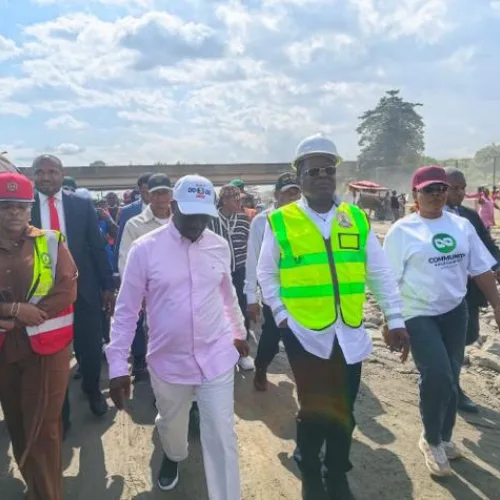
The minister spoke at a Stakeholders Engagement convened to find a feasible solution to the plight of road users and host communities along the corridor at the Edo State Government House.
He stressed that critical national infrastructure must not be allowed to deteriorate through negligence, poor and unprofessional construction practices, or failure to follow instructions.
Umahi frowned at the Concessionaire, Benin-Asaba Expressway Concession Company (BAECC), for failing to comply with engineering standards and directives. He also expressed concern at the continued retention of personnel considered unqualified to direct critical project activities, and what he described as actions capable of causing deliberate or avoidable damage to critical national assets.
He further expressed concern over inadequate construction methods and practices that could compromise the integrity and durability of the road, insisting that the federal government would not tolerate practices that undermine the huge investments being made in the nation’s road infrastructure.
The minister directed BAECC to immediately take corrective measures in order to remedy the problem and alleviate the suffering caused. These measures include the reinstatement of all damaged asphalt sections and the recreation of safe and properly marked passages for motorists within the carriageway.
“Accumulated water on the carriageway should be evacuated, while dust and other materials obstructing visibility and safe movement should also be removed without further delay,” the minister ordered.
He emphasised that motorists must not be subjected to unnecessary hardship because of ongoing construction activities, adding that construction operations should be properly managed to maintain safe and reasonable passage for road users at all times.
As part of the corrective measures, Umahi showcased the application of the DSIP and the reinstatement of asphalt as practical interventions towards restoring sections of the road and improving travelling experience.
He urged the Concessionaire to demonstrate greater commitment to the successful delivery of the project, notwithstanding the challenges posed by the current rainy season and high volume of traffic.
Allwell Onyesoh, Chairman, Senate Committee on Works, commended the Minister for his proactive leadership and inspection-driven approach. He decried the hardship faced by motorists and host communities due to the poor state of the road.
Onyesoh assured that the National Assembly would provide legislative backing and oversight to ensure that Concessionaires comply fully with the terms of their agreements. He called for strict sanctions against defaulters and urged BAECC to prioritise the welfare of road users above profit.
Akin Alabi, Chairman, House Committee on Works, lamented the suffering of commuters and the economic losses recorded daily along the corridor. He noted that the House of Representatives would not hesitate to invoke its oversight powers to compel compliance.
Alabi stressed the need for transparency, timely intervention, and the use of competent contractors to deliver quality and durable roads that reflect the Renewed Hope Agenda of the federal government.
The Independent Engineer (IE) for the project, Messrs Yolas Consultants Limited, in its technical briefing, identified key deficiencies in pavement quality, drainage, and traffic management.
They called for synergy among all stakeholders and the adoption of smooth operational guidelines to ensure that remedial works are executed without further delay and, in line with approved specifications.


Comments
Start the conversation about this story.