





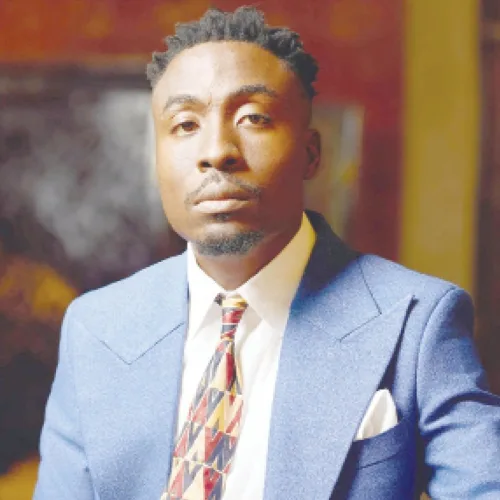
Adeyinka Tunde Molade is better known in the comedy industry as ATM (The Olubadan of Comedy). In this interview by ROTIMI IGE, he spoke about what seperates comedians from skitmakers, also why comedians must protect their art by building a structure that stands the test of time and helps funny people become celebrated comedians.
In an industry where almost everyone wants to be funny, what separates a comedian from someone who simply makes funny skits?
Many skit makers are half-baked comedians. A lot ot them feel comedy is just about being funny. For me, it’s understanding the craft. You can be naturally funny and still not be a comedian. Some people are just hilarious in normal conversation, but comedy requires knowing why something is funny and being able to create that laughter intentionally.
A skit maker can absolutely be a comedian, but making people laugh in a three-minute video is different from standing on stage with one microphone and a live audience. On stage, if the joke dies, you and the joke will die together.
Has Nigerian comedy become too dependent on stereotypes, tribal jokes, sex and poverty for easy laughs? Are we actually becoming less creative?
I think we’ve squeezed some of our easiest jokes until they’re begging for retirement. Tribal jokes, parents, marriage and poverty are easy because Nigerians immediately understand them. The problem is when the topic itself becomes the joke. Saying “Yoruba people are like this” isn’t a joke; give me your own funny perspective.
I don’t think we’re less creative. I just think we need to find newer jokes in our familiar Nigerian experiences.
Where do you draw the line between a joke that is genuinely provocative and a joke that is simply offensive?
I’m comfortable with provocative comedy. Sometimes comedy should make you uncomfortable.
But there should be something behind it. Give me an observation, an idea or a different perspective. If the entire joke is “I know this will offend you,” that’s not necessarily bravery. Sometimes it’s just laziness wearing the clothes of bravery.
Nigerian audiences can cancel a comedian today and celebrate the same joke tomorrow. Is cancel culture actually killing comedy, or are comedians using it as an excuse when a joke doesn’t land?
I don’t think cancel culture is killing comedy, but the fear of being cancelled can make comedians too careful.
However, comedians also need to accept that sometimes a joke just isn’t funny. “It’s just a joke” is not a magic shield. The comedian has the right to make the joke, and the audience has the right to react. Everybody must live with the consequences.
Can a comedian become genuinely successful in Nigeria without compromising their originality to give the audience what they already know they like?
Absolutely. But there’s a difference between compromising and evolving. You have to give your audience what they love about you, but you also have to surprise them. If you keep serving the same meal, eventually even your loyal customers will ask for takeaway. The goal is to remain yourself while showing people something new.
There is a growing argument that many Nigerian comedians are recycling the same characters, catchphrases and story formats. Who do you think is genuinely pushing the art form forward?
Sometimes somebody discovers something that works and suddenly everybody has their own version. One person gets a character, we get 47 cousins of that character.
I think the comedians pushing the art forward are the ones developing their own voices and perspectives. Comedy should be bigger than a catchphrase or costume. I like comedians who can make you laugh simply because of how they see the world.
At what point does a comedian’s personal brand become bigger than their actual comedy? And have we reached that point in Nigeria?
When people become more interested in the celebrity than the comedy. There’s nothing wrong with becoming an actor, influencer, host or entrepreneur. The problem is when nobody asks, “Are you still funny?”
Followers are not laughs. Views are not laughs. Endorsements are definitely not laughs. Your brand should make people want to see your comedy, not replace it.
If a joke gets millions of views online but does not make a live audience laugh, is it still good comedy?
It can be good content, but I wouldn’t automatically call it good stand-up comedy. Online, you have editing, music, captions, camera angles and multiple takes. On stage, you have one microphone and an audience that doesn’t care about your views. If the joke isn’t funny, they’ll let you know immediately. No comment section required.
Money changes creative people. Has making comedy a business made Nigerian comedians more creative, or has it made them too commercially careful?
Both. Money gives you the resources to dream bigger, but it can also make you start asking, “Will the brand like this?” before you say anything.
The real skill is making money without losing your voice. If a brand pays me to be funny, they should be buying my creativity, not replacing it.
If you had the power to change one thing about the Nigerian comedy industry today, what would you destroy, what would you preserve, and what would you create from scratch?
I’d destroy the idea that there’s only one way to become a successful comedian. Not every comedian has to be a great writer, and not every great writer has to be a great performer. We need room for both.
ALSO READ: 2027: Assess candidates by actions, past records — Speaker Tajudeen tasks Nigerians
I’d preserve the hunger of Nigerian comedians and the growing comedy club culture. And I’d create a stronger comedy ecosystem, more writers, writing rooms, comedy education, opportunities for new comedians and collaboration.
Nigeria doesn’t have a shortage of funny people. We have a shortage of structures that help funny people become great comedians.
Ibadan use to be a hub of back to back comedy shows, what do you think caused the reduction in the frequency?
Well I will say that the decline started when skit makers decided to start staging live shows and their performances weren’t what the industry was built on, a lot of people get offended in those shows cos all they get is yabs and curses. I don’t blame the skit makers for it, cos that’s the comedic characters that got them popular, but live shows aren’t meant to be that way. Now anyone who is staging a comedy show in ibadan is almost literally going to people’s houses to beg them to come out for shows which wasn’t the status quo. People now prefer to go for raves as against comedy shows.
It is also capital intensive, getting sponsorship is hard because we’re also unable to deliver the numbers due to low patronage. Without a personal purpose it’s not easy spending that much liquidity annually, it took losing my father and looking for an avenue to celebrate his legacy of being a joy giver for me to be staging my own show annually since we lost him.
Comments
Start the conversation about this story.