





…Endorses Revised National Social Protection Policy
…As FG commences rehabilitation of 13 Police training institutions
…Says economic gains must translate into jobs, stronger purchasing power
The National Economic Council (NEC), on Thursday, adopted the new national social protection policy, with a call on the Federal Government to prioritise investments in main drivers of the economy, including agriculture, energy, manufacturing, mining, and the digital economy.
The Council had noted that there is need to invest more in agriculture which employs over 81.4% of Nigeria’s population and the need to also boost the non-tradable services.
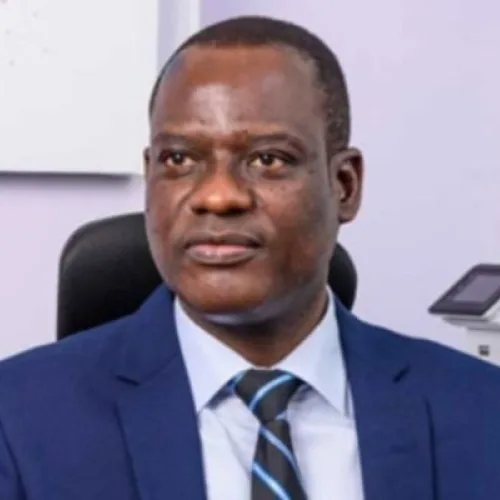
Taiwo Oyedele, Minister of Finance and Coordinating Minister of the Economy, stated this while briefing State House Journalists after the 160th meeting of the National Economic Council (NEC), chaired by Vice President Shettima.
Oyedele, who briefed the Council on the gains record led by the economy, said the “Council noted that there is need for us to accelerate growth in these sectors where majority of our people work.
“That way, we leave them out of poverty and we close the inequality gap” he stated
The Council also identified other areas requiring urgent attention such as “geopolitical conflict, commodity shocks and persistent food inflation”.
Ahead of the 2027 election, the Council also tasked the Federal Government on the need to”manage election cycle fiscal risk, and even the narrative, because there is a tendency to be negative pre-election”.
Oyedele states that, even though it is not supported by data, but there is the need to “ensure that there is job-rich growth, manage FX vulnerability to avoid portfolio flow reversal”.
Oyedele, who highlighted some positive trends in the economy, stated that Nigeria’s economy has stabilised, adding that “the task ahead of us now is to convert stability to shared prosperity.
“Our real GDP growth rate was at 3.89% for Q1 of 2026, which is up now at 3.13% one year ago, and it’s projected that our GDP growth rate for 2026 would be over 4%”.
Read also: Nigerians below 40 years drive 75% of new pension accounts
“Headline inflation is down to 15.43% at the end of July, from 24.94% a year ago. Food inflation is down to 20. 31% at the end of July, compared to 26.2% this time last year.”
He stated that Nigeria had recorded external reserves of 51.9 6 billion U.S. dollars, the highest since January 2009, and up 38% year -on- year, while the naira has appreciated 13.5% year -on -year by the end of half year 2026, with exchange rate at a stable rate of less than N1,400 to the US dollar., with the prospects of appreciating
He also revealed that net revenues had grown by 44% from N15. 2 trillion in 2024 to N21. 9 trillion in 2025 is projected to increase by at least 50% in 2026.
According to him, Nigeria’s trade surplus nearly doubled from N17.7 trillion in 2025 to N 34.7 trillion by Q1 of 2026.
He revealed that total public debt remains moderate at N159.28 trillion, while debt service as a percentage of revenue is on the ” decline from nearly 100% as in 2022 to less than 60% as of 2025″
He stated that all the three major rating agencies; such as Fish, Moody’s, S&P, upgraded Nigeria’s sovereign credit rating between April 2025 and May 2026, the first coordinated alignment in over a decade
“Nigeria has exited the Financial Action Tax Force Grey Lease as of October 2025, and the EU Anti Money Laundry Financing of Terrorism Deficiency Lease as of January 2026, lowering the cost and friction of cross-border capital and flows for Nigeria
“The sovereign spread between the U.S. Treasury bonds and Nigeria’s euro bond narrowed to historic low of less than 200 basis points, and our capital market is one of the best performing in the world, with market capitalisation almost doubling just in the past one year.
“We see opportunities ahead for the country, especially how we accelerate growth and lift our people out of poverty”, he noted.
He assured that the government would develop strategy to moderate lending rates to reach sector in order to stimulate growth.
The Council, however, expressed concern about the high rates of interest, “particularly for businesses, and directed that we look at fiscal and monetary policy measures to moderate these interest rates.”
Oyedele said Nigeria must stay focused on the course of reform to avoid reversals, adding that “The gains on inflation, external reserves, the exchange rates, and a credit rating are the direct results of sustained policy.
He also expressed fears that they could be reversed “if we waver. So we need to prevent reform fatigue, avoid populist reversal, or election cycle slippage that could forfeit the credibility we have spent the past three years rebuilding.
“Government at every level agree: federal, state, and local governments, that we need to hold the line on fiscal discipline as 2027 political activities intensify.
“Council also agreed to sustain policy consistency, ensure domestication and complementary reforms at the subnational level, particularly in the area of agriculture, land reform, and ensuring that we support our vulnerable people, states to prioritise rural roads, storage, transport link, and security investment for farm belts to improve agricultural productivity and food security.”
Other areas include support for jobs and productivity compact, channelling private capital into agriculture, agro-processing, housing, logistics, and light manufacturing, and to strengthen state-level tracking of inflation drivers, project delivery, and welfare outcomes.
“Council reaffirmed commitment to fiscal discipline and reform continuity again as the 2027 election cycle approaches and intensifies.
He stated that the Ministry intends to share some insights on the implication of some proposed policy reversals for the federation, so that the Nigerian people are well informed.
“Overall, council deliberated and agreed that our federation is that of shared responsibility, where the centre drives economic stability, but shared prosperity happens in the states, and better living standard must be delivered at the local level”
The Council was briefed on the ongoing rehabilitation of the 13 police training institutions, which is set to last for a period of three weeks, is aimed at putting the institutions in shape for the commencement of training programme by the Nigerian Police Force.


Comments
Start the conversation about this story.