






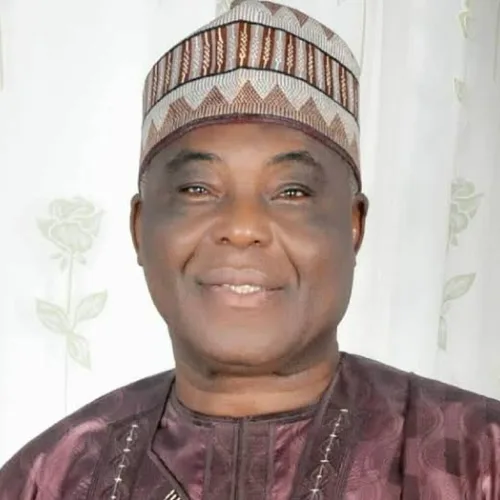
In 2023, the media industry lost a rare gem that is hard to forget. The man showed others what it means to travel the road of private broadcasting in Nigeria at a time when government-dominated media platforms dotted the space. This is why the man, Raymond Aleogho Dokpesi, remains an unforgettable personality, even in death; SUNNY IDACHABA writes.
Raymond Dokpesi, until his death in 2023, was a foremost media guru, entrepreneur and politician widely regarded as one of the pioneers of private broadcasting in the country.
He founded DAAR Communications Plc., the parent company of Ray Power FM and later Africa Independent Television (AIT) that shaped private broadcasting outfits in Nigeria.
According to this late media guru, he established Ray Power Radio station because of his firm determination to transform the information business in Nigeria. In an interview he granted years before his death, he said, “There was a yearning for something new, something fresh and Raypower was able to come out at that point to meet that need.”
His foray into the media space followed the deregulation of broadcast media by the military regime of General Ibrahim Badamasi Babangida in 1992. By that, Dokpesi showed his entrepreneurial energy, as well as vision for the industry by taking advantage of the move.
According to him in another interview, “It takes the heart of a lion to be able to venture into the broadcasting business as at that time and sustain it continuously.”
Subsequently, he built an empire that helped to accelerate the popularity and influence of Afrobeats in the early 2000s when local contents in the music industry were highly sought after. RayPower, in particular, filled that yearning gap for listeners, especially in Lagos, Abuja and Kano.
It would be recalled that the Nigerian Broadcasting Commission (NBC) Decree No. 38 enforced the deregulation of broadcast media in Nigeria, and opened the sector to private players of which Dokpesi was the bravest Nigerian to dip his toes in that wave of media buzz.
According to a close associate of the media guru, Kenny Ogungbe, who was the pioneer General Manager of RayPower FM, the station went on air officially on September 1, 1994, but had gone on test-running for a few months before that time but was scared off air by the military regime of General Sani Abacha, owing to lack of a licence.
Giving further insight into the journey, Ogungbe said, “He (Dokpesi) was into politics then as he was then the director-general for Adamu Ciroma’s Presidential Campaign. Later, he was Bamanga Tukur’s Presidential Campaign director-general. I was like his right-hand man.
“After everything, he would ask me what we should do. At some point, I told him, ‘Let us do radio,’” Ogungbe said. “We got to the US and he started buying radio equipment. I asked if he had a licence and he replied, ‘Don’t worry’. Before we left America, he ordered the construction of DAAR Communications while we were still in Los Angeles.
“We did not have a licence even at that time, but we started broadcasting. This was during Sani Abacha’s regime. One day, we suddenly heard an NTA news report which warned that there was a radio station broadcasting illegally. At that point, we went off-air for six months till August 15, 1994 when we were able to get a licence and fully came on air on September 1, 1994.”
Giving further details, Ogungbe said, “As at that time, there was lack of proper information about the goings on in the country. There was a need to be able to reach the people with up-to-date information. Mind you, Raypower started at the height of the Abiola saga. OGBC at that time was not effective because it was a state government-owned station, even though its vibe took over the air space in Lagos, but there was a limit to its broadcast power.
“Again, there was the Federal Radio Corporation of Nigeria with all its outlets; even at that, there was a yearning for something new, something fresh and RayPower was able to come out at that point to meet the need. We had hoped that we would be able to expand and develop rapidly across the country; unfortunately, there were various blockages and hurdles that were put in our ways.”
Two years after the establishment of RayPower, the parent company (Daar Communications Limited) was able to secure another licence for its television station, African Independent Television (AIT), created with more youth-centric appeal with an array of entertainment programmes.
Dokpesi therefore broke the erstwhile government’s monopoly of broadcasting by revolutionising the media landscape for diverse voices that shaped public discourse till date.
It is not only in the media space that Dokpesi made impressionable marks in Nigeria. In politics, he was a voice for the then ruling Peoples Democratic Party (PDP) as his station, AIT, did live broadcasts on all major events of the party and government.
In 2015, for instance, he assumed the pivotal role of organising committee chairman for the party’s national conference, showcasing his astute leadership and commitment to democratic governance. When his party (PDP) lost out after the general election that brought the current All Progressives Congress (APC) to power, it was Dokpesi that courageously owed up to the errors of the party and apologised when other party faithful were defecting.
According to him, “Make no mistake, PDP is aware that there were errors made along the way. We admit that at certain times in our past, mistakes have been made; we did not meet the expectations of Nigerians. We tender an apology, but the past is exactly what it is. We call on all party faithful, supporters and sympathisers to partner with us as we go forward.”
Prior to all these, Dokpesi was the Chief of Staff to Bamangar Tukur in the former Gongola state government from October to December 1983. Following the military interruption, he left and became the Managing Director of African Ocean Line Limited from 1984 to 1988.
After his exit from that position, he established the first indigenous shipping line in Nigeria. So, in a way, this Edo state-born technocrat, but with a maternal background in Adamawa state, can be credited for his various pioneering efforts in the country.
He created job opportunities for thousands of Nigerians through his ingenuity. His legacies are etched in the fabric of Nigeria’s history, proving his entrepreneurial prowess, political engagement and dedication. His contributions would forever resonate and inspire future generations to strive for excellence and leave an indelible mark on society.
Writing about his death, Business Day editorial, in a tribute, said through his unwavering dedication to truth and integrity, he shaped public opinion and held those in power accountable, earning him a reputation as one of Nigeria’s most respected media owners.
The newspaper stated that, “His impact extended far beyond the media industry. As a philanthropist and social activist, he was a fierce advocate for the rights of the disenfranchised and a powerful voice for change. He worked tirelessly to promote education, healthcare and economic development in Nigeria. His legacies would be felt for generations to come.”
On its part, The Sun editorial stated that Dokpesi was a great mentor and role model whose style of politics was devoid of rancour and bitterness associated with politics of modern-day Nigeria.
Perhaps, the most emotional tribute to the late media guru was by Prof. Pat Utomi. He said, “The news of the passing of Raymond Dokpesi hits me hard in the gut, not just because we have been acquainted for nearly 60 years but because of the irony of the date of his transition. Before it was moved to June 12, this day used to be called Democracy Day. He gave much of his later adult years to engineering a certain vision of democracy he passionately craved.”
He said, “Dr. Raymond Aleogho Dokpesi was my school mate. In Loyola College, Ibadan, during those Civil War years, there was a special bond binding the boys from the Mid-west. Then he left. Raymond’s appetite for venturing stood out and was infectious. It soon shifted from shipping to media and he was quick to drag me in. I became a member of the board of his first media venture, The Nigerian Maritime Digest.
“When the infamous third term bid tried to distort the trajectory of our democracy in 2006, Dokpesi played a role so central that he was anchor to the defeat of the bid in the National Assembly… High Chief Raymond Dokpesi, colorful man of culture, left this world affected for the better from his being around.”
Dokpesi can be, indeed, likened to the one who came, saw and conquered despite all the hurdles on his way. His life was exemplary, showing that any obstacle can be conquered if one doesn’t give up. He is therefore an unforgettable hero.
Comments
Start the conversation about this story.