





With a record 77,792 arrests, 14,225 convictions, and 14,847,486.34 kilograms of drugs seized in the last five years, Nigeria has made bold statements in the fight against illicit drugs and related offences.
The arrests in the last five years by the National Drug Law Enforcement Agency (NDLEA), included 128 identified drug barons who were central to major trafficking networks, large seizures of assorted illicit drugs, and significant disruption in the supply chains, both local and transnational.
Beyond the arrests and seizures, the NDLEA is doing everything in its jurisdiction to ensure that drug cartels will not enjoy proceeds of crime anymore in Nigeria.
The above message is being re-echoed with the forfeiture of properties and assets traced to cartels and offenders.
NDLEA’s great success
Recently, a Lagos hotel and three other properties seized from drug kingpins were forfeited to the Federal Government through court processes and auctioned for the sum of six billion one hundred and forty-eight million nine hundred and sixty-four thousand naira (N6,148,964,000.00) only.
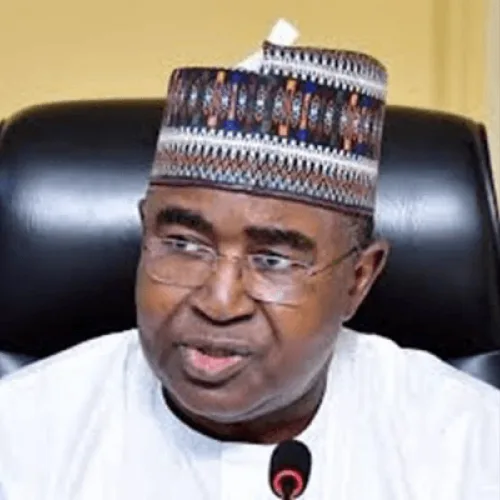
However, the above feats are promises made and kept by Buba Marwa, chairman and chief executive officer, NDLEA.
When he was appointed to office in 2021, many described it as meritorious and attributed his choice for the sensitive office to his feats while in office as the military governor of Lagos State.
They recalled how Lagos regained sanity, laws being enforced, security guaranteed under his watch and hence hoped for sanity in the illicit drug menace.
They also think that Marwa’s warning to drug traffickers in his early days in office that “the era of Nigeria serving as a safe haven for criminal drug enterprises is over”, are justified today going by NDLEA’s feats.
But in his honest appraisals of the agency and even himself, in the last five years, the indefatigable chairman noted that the difference has been very clear since 2021, judging from the bad state of the drug menace before he took over the mantle of leadership at NDLEA.
“When I first resumed in 2021, I promised to take the fight to the doorsteps of the merchants of death. Today, the numbers speak for themselves. Through our collective resilience, we have sent a clear message that Nigeria is no longer a safe haven for illicit drug enterprises,” he said in a statement on marking his achievements in the past five years.
Also, recently, the agency recorded the seizure of the largest multi-billion-naira meth in history, about N480 billion meth, with the arrest of the cartel’s kingpin, three Mexican technical experts, six other top local collaborators, resulting in the smashing a long-thriving Nigerian-Mexican cartel.
The operation, led by its elite Special Operations Unit (SOU), led to the shutdown of an industrial-scale clandestine laboratory, the biggest ever discovered in Nigeria hidden in a remote forest in the Ijebu area of Ogun State.
Sadly, despite the significant operational successes recorded so far by the NDLEA, drug traffickers, barons and cartels seem undeterred.
According to a survey by Crime Watch Monitor, with special focus on West African drug routes, the number of traffickers and cartels have more than doubled in the last decade in West Africa with Nigeria in the lead.
The survey noted that the traffickers cut across all backgrounds and age brackets with teenagers and even octogenarians as recruits.
Greed, poverty, harsh economy to blame
With the growing number of traffickers, Nigerians Against Drug Trafficking, an advocacy group against drug and human trafficking, lamented the alarming number of Nigerians in foreign prisons for drug trafficking and related offences.
But Samuel Onikoyi, a Nigerian academic in Brussels, thinks that the huge foreign currency exchange is the major lure for many in drug trafficking today.
“The American Dollar is about N1,300, and the British Pound is about N2,000. Just do the conversion against $USD100,000, €100,000 or £100,000. If you promise an unemployed $3000 and give him $1000 upfront, the conversion will get him mad and further spur him to carry out whatever assignment you want him to do for you, even local drug trafficking before going international,” Onikoyi said.
“This is very practical, and the reason many are easily convinced to join drug trafficking is that the pay is extraordinarily fantastic. Sadly, the price is more fantastically damaging, and the traffickers know”.
He noted that governments in advanced countries do everything within their power to checkmate drug trafficking due to its many negative impacts from ill-health, death, economic sabotage, bad culture, rise in crime rate, funding of insecurity, among others.
“Here, the government provides virtually everything that will make the citizens comfortable. I don’t earn millions, but the small I earn keeps me and my family very comfortable. So, there is no need for trafficking drugs here because there is money, which also has good value, inflation is controlled, food is cheap, rent is good, education and health are your right, transportation and other welfare incentives are regularly improved upon. All those things that will push people, especially the poor, into things like drug trafficking have been addressed here and our government back home should do the same to complement the good efforts of the NDLEA,” he urged.
Also toeing the same line, Kingsley Esomonu, a chartered auditor and senior banker, noted that the rise in trafficking despite NDLEA’s efforts buttresses the saying that money is the root of all things, especially bad.
He noted that even those who have made billions today still want to have more, hence drug barons and those who have established thriving businesses from the proceeds of illicit drug business are still in the trafficking game.
“It is all about escaping poverty for the vulnerable and new recruits and high-level greed for the barons and cartels because owing the whole of Nigeria can still not be enough once greed sets in,” he said.
Worship of ‘mammon’ provides the oxygen
Simon Hassan Pam, a clergyman, blamed the menace on moral decadence in the society, which, according to him, is incredibly high.
“We are in a society that worships wealth even when the source is questionable. So, the belief out there is just to make money, every other thing will fall in, including respect you don’t deserve, education you did get, and positions,” he decried.
According to him, people do everything today to get rich, no matter how good or bad the thing is, as long as it spins fast money for them.
“That is why drug trafficking will continue to be on the rise because it gives quick wealth despite the dire consequences”.
Societal pressure fuels illicit trade
The pressure from society, according to him, is the reason many will hear and even witness the execution of Nigerian drug traffickers in Asia and even those that die in jail or from the drugs they swallowed that dissolved in their stomach, yet they will traffic drugs.
Adama Basumoh, a university lecturer, blamed the situation on greed as well, insisting that some poor people had the opportunity to traffic drugs and even humans, but refrained from considering the huge price to pay for the temporary gain.
“While in South Africa on a PhD scholarship, I used to visit prisons with a university amnesty group and I don’t like describing the horrible scene of many people who are there for drug trafficking, while the barons are enjoying somewhere,” Basumoh decried.
He lamented that more than half the people he interacted with, including a final-year Chemistry undergraduate, confessed that it was the lure of quick wealth that drove them into drug trafficking, robbery and other offences they committed.
“For me, drug trafficking presents the highest risk for anyone, but it also offers the highest reward for those who want it very fast in life. So, people make their choices and also face the consequences.
“When you see your mates or even juniors live flashy lifestyles, live in luxury estates, own hotels across the country, build shopping malls and fuel stations, you may likely be lured into illicit business and not just drug trafficking, if you don’t have a strong moral fibre,” he said.
Lawrence Alobi, a retired deputy inspector general of Police, blamed the situation on the high unemployment rate, insecurity, Nigeria’s geographical position and thriving global drug business.
According to him, the current economic hardship faced by several households in Nigeria has contributed to the rising drug trade, despite efforts by the NDLEA to curb the scourge.
The security expert argued that, considering the over two decades the country has witnessed widespread violence, insurgency, banditry and terrorism, the porous borders, and economic instability have provided fertile ground for drug cartels to thrive.
Trafficking now a scourge
According to Alobi, drug trafficking has become problematic in Nigeria because of the high profit made from it. From cannabis, tramadol, codeine, cocaine and to other illicit drugs, the security expert decried that traffickers make brisk business, which is often funded by non-state actors.
“Over the years, we have noticed that there is a strong relationship between the thriving economic gains and drug trafficking, cultivation of cannabis and even local drugs that have been banned by the NDLEA in Nigeria.
“The farmers make huge earnings from the cultivation of cannabis because of the high demand by criminal elements and others.
“Criminals, and in some cases, those who do hard labour or use physical strength, also rely heavily on these drugs.
“These drugs give them temporary relief, provide false hope, make them high and provide them with extra powers to confront dangers,” he said.
Relating it to the negative impact on insecurity, Alobi decried that illicit drugs embolden users to act in ways ordinary people cannot act, as the psychoactive substances in the drugs help them to suppress fear and sadly sustain energy during violent operations.
But the NDLEA is also not deterred by the boldness of traffickers and new methods they devise in their devilish craft, rather it is going herder against them, unleashing more tactically sophisticated operations against drug cartels, barons and their mules.
NDLEA pushes hard as cartels restrategise
Like Marwa assured, the agency under his watch will continue to pursue drug traffickers, dismantle criminal networks, recover the proceeds of crime and uphold the rule of law without fear or favour.
Onikoyi and Esomonu think that the war is not over as cartels reposition and restrategise.
“As much as we commend the success of the NDLEA, we know that it is because of the massive support of the government which allows the agency free hand to operate. We hope that that freedom will continue even after this administration to sustain the gains of today,” Onikoyi urged.


Comments
Start the conversation about this story.