





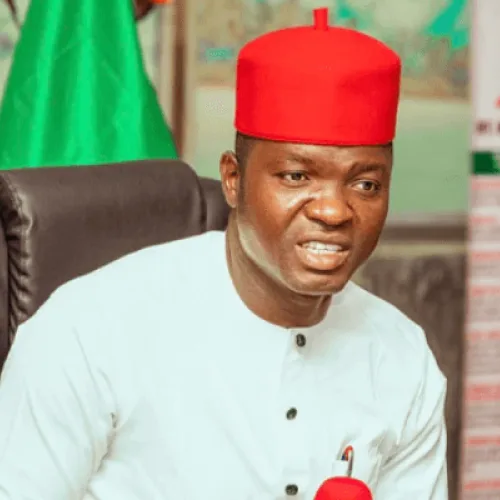
As the 2027 gubernatorial election in Ebonyi State approaches, the political landscape is increasingly animated by two intertwined debates. These debates involve the performance of Governor Francis Ogbonna Nwifuru and the sanctity of the state’s unwritten zoning arrangement. For me, an avid reviewer of the mechanics of governance and political stability, Ebonyi presents a compelling case study.
Governor Nwifuru’s first term has been marked by significant strides in education, healthcare, and fiscal responsibility, particularly regarding pensioners. However, the argument for his re-election transcends mere performance metrics. It is fundamentally rooted in the principles of equity, fairness, and political stability that the zoning arrangement guarantees. Respecting this arrangement is not just a political courtesy; it is the bedrock of Ebonyi’s peaceful coexistence and a model for national harmony.
A foundation of development: Education and human capital
Governor Nwifuru’s administration has anchored its development agenda on the “People’s Charter of Needs”. The Charter of Needs is a policy framework that prioritises tangible improvements in citizens’ lives, whose impact has been very evident in the transformative investments in education and human capital. A cornerstone of this policy has been the massive scholarship programme, which has sent hundreds of Ebonyi students to pursue postgraduate (especially STEM) studies in various universities abroad and in Nigeria. As at the time of writing, there were indications that more than 400 beneficiaries are currently in the United Kingdom alone, with over 1,000 students benefiting from scholarships in Nigerian universities. This is a long-term investment in Ebonyi State’s intellectual capital, targeted at creating a pool of skilled professionals who will drive future development. It is not just another expenditure item.
Furthermore, the administration has demonstrated a commitment to expanding educational infrastructure. The establishment of the University of ICT at Oferekpe and the University of Aeronautic Engineering at Onueke are landmark projects designed to position Ebonyi as a hub for specialised knowledge. Nwifuru’s government has also increased subventions to tertiary institutions, such as Ebonyi State University, and recruited over 2,000 new teachers to improve the quality of basic and secondary education. These actions signify a holistic approach that addresses both the physical and human infrastructure necessary for a robust educational system.
A commitment to life: Healthcare for all
Consistent with educational reforms, Nwifuru’s administration has redefined access to healthcare in Ebonyi. The government has made universal health coverage a tangible reality for many through the Ebonyi State Health Insurance Agency (EBSHIA). Data from the agency shows that between 2023 and 2026, over 394,000 visits and 478,000 health services were utilised across accredited facilities, prompting close to 28,000 beneficiaries to publicly endorse the governor for a second term. This underscores the profound impact of making healthcare a right rather than a privilege.
The administration’s interventions extend beyond insurance. All 13 general hospitals have been rehabilitated and equipped with modern facilities, including MRI and CT scan machines, while 171 primary healthcare centres have been revitalised. The provision of operational vehicles and ambulances for doctors has also improved emergency response and service delivery, particularly in rural areas . These are tangible achievements that directly reduce mortality and improve the quality of life for the state’s most vulnerable citizens.
Restoring dignity through prompt payment of pensioners
The most touching achievement of Governor Nwifuru’s tenure is, perhaps, the restoration of hope to Ebonyi State pensioners. For decades, thousands of retirees, some dating back to the creation of Ebonyi State in 1996, lived in despair as they waited endlessly for their entitlements. Nwifuru’s administration broke this cycle of neglect, demonstrating a profound respect for the dignity of labour. By clearing these long-standing arrears and improving workers’ welfare through salary enhancements, Nwifuru’s government has not only fulfilled a moral obligation but also injected a significant amount of money into the local economy. This act of fiscal prudence and compassion is a testament to a leadership that values its citizens beyond their productive years. This act of compassionate leadership is a rarity in the annals of Nigerian governance.
Read also: Kogi Police urge youths to shun political, digital thuggery ahead of 2027 election
The zoning imperative of equity, fairness, and stability
While the achievements in education, healthcare, and pension payments provide a strong case for Governor Nwifuru’s re-election, the argument is fortified by the critical principle of zoning. Since the creation of Ebonyi State in 1996, an unwritten but deeply respected zoning arrangement has guided political succession. This covenant of equity has seen the governorship rotate among the three senatorial zones: Ebonyi North (1999-2007), Ebonyi Central (2007-2015), and Ebonyi South (2015-2023), before returning to Ebonyi North with Governor Nwifuru’s election in 2023. This arrangement is not a mere political convenience. Rather, it is the glue that has held the state together, ensuring that no single zone dominates the others and that every zone feels a sense of belonging and investment in the state’s progress.
The logic is irrefutable and based on reciprocity. When Ebonyi South produced Governor David Umahi, he enjoyed overwhelming support from Ebonyi North and Ebonyi Central for two terms. Now, in the spirit of that same agreement, it is only fair and just that Ebonyi North be allowed to complete its two tenures under Governor Nwifuru. As the Commissioner for Information Ikeuwa Omebeh has articulated, the philosophy of zoning encourages reciprocity and mutual respect. To abandon this principle now would be a betrayal of the trust that has fostered peace and allowed for the state’s development. As groups like the Ezza Ezekuna Development Association and the Ebonyi South Youth Assembly have insisted, sustaining zoning is a sine qua non and non-negotiable for political stability.
Conclusion: A case for continuity and national example
In Governor Francis Ogbonnaya Nwifuru, Ebonyi State has a leader who has delivered on the fundamentals of good governance. His administration has tackled the state’s most pressing challenges of education, health, and the welfare of its most vulnerable citizens. He has done this with a clear-eyed pragmatism that deserves commendation. As such, it is only reasonable for one to conclude that the pushback against his re-election is inexorably rooted in the politics of political ambition and not a reflection of his performance.
But the decision to support his second term is about more than one man. It is about upholding a sacred covenant that ensures peace, justice, and equitable development for all Ebonyi people. For a nation struggling with issues of religious and ethnic inclusivity, Ebonyi’s zoning arrangement offers a powerful lesson, the lesson that sustainable peace and progress are built on the foundation of mutual respect and fair power-sharing. By respecting the zoning arrangement and re-electing Governor Nwifuru, Ebonyi leaders will be affirming their commitment to these values, setting a standard for the rest of Nigeria to emulate. A vote for Nwifuru in 2027 is a vote for continuity, stability, and the preservation of the Ebonyi dream.


Comments
Start the conversation about this story.