





The Federal Government has concluded plans to establish a national data hub within the Federal Ministry of Finance to serve as the central repository for economic policy data and strengthen transparency in public finance management.
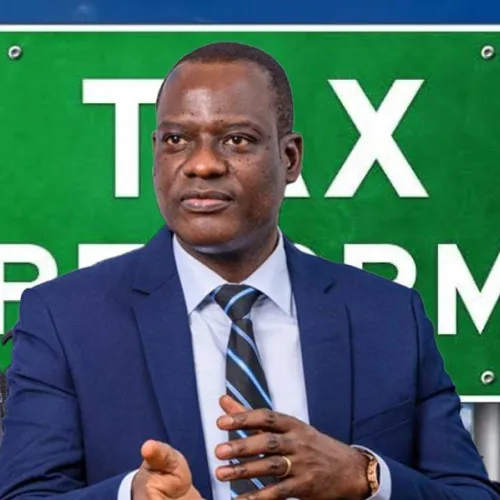
The Minister of Finance and Coordinating Minister of the Economy, Mr. Taiwo Oyedele, disclosed the initiative on Wednesday while speaking during a panel session at the ongoing Africa Emerging Markets Forum.
According to Oyedele, the proposed data hub will provide comprehensive and reliable information on government revenue, expenditure, and other key economic indicators, enabling Nigeria to generate and manage its own credible data.
He explained that the initiative forms part of the Ministry’s new DNA agenda, which stands for Diligent Execution, National Interest, and Accountability.
“Within the Ministry of Finance, we’re developing DNA. DNA means D for Diligent Execution. Whether it’s policy or a mandate on spending, we will execute diligently. N is for National Interest. We will place Nigeria’s interest above personal, sectional and regional interests. It will be Nigeria first, and Nigeria always. And A is for Accountability because we want to be accountable.
“We’re building a new data hub for the Ministry of Finance where you will find data about Nigeria. We no longer want to be referencing the World Bank about Nigeria’s data. The World Bank will reference us. We will own our data, and the data will be credible, accessible and timely,” Oyedele said.
The Federal Government has in recent years faced increased scrutiny over budget implementation, public spending and the management of public resources, making transparency and access to official data a key policy priority.
Responding to a question from the World Bank’s Chief Economist and Senior Vice President for Development Economics, Indermit Gill, on the achievements of the administration over the past three years, Oyedele said the government’s economic reforms had helped avert a deeper economic crisis.
Speaking on the theme, “Triad of Fragility: Food Price Volatility, Inflation and Monetary Policy Transmission in Selected Fragile and Post-Crisis Economies in Sub-Saharan Africa,” the minister said Nigeria’s reform programme demonstrates the importance of taking ownership of difficult but necessary policy decisions.
“Nigeria’s reform journey is a useful lesson in what is possible when a country owns its reforms,” he said.
According to Oyedele, the Tinubu administration inherited an economy burdened by years of structural distortions that discouraged investment, weakened productivity and undermined competitiveness.
He said postponing reforms would have imposed greater costs on the economy than confronting the challenges head-on.
“Over the past three years, we have pursued one of the most comprehensive reform programmes in Nigeria’s modern history. We unified the foreign exchange market by eliminating multiple exchange-rate windows, restoring transparency and predictability to trade finance and cross-border transactions.
“We also embarked on fiscal consolidation by removing unsustainable subsidies that drained national resources and redirected those resources to infrastructure and social investments. In addition, we have undertaken tax reforms aimed at simplifying a system that had become unnecessarily complex,” he said.
Oyedele reiterated that Nigeria’s experience offers a useful example of how bold, locally driven reforms can lay the foundation for long-term economic stability and sustainable growth.
Please follow and like us:
Comments
Start the conversation about this story.