





Nigerian grocery delivery startup GoLemon has shut down its operations after failing to secure additional funding, leading to the loss of jobs for its 33 employees.
The shutdown, announced on Wednesday, July 29, 2026, brings to an end a two-year journey that saw the company complete tens of thousands of grocery deliveries across Lagos.
According to the company’s LinkedIn profile, GoLemon employed 33 people, although it disclosed that about 20% of its workforce has already secured new jobs.
GoLemon adds to the growing list of Nigerian startups that have shut down amid a prolonged funding slowdown, as venture capital investors become more selective and prioritise profitability over rapid expansion.
What they are saying
Announcing the decision on Wednesday, the company said it explored options to raise fresh capital but was unable to find a sustainable path forward within the available timeframe, forcing it to wind down operations.
- “Despite our efforts to raise additional funding, we couldn’t find a sustainable path forward within the time available to us,” the company said in a statement announcing the shutdown.
The company added that all outstanding customer refunds have been processed, while its customer support team will remain available until Sunday, August 2, to resolve any remaining issues through its in-app live chat.
For farmers, suppliers and other business partners, the company said enquiries can be directed to its business support email as it concludes its remaining obligations.
Get up to speed
While startup shutdowns have become rampant across Africa since 2023 when the funding drought began, many Nigerian startups are navigating the turbulent waters by cutting their headcount, rather than throwing in the towel.
A recent Nairametrics report revealed that at least three Nigerian startups have sacked workers this year to stay afloat.
- Digital bank, Kuda, laid off hundreds of employees across multiple departments as part of what it described as a company-wide restructuring exercise.
- Crypto startup, ZAP Africa, also reduced its workforce by 44% in February 2026 as part of a restructuring aimed at building a leaner and more automation focused business model.
- Quidax, one of the first crypto exchanges to secure Approval in Principle from Nigeria’s Securities and Exchange Commission in 2024, also laid off an unspecified number of employees in March.
Built around convenience
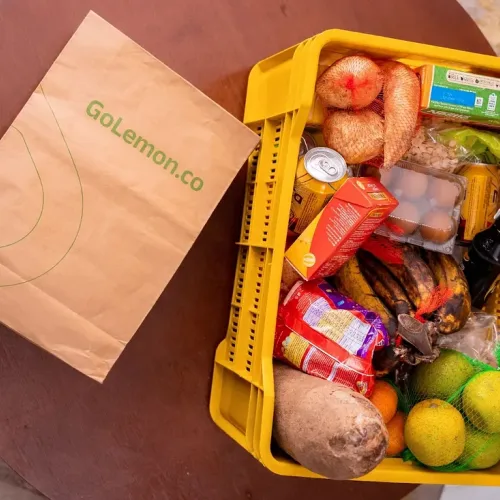
Founded to simplify grocery shopping for Lagos residents, GoLemon said it spent the past two years building its own software platform while expanding its delivery operations across the city.
The company said it completed tens of thousands of deliveries during that period and became part of the weekly shopping routine for thousands of households.
- “When we started GoLemon, we wanted to make grocery shopping simpler, more reliable and a little more delightful,” the company stated.
It added that it was proud of what it had built despite the difficult outcome.
GoLemon said it has spent the past few weeks supporting employees affected by the shutdown.
According to the company, around 20% of its workforce has already secured new jobs, while efforts are continuing to help the remaining employees find opportunities.
The startup also appealed to employers hiring across fulfilment operations, engineering, product, growth, customer support, finance and other startup functions to consider members of the GoLemon team.
What you should know
According to a report Startup Graveyard, funding shortages have been the primary cause of African startups’ shutdowns in recent years.
It, however, noted that a new trend emerged in 2024 with failed expansions into new product lines by startups leading to a lack of product-market fit and eventual discontinuation.
According to the report, 18 startups shut down in Africa in 2023. The figure, however reduced in 2024 as 11 shutdowns were recorded.
Comments
Start the conversation about this story.