





- Advertisement -
The Federal Government has reaffirmed its commitment to eliminating hazardous plastics in Electrical and Electronic Equipment (EEE) products in Nigeria.
The move is part of ongoing efforts to promote a circular economy and achieve a Persistent Organic Pollutants (POPs)-free plastics value chain in the country.
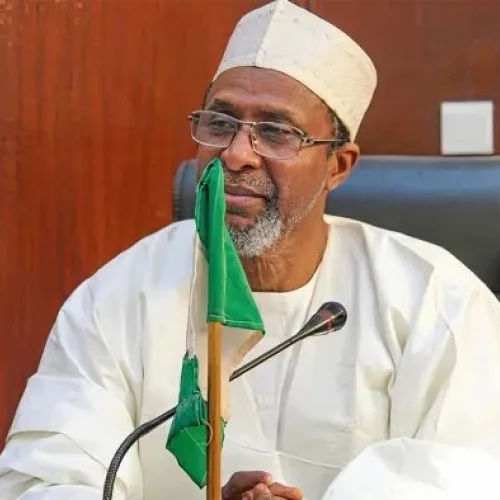
The Minister of Environment, Mr. Balarabe Lawal, stated this on Friday, July 31, 2026, in Abuja at the National Consultative Meeting on the Circular and POPs-Free Plastics Africa Project (GEF ID: 11049).
Lawal, represented by Mrs. Omotunde Adeola, Director of Pollution Control and Environmental Health, said plastic pollution was worsened by the presence of POPs in some plastic products and waste streams.
He said such hazardous substances posed serious risks to human health and the environment.
“The Federal Ministry of Environment and its agencies remain committed to strengthening chemicals and waste management through the implementation of sound environmental policies, legislation and programmes.
“As a party to the Stockholm Convention on POPs, Nigeria will continue to fulfil its international obligations by promoting environmentally sound management practices, strengthening institutional capacity and supporting initiatives that reduce the release of hazardous chemicals into the environment,” he said.
Earlier, Prof. Innocent Barikor, Director-General of the National Environmental Standards and Regulations Enforcement Agency (NESREA), said the meeting would strengthen national policies and improve regulation of hazardous chemicals in EEE plastics.
Barikor, represented by Dr. Christopher Beka, Director of Inspection and Enforcement, NESREA, said the engagement would also encourage innovation and investment in circular business models for the environmentally sound management of Waste Electrical and Electronic Equipment (WEEE) in Nigeria.
“Nigeria is committed to playing a leading role in Africa’s transition towards a circular and non-toxic EEE plastics economy.
“The recommendations from this consultation should provide a strong technical foundation for national policy reforms, strengthened enforcement mechanisms and strategic investments that will deliver measurable environmental, economic and social benefits,” he said.
The Circular and POPs-Free Plastics in Africa Project is funded by the Global Environment Facility (GEF) and implemented by the United Nations Environment Programme (UNEP) through the Basel Convention Coordinating Centre (BCCC), Ibadan, in partnership with NESREA.
By Doris Esa
Comments
Start the conversation about this story.