





…sustains 5,000 megawatts ouputs
…plans grid audit
The federal government is pinning its hopes on a new “Super Grid” transmission programme, part of a broader overhaul of Africa’s largest economy’s chronically unreliable power sector.
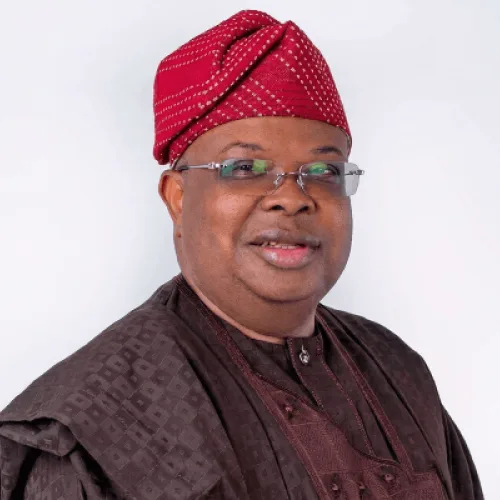
Joseph Tegbe, minister of power unveiled the plan on Friday at Nigeria’s commercial capital, framing it as the centerpiece of what the ministry is calling “Resetting the Sector”, an effort to fix a grid that has long undermined industrial growth in a country of more than 200 million people.
“The Super Grid Programme represents our medium and long-term strategy for expanding Nigeria’s transmission backbone along critical corridors,” Tegbe said.
He noted that the programme will reinforce the national grid, improve redundancy, enable higher power transfers across regions and create dedicated electricity corridors capable of supporting future industrial growth.
“ In the next few months, we plan to achieve visible improvements in availability,” Tegbe said.
The Super Grid initiative is designed as Nigeria’s medium- and long-term answer to a transmission network that has repeatedly buckled under demand, triggering national grid collapses and stranding power that generators are capable of producing but cannot deliver.
Tegbe described it as a plan to “reinforce the national grid, improve redundancy, enable higher power transfers across regions” and build dedicated corridors to support future industrial expansion.
In the nearer term, the ministry is targeting three specific transmission corridors, Lagos, the Enugu–Port Harcourt axis, and the Abuja–Kaduna–Kano route, under what it calls a Grid Stabilisation Programme.
Tegbe said a technical audit of the national transmission network, meant to catalogue ageing assets, overloaded substations and weak corridors, will underpin decisions on where money gets spent first.
“One cannot effectively rebuild what one has not properly diagnosed,” Tegbe said of the audit, which he cast as a prerequisite for prioritising investment and reducing system failures.
The push comes as the ministry points to modest signs of progress on generation, saying the country has sustained around 5,000 megawatts of output over the past two weeks, a level that, if maintained, would mark an improvement for a grid that has often struggled to stay above 4,000 megawatts nationwide, a fraction of what economists say is needed for an economy Nigeria’s size.
But Tegbe was careful not to oversell the numbers. “Generation alone does not solve Nigeria’s electricity problem,” he said, noting that power has to be generated, transmitted, distributed and paid for “simultaneously” for the system to function.
That last point, payment, remains the sector’s oldest wound. Unpaid legacy debts owed to power generation companies and gas suppliers have piled up for years, discouraging new investment and leaving utilities short of cash to maintain equipment.
The government says it is now advancing a Power Sector Bond to help clear those obligations, part of an effort to “restore confidence” and bring “commercial discipline” back to the market.
Alongside the grid overhaul, the ministry is leaning on the Presidential Metering Initiative, an attempt to close a metering gap that has left millions of households on estimated bills — long a source of consumer distrust.
A newly inaugurated “Power Force” will deploy 5,000 young Nigerians to install meters nationwide while building a skilled labor pool through the National Power Training Institute.
Tegbe also moved to head off speculation about tariffs, telling reporters there is “no policy by this administration to increase electricity tariffs beyond its current level,” and that the near-term priority is service improvement and universal metering rather than higher prices.
He said the government would keep examining ways to protect vulnerable consumers while working to make the market more financially sustainable.
Officials are setting a two-to-three-year horizon for results, promising Nigerians a “stronger grid, reduced technical losses, improved market discipline” and expanded access over that period.
Tegbe also flagged plans to clarify regulatory overlap between federal and state authorities following the 2023 Electricity Act, which opened the door for states to run their own power markets — a shift he called an opportunity rather than a threat to national coordination.

Comments
Start the conversation about this story.