





Experts in the energy sector have said that factual, unbiased and comprehensive energy reporting will advance Nigeria.
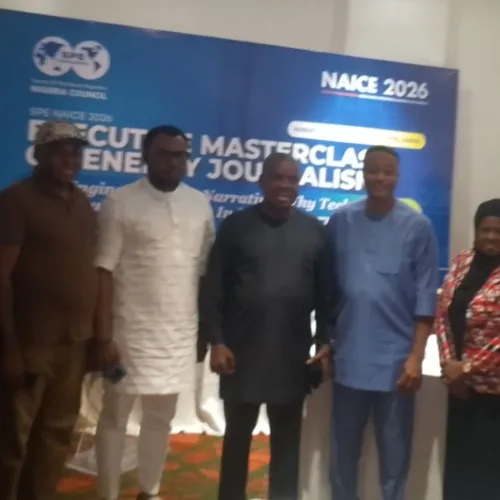
They spoke in Lagos on Saturday during the SPE NAICE 2026 Executive Master Class on Energy Journalism with the title: “Engineering the narrative: Why technical knowledge matters in energy journalism.”
The speakers include: former Council Chairman, SPE Nigeria Council, Engr Amina Danmadami; Chairman, AA Holdings/Board Member, NNPC, Mr Austin Avuru; Manager, Information Technology, Corporate Functions, Chevron Nigeria Limited, Mr Christopher Eleagu; Chairman, MD Western & Renaissance Africa Energy Company, Dr Layi Fatona and oil and gas expert, Mr Chike Nwosu.
Chairman, Society of Petroleum Engineers (SPE) Nigeria Council, Engr Francis Nwaochei said the theme of the training spoke directly to the role that credible journalism plays in shaping public understanding of Nigeria’s energy industry.
He added that the stories that appear in the newspapers, on television, online platforms and across social media influence public perception, investor confidence and even policy conversations.
According to him, that is why accuracy matters.
Nwaochei said: “Nigeria’s energy industry is evolving rapidly. Today’s conversations extend beyond crude oil production.
“They include gas development, energy security, carbon management, digital technologies, local content, infrastructure development, financing, regulatory reforms and the transition to a lower-carbon future. As the industry becomes more complex, reporting on it also requires greater depth and context.
“This Masterclass is not about turning journalists into petroleum engineers. That is not our expectation. Rather, our goal is to inspire you to become even more effective energy journalists by developing the confidence to ask the right questions, conduct due diligence and present accurate, balanced and well-researched reports.
“In our industry, details matter. A production figure may represent installed capacity, actual production or a future target. A reserve estimate is different from recoverable production.
A licence award is not the same as first oil. An investment announcement does not necessarily mean the funds have been deployed, and an acquisition only creates value when it is successfully executed.
“Understanding these distinctions helps journalists move beyond reporting headlines to explaining what those headlines actually mean.
Before publishing a story, ask: What exactly does this number represent? What evidence supports this claim? Has it been independently verified? What stage has this project reached? What approvals or milestones are still outstanding?”
“Nigeria deserves an energy narrative that is both ambitious and accurate. We should celebrate our achievements, acknowledge our challenges, explain our opportunities and report our progress with fairness and context. Credibility is built not by sensational headlines, but by facts, evidence and responsible journalism.”
Nigerian Upstream Petroleum Regulatory Commission said that it is working to position Nigeria’s upstream sector as the continent’s most transparent, investment-friendly, and technically rigorous petroleum jurisdiction.
It added that this is not merely an aspiration; it is an operational principle that guides every licensing round they design, every field development plan they evaluate, every reserves audit they validate, and every production benchmark they monitor.
The Commission Chief Executive, NUPRC, Mrs Oritsemeyiwa A. Eyesan, represented by Deputy Director, Acreage Administration, NUPRC, Engr. Dr Amba Ndoma Egba, stated that good partnership was imperative for the growth of the industry.
Eyesan said: “Under this Commission, regulation is no longer simply a gatekeeping exercise; it is a framework for enabling responsible growth.
“We regulate not to obstruct, but to reduce risk; not to create confusion, but to provide clarity. Central to this clarity is the public narrative—the story Nigeria tells the world about its petroleum sector.
“The NUPRC is not merely a regulator; it is the steward of Nigeria’s sovereign petroleum resources on behalf of more than 200 million Nigerians. At its core, stewardship is also an act of communication.
“Through our regulations, enforcement, data, and commitment to transparency, we tell the story of how Nigeria manages one of its most
vital resources.
“However, the regulator cannot tell this story alone. It must also be reported, interpreted, scrutinised, and communicated by a media
equipped with the technical literacy to engage confidently with the sector’s complexities.
“You have the platform, and we have the data. Together, let us engineer an accurate and credible narrative.”
Please follow and like us:
Comments
Start the conversation about this story.