





…As Accord, Civil Society Demand Technical Audit
The Chairman of the Independent National Electoral Commission (INEC), Professor Joash Amupitan (SAN), has attributed the technical glitches recorded during Saturday’s mock accreditation exercise in Osun State to compatibility issues involving old Permanent Voter Cards (PVCs), assuring voters that the problem was identified and resolved within an hour.
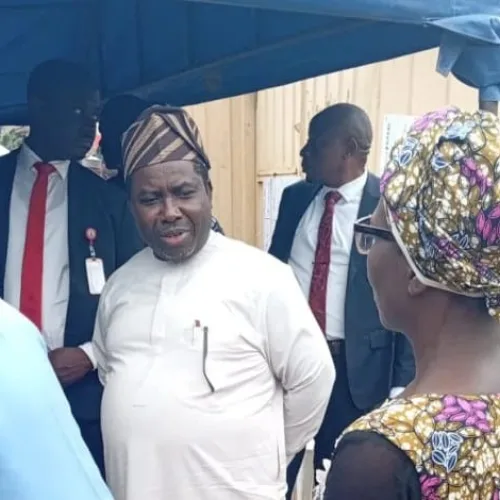
Speaking with journalists at the INEC headquarters in Osogbo after monitoring the exercise, Amupitan explained that the mock accreditation successfully achieved its objective of exposing potential technical challenges ahead of the August 15 governorship election.
According to him, the commission’s Information and Communication Technology (ICT) team promptly intervened after reports emerged that some older PVCs were not being recognised by the Bimodal Voter Accreditation System (BVAS).
“We initially had a minor hitch, and I call it minor because if it happened during the election, it would have been a major hitch,” Amupitan said.
“We discovered that most of the old cards were not being accredited. This was a result of what we call a compatibility score, or a similarity score. The moment we were alerted, our ICT team worked on it and within one hour the issue was resolved. We didn’t have to wait until election day.”
He explained that some PVCs issued as far back as 2011 had become worn out or defaced, making them difficult for the machines to read, adding that the commission had earlier considered validating such cards for that reason.
The INEC chairman stressed that the mock exercise was organised to detect and resolve any technical issues before the governorship election, noting that a similar incident on election day could easily have been misinterpreted as a complete failure of the BVAS.
“We want to identify problems ahead of time. If this had happened on election day, many people would have concluded that BVAS had failed. But we have the capacity to overcome every challenge,” he added.
Amupitan also announced that the commission had increased the number of BVAS machines for the election from 4,427 to 5,130 following concerns raised by political parties over deployment.
According to him, the additional machines will cater for split polling units in Ife East, Irewole, Egbedore, Ede North and Osogbo Local Government Areas.
He further disclosed that the number of backup BVAS machines had been doubled from 664 to 1,328 to ensure prompt replacement of any faulty device during the election.
Meanwhile, the Osun State chapter of the Accord Party expressed concern over the glitches recorded during the mock accreditation, urging INEC to carry out a comprehensive technical audit of the BVAS configuration before the election.
In a statement signed by its chairman, Pastor Victor Akande, the party described the observed errors as fundamental and called for direct involvement of political stakeholders in resolving the identified challenges.
“With less than two weeks until election day, INEC must demonstrate genuine readiness for reliable, fast and transparent technological applications in the electoral process,” the statement read.
While expressing confidence in the commission’s ability to conduct a credible election as it did in 2022, the party proposed the establishment of a technical committee comprising representatives of all contesting political parties to support INEC in the corrective process.
According to the party, such collaboration would strengthen public confidence and prevent speculation over the integrity of the BVAS.
Similarly, a civil society organisation, the Coalition of Concerned Nigeria Citizens (CCNC), called on INEC to provide a detailed explanation of the technical problems allegedly experienced during the exercise.
In a statement signed by its spokesperson, Comrade Raufu Sodiq, popularly known as “Oluomo Success,” the coalition alleged that several BVAS machines failed to recognise fingerprints, facial features and PVCs shortly after accreditation commenced in some polling units.
The group described the development as disturbing, arguing that a mock accreditation exercise should ordinarily strengthen public confidence in the electoral process rather than raise fresh concerns about the commission’s preparedness.
CCNC maintained that voter accreditation remains the foundation of every credible election because it determines voter eligibility and safeguards the integrity of the electoral process.
The coalition therefore urged the Osun Resident Electoral Commissioner and the national leadership of INEC to publicly explain whether the reported glitches were caused by software, hardware or configuration issues, disclose contingency plans for the state’s 3,763 polling units, replace any defective BVAS machines and consider conducting another mock accreditation exercise before the August 15 governorship election.
“We believe in strong democratic institutions and do not want to see INEC fail. However, public confidence must be built on competence, transparency and accountability. The people of Osun deserve an election where every eligible voter can vote without avoidable technological failures,” the coalition stated.
INEC conducted the statewide mock accreditation exercise on Saturday to test the functionality of the BVAS and other electoral processes ahead of the August 15 Osun State governorship election.
Please follow and like us:
Comments
Start the conversation about this story.