






The United Nations Children’s Fund (UNICEF) has revealed that two out of every three Nigerian children aged between six and 23 months suffer from child food poverty, deepening the country’s child nutrition crisis, while two in three are also not exclusively breastfed.
The agency further disclosed that Nigeria’s 36 states and the Federal Capital Territory have about 38 million children under the age of five, of whom 15 million are stunted, 10 million are wasted and 12 million are anaemic.
UNICEF noted that despite overwhelming scientific evidence showing that exclusive breastfeeding is vital for child survival, healthy growth and cognitive development, the practice remains far below recommended levels.
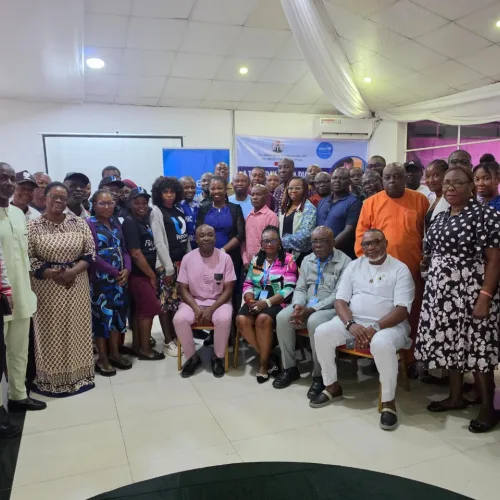
The revelations were made during a two-day zonal media dialogue organised by UNICEF’s Enugu Field Office in collaboration with the Broadcasting Corporation of Abia State (BCA) for journalists from Benue, Enugu, Abia and Imo states to commemorate the 2026 World Breastfeeding Week.
The event, supported by the United States Mission in Nigeria, the Child Nutrition Fund, the Gates Foundation and The Church of Jesus Christ of Latter-day Saints, focused on child nutrition, early initiation of breastfeeding and advocacy for exclusive breastfeeding.
Presenting the nutrition situation, UNICEF Nutrition Specialist at Enugu Field Office, Mrs Ngozi Onuora, said although early initiation of breastfeeding had improved, exclusive breastfeeding rates remained far below national targets.
She stressed that improving breastfeeding practices was essential to reducing child malnutrition, preventing disease and promoting healthy physical and cognitive development.
In his welcome address, the Officer-in-Charge of the UNICEF Field Office, Enugu, Dr Hilary Ozoh, described breastfeeding as one of the most effective and cost-efficient investments any nation could make in securing the future of its children.
Dr Ozoh said breastfeeding strengthens infants’ immunity, enhances cognitive development, reduces childhood illnesses, improves maternal health and contributes significantly to achieving the Sustainable Development Goals on health, nutrition, education and poverty reduction.
He, however, lamented that misinformation, harmful cultural beliefs, inadequate workplace support and inconsistent public messaging continued to discourage many mothers from exclusively breastfeeding their babies.
The media dialogue also sought to equip journalists with accurate information to dispel myths surrounding infant feeding, promote ethical reporting and advocate policies such as six months’ paid maternity leave to support exclusive breastfeeding.
Speakers at the event included consultant public health physician, Dr Chikezie Obassi, who spoke on leveraging the media for advocacy on infant and young child feeding, and UNICEF Communication Officer, Dr Ijeoma Onuoha Ogwe, who delivered a presentation on ethical reporting and effective messaging for children’s issues.
Earlier, the Director-General of the Broadcasting Corporation of Abia State, Francis Nwubani, represented by the UNICEF Desk Officer, Mr. Nkpa Okezie, reaffirmed BCA’s long-standing partnership with UNICEF stressing “we are solidly behind UNICEF on this programme and participants will be better informed at the end of the
meeting.”
The 2026 World Breastfeeding Week is themed, “Breastfeeding for a Sustainable Start in Life: Strengthen What Works,” with campaign organisers calling for sustained behavioural change during the first 1,000 days of a child’s life.
Comments
Start the conversation about this story.