





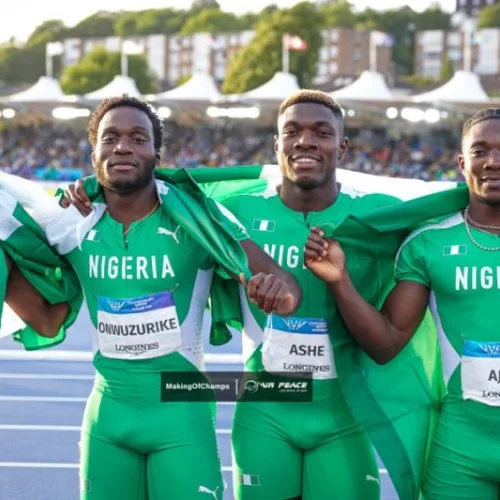
Nigeria’s performance at the 2026 Commonwealth Games in Glasgow should be celebrated. It was not just about winning medals. It was about showing that Nigerian athletes can compete with the best when they receive the right support.
Team Nigeria finished seventh on the overall medals table with 24 medals-10 gold, seven silver and seven bronze. More importantly, Nigeria emerged as the highest-ranked African country at the Games. That is an achievement every Nigerian should be proud of. It also improved on the country’s performance at the last Commonwealth Games, proving that Nigerian sports are moving in the right direction.
One of the biggest moments came on the athletics track. Samuel Ogazi won Nigeria’s first-ever Commonwealth Games gold medal in the men’s 400 metres, producing a brilliant run that announced him as one of the world’s rising stars. Ezekiel Nathaniel also struck gold in the men’s 400m hurdles, while Nigeria’s relay teams and other track athletes produced impressive performances throughout the Games. Team Nigeria also won gold in weightlifting and shot put. Our athletes are now making their mark on the international scene. This is one of the best Commonwealth Games ever.
The success in Glasgow did not happen by luck. Behind every medal were years of hard work, discipline and sacrifice. Many of these athletes trained under difficult conditions, often with limited facilities and funding. Yet they refused to give up. Their determination should inspire every young Nigerian who dreams of wearing the green and white.
But while we celebrate, we must also ask an important question: what next?
Nigeria has often produced outstanding results at major competitions only to forget the athletes once the celebrations end. That must not happen again. Champions should not have to struggle for training equipment, medical care or financial support after bringing honour to the country.
Government, the private sector and sports administrators must use this success as a foundation, not a finishing line. More investment is needed in grassroots sports, coaching, and modern training facilities. Schools should once again become centres for discovering young talents. Companies should also see sports sponsorship as an investment in national development, not just charity.
The athletes have done their part. They have shown that Nigeria has the talent to compete with the best in the Commonwealth. It is now the responsibility of those who manage sports to create an environment where success becomes a habit rather than an occasional surprise.
Glasgow 2026 has given Nigerians something to celebrate. More importantly, it has given the nation hope. If the lessons from these Games are taken seriously, the victories in Scotland could become the beginning of an even greater era for Nigerian sports.
Nigeria has proved that it belongs among the best. The challenge now is to stay there.
Comments
Start the conversation about this story.