





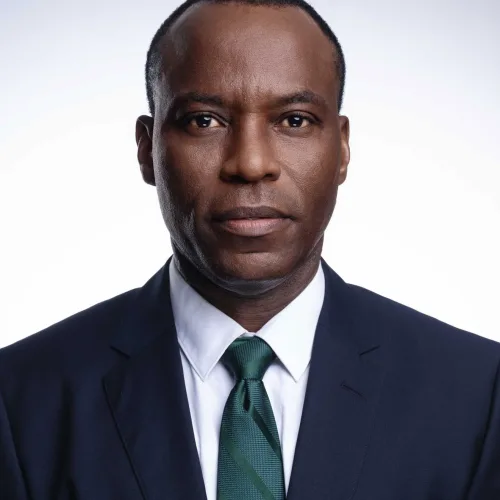
Nigeria needs to produce oil and gas at globally competitive cost and lower emissions intensity if it wants to keep attracting capital in a market where investors have grown more selective about which barrels they back, according to the new chief executive officer of Seplat Energy Plc.
Effiong Okon, who took over as CEO of the Lagos-based energy producer on the same day he addressed the Society of Petroleum Engineers Nigeria Council’s annual conference, told delegates in a keynote speech that global capital is no longer chasing reserves alone.
“Investors are not simply asking who has barrels,” Okon said at the 49th edition of the Nigeria Annual International Conference and Exhibition, known as NAICE. “They are asking who can produce safely, at competitive cost, with lower emissions intensity, credible governance, strong community relationships and predictable cash flows.”
The remarks come as recent shocks to global energy supply chains have sharpened focus on which producing nations can reliably deliver output when markets are under strain. Okon pointed to disruption in the Strait of Hormuz, the shipping corridor that carries roughly a fifth of global oil consumption, as a case study in how quickly supply routes can seize up.
Citing Lloyd’s List Intelligence data, he said vessel transits through the strait fell to 53 in the week through July 20 from 157 a week earlier, while tanker and gas-carrier movements dropped to 30 from 90.
The United Nations Conference on Trade and Development has warned the broader economic fallout from that disruption, including higher transport, insurance and supply-chain costs, may not be fully visible until the second half of 2026, Okon noted.
The International Energy Agency’s July report showed global oil supply rebounding by 4.1 million barrels a day in June to 98.8 million barrels a day as Hormuz flows partially resumed, though output remained about 9.4 million barrels a day below pre-war levels, with refined product markets still tight.
“For Nigeria and Africa, the message is direct,” Okon said. “The world is asking who can deliver energy reliably when the system is stressed.”
Okon argued Nigeria’s energy strategy should be framed around addition rather than subtraction, expanding gas-to-power, electricity access and industrial gas use alongside renewables, rather than curbing oil and gas production.
He said gas should be treated as Nigeria’s “industrialisation fuel,” feeding fertilizer plants, petrochemicals, data centers and cleaner cooking, contingent on upstream supply, pipelines and creditworthy buyers working in concert.
Nigeria produced about 554.4 million barrels of crude and condensate in 2025, averaging roughly 1.63 million barrels a day, according to figures from the Nigerian Upstream Petroleum Regulatory Commission cited by Okon.
State-owned NNPC Ltd. has set an ambition of reaching 3 million barrels a day and 12 billion cubic feet of gas a day by 2030.
Seplat itself reported average working-interest production of 131,506 barrels of oil equivalent a day in 2025, up 148 percent from a year earlier, after restoring 49 idle offshore wells. The company said its 2P-plus-2C resource base stood at about 2.49 billion barrels of oil equivalent at year-end.
On gas, Seplat processed 172 million standard cubic feet a day net working interest in 2025 and said it supplies up to 30 percent of gas connected to Nigeria’s power grid. Its ANOH gas project reached first output in January and hit a peak processing rate of about 193 million cubic feet a day by late April.
Okon laid out a five-point agenda for the industry: treating infrastructure reliability as a competitiveness issue, building out gas markets rather than announcing projects without buyers, lowering production costs and carbon intensity, streamlining regulatory approvals, and investing in technical talent.
The IEA has projected that global electricity demand tied to data centers could more than double, to over 1,000 terawatt-hours by 2030 from 460 terawatt-hours in 2024, a shift Okon said raises the stakes for countries seeking to attract technology investment alongside traditional industry.
“The transition for a country like Nigeria cannot mean removing energy from a system that already has too little,” he said.

Comments
Start the conversation about this story.