





Team Nigeria concluded its campaign at the 2026 Commonwealth Games in Glasgow as Africa’s highest-ranked nation, finishing seventh on the final medals table with an impressive haul of 24 medals, comprising 10 gold, seven silver and seven bronze.
The feat ensured Nigeria retained its status as the continent’s leading sporting nation at the Games, finishing ahead of every other African country despite facing stiff competition across several sporting disciplines. Blueprint reports
The final standings, released at the close of competition on Sunday, showed that Nigeria once again demonstrated its strength in athletics, weightlifting, wrestling, para sports and other events, maintaining its reputation as one of the Commonwealth’s most consistent sporting nations.
Africa’s leading nation
Nigeria’s seventh-place finish placed the country ahead of traditional Commonwealth sporting nations such as Jamaica, Wales, Malaysia and South Africa.
Australia topped the medals table with a dominant performance, winning 70 gold medals, while England finished second and Canada occupied third position.
Among African countries, Nigeria comfortably led the standings, with South Africa emerging as the next best-performing nation after finishing 11th with seven gold, 11 silver and 10 bronze medals.
Kenya finished 13th after winning three gold, four silver and five bronze medals, while Mauritius placed 15th with one gold, two silver and one bronze.
Cameroon ended the Games in 16th position after claiming one gold, one silver and three bronze medals.
Uganda finished 27th with two silver and one bronze medal, Namibia placed 29th with one silver and two bronze medals, while Ghana ended 30th after winning one silver and one bronze medal.
Other African countries that featured on the medals table included Lesotho with two bronze medals, Zambia with two bronze, Gabon with one bronze, Rwanda with one bronze and The Gambia with one bronze.
Overall, 13 African nations won at least one medal at the Glasgow Games, underlining the continent’s growing competitiveness across different sports.
Performance below Birmingham return
Despite finishing as Africa’s top nation once again, Team Nigeria’s overall medal haul represented a decline compared to its performance at the 2022 Commonwealth Games in Birmingham.
In Birmingham, Nigeria returned home with 35 medals, including 12 gold, making Glasgow’s return of 24 medals a reduction of 11 medals, while the gold medal tally also dropped by two.
The comparison suggests that although Nigeria maintained continental supremacy, there remains room for improvement as the country prepares for future international competitions.
Sports analysts believe the Glasgow performance provides useful lessons for athletes, coaches and administrators ahead of the Olympic cycle and other major championships.
Athletics leads medal charge
As in previous editions of the Games, athletics once again proved to be Nigeria’s biggest source of medals.
Among the standout performers was Nathaniel Ezekiel, who produced a brilliant display to win gold in the men’s 400 metres hurdles, reinforcing Nigeria’s growing reputation in sprint hurdling.
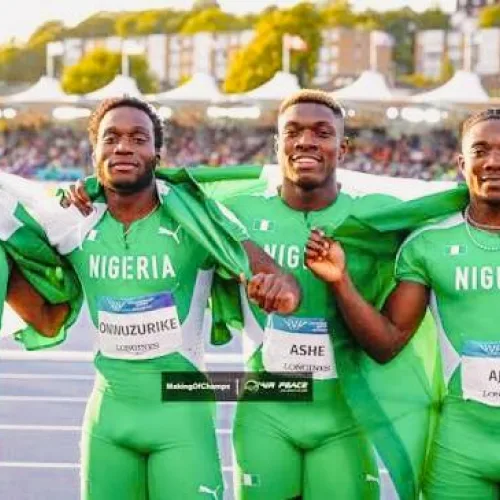
The men’s 4×100 metres relay quartet of Favour Ashe, Kanyinsola Ajayi, Nicholas Fakorede and Udodi Onwuzurikealso delivered an outstanding performance, winning silver after clocking a season’s best time of 38.12 seconds.
In the field events, Ruth Usoro secured silver in the women’s long jump after recording a leap of 6.87 metres, while several other Nigerian athletes contributed valuable points through strong performances across the athletics programme.
Historic moments in other sports
Beyond athletics, Team Nigeria celebrated several memorable achievements across different sports.
Judoka Enku Ekuta ended Nigeria’s 24-year Commonwealth Games medal drought in judo by claiming bronze in the women’s 63kg event after an impressive repechage campaign.
Weightlifting and wrestling also continued to justify their reputation as traditional medal-producing sports for Nigeria, while para-athletes once again demonstrated remarkable resilience and excellence on the international stage.
The performances reflected the growing depth of Nigerian sports beyond its traditional strengths.
Investment beginning to yield results
The Glasgow campaign also highlighted the impact of the National Sports Commission’s renewed emphasis on elite athlete preparation and high-performance development.
Ahead of the Games, the Commission intensified training programmes, international exposure and technical support for athletes across various sports.
Although the final medal tally fell below the Birmingham record, sports administrators have described Nigeria’s ability to remain Africa’s number one nation as evidence that the country’s sports development programmes are moving in the right direction.
Many observers believe greater investment in grassroots sports, coaching education, sports science and athlete welfare will be essential if Nigeria is to improve its medal haul at future multi-sport events.
Focus shifts to future competitions
With the Glasgow Games now concluded, attention will gradually shift to forthcoming international competitions, including the African Games, World Championships, Commonwealth youth events and the 2028 Olympic Games in Los Angeles.
Sports stakeholders are expected to evaluate Team Nigeria’s overall performance to identify areas requiring improvement while consolidating the gains recorded during the Games.
Despite winning fewer medals than in Birmingham, Nigeria’s ability to finish as Africa’s highest-ranked nation once again reinforces its position as one of the continent’s foremost sporting powers and a consistent force within the Commonwealth.
The Glasgow outing also provided another opportunity for a new generation of Nigerian athletes to announce themselves on the international stage, offering optimism that with sustained investment, effective planning and continued support, Team Nigeria can build on its achievements and return even stronger in future global competitions.
Comments
Start the conversation about this story.