





By Gift Chapi Odekina, Abuja
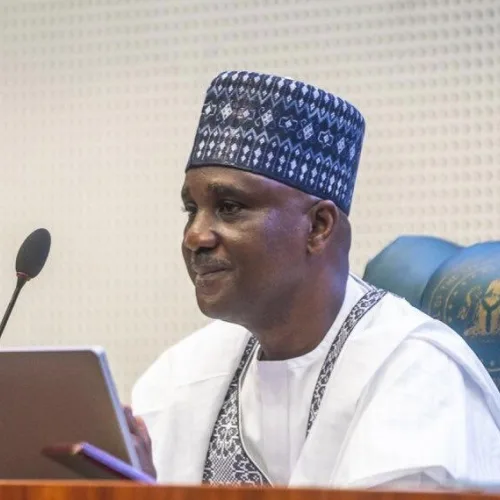
The Speaker of the House of Representatives, Rep. Abbas Tajudeen, has called for deliberate efforts to prepare young Nigerians for leadership, saying they should no longer be seen merely as the leaders of tomorrow but as active participants in shaping the nation’s future.
Abbas made the call on Tuesday at the launch of the Leadership for Equity, Advocacy and Development (LEAD) Fellowship, organised by the Gender Mobile Initiative (GMI) at the National Assembly, Abuja.
Represented by the Chairman of the House Committee on Women Affairs and Social Development, Hon. Kafilat Ogbara, the Speaker said Nigeria’s youthful population must be equipped with the knowledge, ethical values, institutional exposure and leadership skills required for effective public service.
He said leadership goes beyond holding political office, stressing that it is rooted in responsibility, accountability and respect for democratic institutions.
“It is time we deliberately prepared young people for leadership. As the trustees of our tomorrow, they must understand how government works and how political office can be used to improve society.
Without such preparation, they risk losing the opportunity to make lasting positive impact,” Abbas said.
He described the LEAD Fellowship, which targets students in tertiary institutions, as a strategic investment in Nigeria’s democratic future.
“The youth are no longer merely the leaders of tomorrow; their time has come. As voters, innovators, entrepreneurs and community leaders, they deserve the opportunity to influence decisions that affect their lives today,” he added.
The Speaker also defended the proposed constitutional amendment seeking to create special seats for women in the National Assembly and state Houses of Assembly, saying the initiative is intended to remove structural barriers to women’s political participation rather than lower leadership standards.
“We are not attempting to lower the standard of leadership. We are seeking to remove the barriers that prevent capable women from reaching the starting line,” he said.
Abbas identified inadequate campaign financing, exclusion from party structures, cultural stereotypes and electoral violence as major factors limiting women’s participation in politics.
He urged beneficiaries of the fellowship to focus on solving societal problems rather than merely seeking political office.
“Nigeria does not need a generation that is simply more ambitious than the previous one. It needs a generation that is wiser, more ethical, more inclusive, technologically driven and institutionally minded,” he said.
To sustain the initiative, Abbas proposed the establishment of a LEAD Alumni Policy Network to promote mentorship, policy research and collaboration among participants, while reaffirming the House’s commitment to partnering with GMI to deepen citizen engagement and inclusive governance.
Earlier, the Executive Lead of the Gender Mobile Initiative, Omowumi Ogunrotimi, said the fellowship was designed to bridge the gap between student leadership and meaningful participation in governance after graduation.
She disclosed that the 18-month programme would train 1,000 student leaders drawn from 10 tertiary institutions in ethical leadership and public service through partnerships with the Office of the Speaker, the National Institute for Legislative and Democratic Studies (NILDS), the Office of the Senior Special Assistant to the President on Student Engagement, with support from the Open Society Foundations.
“We are intentionally developing 1,000 student leaders across 10 pilot institutions. Our goal is to nurture women and men whose leadership will be defined by ethics, constitutionalism, evidence, inclusion and an unwavering commitment to public service,” Ogunrotimi said.
She explained that the fellowship was conceived after a female student leader asked what opportunities existed for ethical student leaders after graduation, describing the programme as a response to Nigeria’s leadership development gap.
Also speaking, the House Spokesman, Rep. Akin Rotimi, urged young Nigerians to prioritise character, competence and service above the pursuit of political power.
“Strong institutions require capable leaders. Leadership must therefore be identified, nurtured and developed,” he said.
Rotimi noted that the fellowship aligns with the House’s commitment to youth inclusion, adding that initiatives such as the National Assembly Youth Engagement Strategy and the 2026 Youth Town Hall demonstrate the legislature’s resolve to encourage greater youth participation in governance.
“If we want better politics, stronger institutions and more accountable governance, we must invest in leadership development long before individuals seek public office. The LEAD Fellowship is part of that investment,” he said.
The Director-General of the National Institute for Legislative and Democratic Studies (NILDS), Prof. Abubakar O. Sulaiman, represented by Dr. Shuaibu Danwanka, described the fellowship as “a bold national investment in ethical leadership, democratic resilience and inclusive governance.”
He warned that without deliberate efforts to nurture ethical leadership from an early stage, Nigeria risks producing future leaders who perpetuate patronage, exclusion and weak accountability instead of strengthening democratic institutions.
“Strong democracies are built not only by strong institutions but also by leaders with intellectual capacity, ethical discipline, emotional intelligence and a commitment to national development,” he said.
Sulaiman reaffirmed NILDS’ commitment to supporting the fellowship through research, democratic education and strategic partnerships, expressing confidence that it would help produce a new generation of ethical leaders committed to advancing democratic governance in Nigeria.
Comments
Start the conversation about this story.