





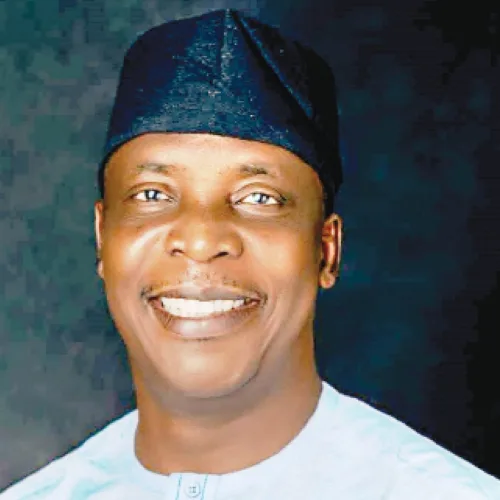
A stalwart of the Peoples Democratic Party (PDP) and a factional gubernatorial candidate in Plateau State, Mr. Sunday Garba Biggs, is a loyalist of the Tanimu Turaki-led faction of the party. He speaks with ISAAC SHOBAYO on the state of PDP among other issues. Excerpts:
THE once vibrant Peoples Democratic Party (PDP) is struggling with multiple litigations; do you see the party surviving this ordeal?
Like I’ve always said, it’s an in-house disagreement that we are trying to sort out. However, we are before the public now because the matter is before the courts of the land to adjudicate on some of the crucial issues facing us as a political party. As it stands, the two factions are operating simultaneously, and the matter is before the Independent National Electoral Commission (INEC). The judiciary had initially finished its job. The Court of Appeal had spoken, the Supreme Court had spoken, and all the judgments that were delivered were in favour of the Turaki faction. However, the judgments were presented to INEC for implementation, and INEC was mute about them. That became a source of concern to all of us. Therefore, we had recourse to the courts again to seek an order compelling INEC to respect the judgments of the Court of Appeal and the Supreme Court. That was what took us before the Federal High Court, where an order of mandamus was being sought. All the BOT members went to court for was to seek an order compelling INEC, but the court delved into issues of the party’s leadership, which, as far as we are concerned, had already been settled by the Court of Appeal.
Dissatisfied with that judgment, we are back at the Court of Appeal so that it can intervene. We were not satisfied with the pronouncement made by the Federal High Court judge, and we believe that the Court of Appeal, which had already adjudicated on the matter, will determine whether its earlier judgment is in tandem with what the Federal High Court judge did. So, the matter is still pending, and I believe that, with the passage of time—and since we are in an election period when courts usually give accelerated hearings to political cases—we expect those issues to be resolved soon. We are very hopeful. We are very determined. PDP is still one. However, wherever the pendulum swings, always remember that this is an in-house issue. PDP is still one.
How hopeful are you about the party getting the desired reprieve from the courts?
That judgment delivered in favour of the four political parties by the Court of Appeal has signalled that there are people of good conscience in this country, particularly within the judiciary, who can always do what is expected of them. We have never been disillusioned by these judgments. We know that, by the hierarchy of courts, the higher you go, the more minds are involved. At the Federal High Court, it is only one judge. At the Court of Appeal, you have a panel of three justices, and at the Supreme Court, you have an even larger panel. So, we believe there are experienced judicial minds there that can do justice to these issues. We are very hopeful. That judgment alone speaks volumes for us. It tells us that there is hope for the PDP in the 2027 elections.
Are you still nursing the hope that the Turaki faction of the PDP will still be on the ballot come 2027?
That issue has already been settled. President Goodluck Ebele Jonathan is the presidential candidate of the PDP. His name has been submitted to INEC, just like every other candidate. The fact that he has not spoken publicly does not mean he did not complete his nomination forms. Neither does it mean that his documents are not with INEC.
We visited him last week as a PDP delegation, and I heard directly from him. He remains the presidential candidate of our party. He gave us every assurance, and the party chairman has already forwarded his name, alongside those of all other candidates, to INEC.
Therefore, unless there is an official statement to the contrary, Goodluck Jonathan remains the PDP presidential candidate for the election.
ALSO READ: Reps move to domesticate AfCFTA, advance 13 commerce bills
Outside the courts, what is the way out of the prolonged crisis in the PDP?
I think the responsibility lies with the party leaders. There are two possible approaches: a legal solution or a political solution. At the moment, we are pursuing the legal option, and the matter is still before the Court of Appeal. However, I believe the time may come when a political solution will also be explored.
I am not speaking on behalf of the national leadership, but in my opinion, whichever side eventually prevails will still need the support of the other faction. We are one political family. If the Turaki group succeeds in court, we will still need the support of the other faction to strengthen the party. Ultimately, there may be room for political reconciliation alongside the legal process. If the legal process settles the dispute, then you invite your colleagues to unite and move the party forward. If a political settlement is reached instead, everyone sits together, negotiates, makes compromises where necessary, and moves on.
Assuming the dispute is not resolved until November, what happens to the party’s preparations for the 2027 election?
Well, that is hypothetical, but we do not expect it to get to that point. As I said earlier, election-related cases are given accelerated hearings. We believe these issues will be resolved before the middle of August. In fact, I am optimistic that within the next two weeks there should be substantial progress. The courts have a constitutional responsibility to ensure that election matters are adjudicated promptly. It was the intention of the framers of the Electoral Act that election-related disputes should be concluded before elections are conducted. So, I believe that, in due course, all these issues will be resolved.
You are from the Plateau Central Senatorial Zone, particularly Mangu Local Government Area. Some people are marveled to see you contesting against the incumbent governor, who is also from the same council area. How do you feel running against Governor Mutfwang?
There’s no problem there. In fact, I think that is what Plateau people even expect—that the candidate who will challenge the incumbent governor should come from the same place. You know, zoning is very sacrosanct in this state. We are all living witnesses to that. Therefore, taking the PDP candidate outside Mangu could send the wrong signal. But if the candidate is from Mangu, morally speaking, Mangu has already produced a governor before, and what is expected now is simply another opportunity if the people so desire. So, by me coming from Mangu to contest, I think I’m only doing what is just, as against taking the ticket to another local government. Apart from that, there are party differences. He is of the APC, and I am of the PDP. There is no law in the Electoral Act or the Constitution that says if one party is governing, no other party can challenge it. We are all throwing our dice, and whoever wins will take the day. I believe that, coming from Mangu, I know what I stand to gain, and I know the strength I have in Mangu over and above anyone who may come from the APC.
So, what were the considerations in choosing your running mate?
For people who know my running mate, Mr. Austin Pam, he has spent most of his working life in the private sector. He’s a very disciplined person. He’s from Jos South Local Government Area. I believe that, coming from that background and joining hands with me, who has also spent most of my working life in the public sector, we present to Plateau people a blend of public and private sector experience that can positively impact the state.
What will be your focus in governing Plateau State?
Like you know, the mandate we receive from Plateau people is for four years. Therefore, we have observed many things that are not in tandem with the hopes and aspirations of the people.
Our focus is to lay a very solid foundation that will redirect the course of Plateau’s affairs and chart a new path that is sustainable so that succeeding governments can build upon it. We cannot claim that within four years we can do everything. But one thing I am certain about is that we will be able to lay a very solid foundation that future governments can build on. We have various challenges facing the state, particularly insecurity. If we could focus our attention even on security alone and return Plateau State to its rightful place as the Home of Peace and Tourism, I think we would have played our part.
Subsequent governments can then come and explore other avenues to take Plateau to greater heights. We have our own package, and we will limit ourselves to what can realistically be achieved within the four-year mandate that Plateau people will give us.
What is your assessment of the current administration in Plateau State?
This government has been in office for about three years now. I don’t know whether you can point to any major legacy project that has been initiated and executed since it came on board. You know the quantum of money that comes into this state. On average, Plateau receives between ₦15 billion and ₦20 billion monthly, yet we cannot point to any project that justifies the level of resources that have come into the state.
So, there are many questions this government will have to answer before the people of Plateau. By the time we are ready for the elections, I believe those answers will be demanded by the electorate.
How would you address the issue of insecurity?
Security is a very critical issue for Plateau State. We have our own security model that we intend to implement. Various governments have tried their best, but I believe that with what we have in stock—a concentric security model involving the people—we can move Plateau out of the woods. People must first take ownership of their own security. You cannot rely entirely on government institutions to secure every remote village. How do communities gather intelligence? What structures exist within local communities for early warning and information sharing? These are some of the questions we are asking. We also intend to work closely with the federal government, particularly with the ongoing discussions around state policing. Plateau already has a foundation that can serve as a launching pad for community policing. Operation Rainbow is already in place. It only needs to be strengthened, refocused, and properly equipped to align with the emerging reforms. By the time we come into office, Plateau people should know that government will create the legal and operational framework that enables communities to play a greater role in safeguarding themselves.
Comments
Start the conversation about this story.