





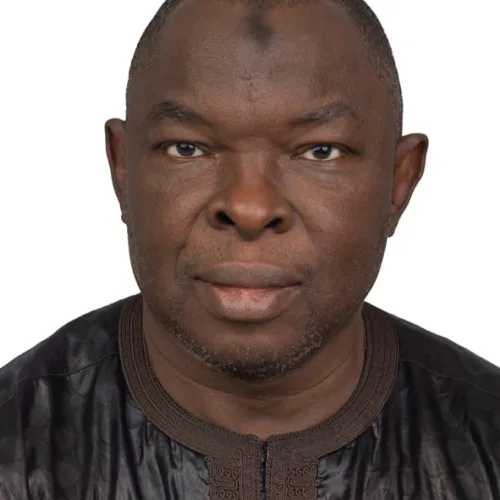
 Dr Segun Osoba

Dr Samuel Olusegun Osoba, in his residence in Ijebu Ode, Ogun State, on Thursday, 14 May, joined his ancestors at the age of 92.
He obtained his first degree in History at the University of Ife, Ile-Ife, Nigeria, and a doctoral degree at the Moscow State University. He taught History for a quarter of a century at Ife from 1967.
Professor Toyin Falola, an ex-student of Osoba, wrote that his “distinctive intellectual and human attributes” and his “love for history was contagious, and his ability to make complicated historical events comprehensible to his students, despite the embedded convolutions of philosophy, appeared to many a gift of nature.”
Falola added that Osoba made “history come alive” and to be “relevant and interesting.” This, Femi Falana revealed, created ‘problems’ for him, as more unregistered “students” kept trooping to his classes to audit “Osoba’s classes and public debates for critical analysis and inspiration.”
But Osoba’s ideas and critical scholarship went far beyond Ile-Ife and Nigeria. In Nigeria, Dung Sha, a professor of Political Science at the University of Jos, wrote that Osoba: “taught us never to suppress our voices in silence; to challenge hegemony; resist provincialism; push the boundaries of knowledge; and cultivate resilience in the struggle for transformative society.”

As a first year political science student in Ahmadu Bello University (ABU), Zaria, Nigeria, in 1981/82, I read Osoba’s “The Deepening Crisis of the Nigerian National Bourgeoisie”, published in Review of African Political Economy, No.13, September – December 1978.
The article contributed in making me understand the nature, character and mentality of the Nigerian ruling and governing elites. To see the latter as an extremely dependent, highly lily-livered, and totally unsalvageable class. A class that is fully dependent on the oxygen of Western imperialism for its survival.
Any wonder that the Second Symposium in honor Osoba held in Abuja on Tuesday, 28 July, 2026, like the first one held in Ijebu Ode, was well attended by scholars, labour unionists, human rights activists, students, development practitioners, and former students of Osoba.
The theme was “The Historian as a Public Intellectual: Segun Osoba, Radical Historiography and the Defence of the Common People.” It was hosted by the Osoba for Eternity group comprising 230 radicals, intellectuals, lawyers, trade unionists, journalists and social activists.
Femi Falana, Senior Advocate of Nigeria, SAN, chaired the symposium, while Owei Lakemfa, writer and labour leader, was Master of the Ceremony. Solidarity messages were delivered by the Saharawi Arab Democratic Republic (Western Sahara) Ambassador, Brahim Salem Buseif, and, Cuban Ambassador, Miriam Morales, who highlighted on-going attempts by the Trump administration to crumble the country by forcing its isolation.
In his remarks, spokesperson of the Organising Committee, Dr. Y.Z. Ya’u said the symposium was first, to pay tribute to Osoba, whose ideas are “eternal and will continue to resonate with society when they speak to the realities of that society.”
Secondly, to popularize his ideas “beyond academia and the movement” saying society will come to: “appreciate his ideas, which have continued to remain relevant in the discourse and struggle for a better Nigeria.”
The organisers said they hope that popular engagements with Osoba’s ideas would help to define the missions of patriots: “who are committed to the remaking of this country. We do not take ideas as ornamental pieces to decorate our speech. We take them as tools for action, and we invite you to do so.”
The intellectual, Professor Jibrin Ibrahim, who spoke on “Comrade Segun Osoba: The Radical Historian Who Stood with the People”, said Osoba “was deeply patriotic, committed to Nigeria and had a clear socialist ideological orientation.”
Ibrahim stated that Osoba became nationally known for the Minority Report & Draft Constitution for the Federal Republic of Nigeria, 1976, which he co-authored with Dr Yusuf Bala Usman. A Report which Obasanjo led military despots dismissed with the wave of a hand; yet, used police to tear-gass and beat up students and radical activists who wanted to launch it in Zaria.
Osoba, Ibrahim emphasised, was “one of the first to popularise Marxist methodology thus helping to make Ife one of the first hubs of radical thinking and student unionism in the Nigeria of the 1970s and 1980s.”
Ibrahim reminded the audience that the: “Nigerian political space is completely dominated, not by bourgeois forces, but by criminals pretending to be politicians; whose focus is looting the treasury. They have no agenda for the people but are highly skilled in divide and rule tactics continue to divide citizens along primordial lines while they loot. They have been able to do so because the participation of the political Left in partisan politics has been weak and poorly organised.”
He, therefore, challenged left forces: “to work hard to challenge and remove them from power” through independent political organisation of Left forces. He, nevertheless, reminded his listeners that Osoba: “opposed the short cut path to revolutionary change and devoted his life to improving ideological clarity.”
He added that Osoba had no respect for: “revolutionaries who decided to take the short court of joining bourgeois politics [and] ended up as turn coats who betrayed our ideals.”
“Comrade Segun Osoba and Class Struggle in Nigeria since the Mid-1970s” was the topic addressed by Botanist and social activist, Professor Toye Olorode. It focuses on the encounter of Ife comrades with Osoba, and the collapsed of the Left and working peoples’ resistance movement.
Osoba’s discourse of the neocolonial nature of the Nigerian economy, the character of the Nigerian bourgeoisie, and the deepening crisis of Nigeria’s underdevelopment were also discussed.
Further, the paper examined the crisis of capitalism, the class struggle it triggers, and the crisis of the left forces within and outside Nigeria. On these basis, it underscored the social base of a socialist struggle in Nigeria, focusing from 1976-2026.
Olorode stated that Osoba’s work in the movement contemplates: “the individual/collective dialectic, the importance of individual’s personality, collective leadership and leadership recruitment and maintenance in the task of re-inventing our movement.”
The paper concluded by underscoring the fact that: “we have so much to learn from exemplars and so much to teach by our being exemplary towards prioritising and enlarging collectivism and the collective.”
Comrade Hauwa Mustapha, Labour leader, discussed “Historiography and its Effects on Gender Inequality in Nigeria.” She aligned with Osoba’s intellectual legacy, which rejects: “the assumption that archives are politically neutral”. Hence, the need to critically: “interrogate who produced these stories, whose interests they served, and whose voices were systematically excluded.”
She underscored that just as Osoba’s ideas, scholarship, and activism sought : “to recover the agency of peasants, workers, traders and other marginalized social groups whose experiences constituted the foundation of Nigeria’s historical development”, so also must historians and social scientists: “recover the experiences of women through oral traditions, market histories, family archives, songs, court proceedings, indigenous institutions and community memory.”
Such recoveries, she asserted, must not merely be seen as “an academic exercise” but, most importantly as “an act of social justice.” This, she added: “restores women’s agency within the broader struggle against colonial domination, economic exploitation and social exclusion. Indeed, it seeks to democratize historical knowledge by ensuring that the lived experiences of ordinary people—including women—become central rather than peripheral to national history.”
She concludes that a critical analysis of Osoba’s works: “made it explicitly clear that ultimately, the struggle over historiography is a struggle over citizenship, identity and power.”
The analysis rolled down and seemed well received, the challenge is how to transform words into action.
Ahmed Aminu-Ramatu Yusuf worked as deputy director, Cabinet Affairs Office, The Presidency, and retired as General Manager (Administration), Nigerian Meteorological Agency, (NiMet). Email: [email protected]
Discover more from Premium Times Nigeria
Subscribe to get the latest posts sent to your email.
Comments
Start the conversation about this story.