





Sepha Energies Ltd, a Nigerian oilfield services company, is expanding its rig fleet and doubling its workforce, betting that bigger equipment and a track record of delivery will help it capture a larger share of upstream work as the country pushes to hand more of its energy sector to local firms.
Sepha Energies Ltd., which rebranded from Noranova Resources a year ago, said it completed more than 30 upstream projects over the past 12 months and has another 10 in the pipeline, with services running across four active sites.
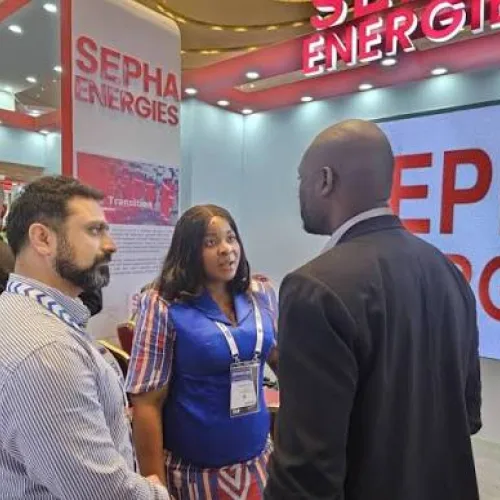
Staff numbers rose to 50 from 25 over the same period, Sandra Agho, managing director, said Monday at the Society of Petroleum Engineers’ Nigeria Annual International Conference and Exhibition in Lagos.
Agho said Sepha secured a 2,000-horsepower, 10,000-psi land rig contract that she described as a turning point for the business, unlocking financing and partnerships that followed.
Since then, the company has added a 460-horsepower workover unit and lined up access to a 3,000-horsepower, 15,000-psi swamp rig, one that ranks among the more powerful units available globally, which it says can be brought into Nigeria within three months.
The buildout comes as Nigeria’s Nigerian Content Development and Monitoring Board pushes local ownership requirements meant to shift more contract value to Nigerian companies in an industry historically dominated by multinational service providers and foreign-owned rig operators. Agho credited the board’s policies with helping create room for firms like hers to compete for work once reserved almost exclusively for larger international players.
Access to capital remains the central constraint, according to Agho. She said indigenous service companies cannot scale without financing tailored to their needs, arguing that local content targets will fall short unless banks and investors extend credit on terms that let Nigerian firms invest in equipment and technology rather than lease it from abroad.
“We cannot build indigenous capacity without indigenous capital,” Agho said, adding that sustainable financing is the missing piece for firms trying to compete with international rivals.
Sepha has also taken on financial risk to build relationships in the sector.
Agho said the company backed several Nigerian marginal-field operators through to first oil production without requiring payment upfront, an arrangement she framed as a bet on long-term partnership rather than a typical vendor contract.
Marginal fields, smaller deposits often passed over by major operators, have become a proving ground for indigenous companies since Nigeria began reallocating them to local players.
Agho, who leads one of the few women-owned oilfield services firms in Nigeria’s upstream sector, said gender was not the primary obstacle in the company’s growth. The harder task, she said, was landing an initial contract that would let the company demonstrate its capabilities to skeptical clients and lenders.
Sepha’s plans going forward include partnerships with global equipment manufacturers to bring newer drilling technology into Nigeria, along with further investment in upstream assets. Agho said the company’s push mirrors a broader test facing Nigeria’s oil and gas sector: whether local firms can absorb larger, more technical contracts as international operators continue to divest onshore and shallow-water assets to Nigerian buyers.
The conference, one of the industry’s largest gatherings in West Africa, has drawn operators, regulators and financiers to Lagos this week to discuss investment in Nigeria’s upstream sector amid a wider push to raise local participation across the oil and gas value chain.


Comments
Start the conversation about this story.