





- Advertisement -
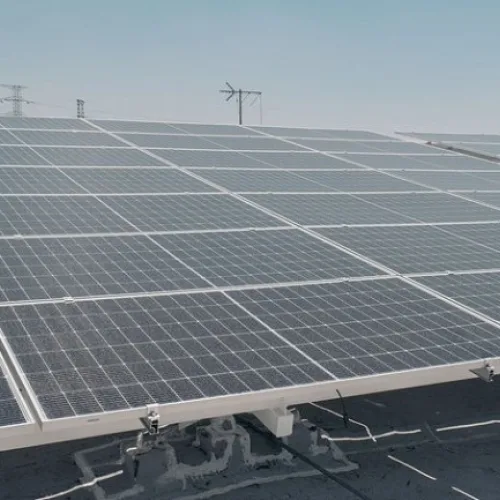
A renewable energy investor and Chief Executive Officer, Gigawatts Global, Yosef Abramowitz, has announced plans to provide up to $500 million in project financing for solar power plants across Nigerian universities.
Abramowitz announced this in Abuja during the 2026 NextGen Innovation Challenge National Showcase and the official launch of the Tinubu Light Initiative (TLI), organised by the National Board for Technology Incubation (NBTI).
He said the initiative was aimed at improving electricity supply, supporting research and extending power to surrounding rural communities.
He said the funding would cover up to 90 per cent of the financing required for university-based solar projects, subject to internationally bankable power purchase agreements and agreed project milestones.
“We’re honoured to be able to present up to $500 million in project finance.
“That will represent 90 per cent financing for solar power plants at universities, which will also anchor power supply to the rural communities surrounding them,” Abramowitz said.
He said many Nigerian universities currently rely on expensive diesel generation, leaving campuses with electricity for only a few hours each day.
“How do you run a university in three, four or five hours? How do you not have internet because you don’t have electricity?” he said.
According to him, the proposed solar facilities will generate between 10 and 20 megawatts per location, exceeding the immediate electricity needs of the universities.
He added that the electricity surplus would be supplied to nearby communities through prepaid metering systems, helping to expand rural electrification.
“We want to bring down your costs, increase the amount of energy, make it green and sustainable, and empower the communities around each of these universities,” he said.
The Gigawatt Global chief said the company intended to maximise local participation in the projects by sourcing equipment and maintenance services within Nigeria.
“We’re going to buy our panels in Nigeria. We’re going to buy our solar racking in Nigeria. We’re going to buy our cables in Nigeria.
“The idea is to keep as many of the jobs locally, both for operations and maintenance and for the hardware to be made in Nigeria,” he said.
Abramowitz said local partners would be responsible for the operation and maintenance of the solar facilities, adding that this would improve long-term reliability and reduce costs compared with smaller standalone mini-grid projects.
He added that reducing universities’ energy costs would allow institutions to redirect resources toward education, research and innovation, while supporting cleaner and more sustainable power generation.
By Thompson Sylvester
Comments
Start the conversation about this story.