





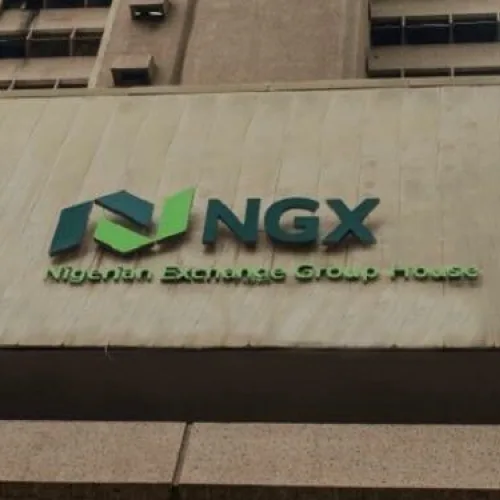
The Nigerian Exchange Group (NGX) is home to more than 150 listed companies, but the corporate size of the companies on it is far from evenly distributed. Only 24 companies currently have a market capitalisation above N1 trillion, which amounts to about 89 percent of the entire market cap of the NGX, placing them in an exclusive club that commands the bulk of the market’s value and investor attention.
From telecommunications and banking to cement, energy, and consumer goods, these trillion-naira companies have become the anchor of Nigeria’s capital market, reflecting the industries, strategies, and competitive advantages that investors believe will define the country’s long-term economic future.
These companies include Airtel Africa Plc, MTN Nigeria, Dangote Cement Plc, BUA Foods Plc, BUA Cement Plc, Seplat Energy Plc, FirstHoldCo Plc, Aradel Holdings Plc, Zenith Bank Plc, Guaranty Trust Holding Company (GTCO), Stanbic IBTC Holdings Plc, Transcorp Hotels Plc, Presco Plc, Nigerian Breweries Plc, Nestlé Nigeria Plc, Geregu Power Plc, Geregu Power Plc, United Bank for Africa (UBA) Plc, International Breweries Plc, Ecobank Transnational Incorporated (ETI), Transcorp Power Plc, Access Holdings Plc, Okomu Oil Palm Plc, Wema Bank Plc, and Fidelity Bank Plc.
Detailed analysis of all the companies on the NGX with over N1 trillion in Market cap as at August 7, 2026.
Airtel Africa Plc (N21.8 trillion)
Current Share Price: N5,801 Sector: ICT
Airtel Africa sits at the top of the Nigerian Exchange in terms of market cap, not because it is simply a successful telecommunications company, but because investors increasingly view it as one of Africa’s most important digital infrastructure businesses. Operating across 14 African countries, the company has evolved far beyond voice services, generating growing revenues from mobile data, enterprise connectivity, and mobile money, businesses that offer stronger long-term growth than traditional telecommunications.
Its dual listing in Lagos and London has broadened its institutional investor base, while its geographically diversified operations reduce dependence on any single economy. Unlike many NGX-listed companies whose fortunes are tied closely to Nigeria’s macroeconomic cycle, Airtel benefits from exposure to multiple fast-growing consumer markets across East, Central, and West Africa.
The company’s continued investment in 4G and 5G networks, fibre infrastructure, and financial technology has reinforced its position as a long-term beneficiary of Africa’s digital transformation.
The company is currently being led by seasoned CEO Sunil Taldar.
MTN Nigeria (N17.74 trillion)
Share Price: N845 Sector: ICT
MTN Nigeria’s rise into the trillion-naira elite reflects its transformation from the country’s largest mobile network into one of its most important technology platforms. While voice services laid the foundation of the business, today’s investment case revolves around data consumption, enterprise services, fintech, and digital ecosystems that continue to expand as Nigeria’s economy becomes increasingly connected.
Despite periodic regulatory challenges and the impact of exchange-rate reforms, MTN remains one of Nigeria’s strongest cash-generating businesses. Its vast subscriber base provides recurring revenue that few listed companies can match, while its scale enables continual investment in network quality and digital innovation.
The company also occupies a strategic position within Nigeria’s broader digital economy. Every increase in internet penetration, smartphone adoption or digital financial inclusion ultimately expands MTN’s addressable market.
Dangote Cement Plc (N17.45 trillion)
Share Price: N1034 Sector: Industrial Goods
Few companies have shaped Africa’s industrial landscape as profoundly as Dangote Cement. The company dominates Nigeria’s cement industry while maintaining a growing footprint across several African countries, giving it unparalleled economies of scale and significant pricing power.
From limestone mining to manufacturing and distribution, create cost advantages that competitors struggle to replicate. As governments across Africa continue investing in roads, bridges, housing, and industrial infrastructure, Dangote Cement remains deeply embedded in the continent’s long-term development agenda.
Beyond domestic demand, they explore export opportunities through regional trade agreements and improving logistics continue to strengthen its strategic position.
BUA Foods Plc (N15.21 trillion)
Share Price: N845.10 Sector: Consumer Goods
BUA Foods has rapidly established itself as one of Nigeria’s most valuable consumer companies by focusing on products that remain essential regardless of economic conditions. Sugar, flour, pasta, and edible oils form the backbone of household consumption, providing relatively stable demand even during periods of inflation or slower economic growth.
The company’s integrated manufacturing model has helped improve operational efficiency while reducing dependence on imported inputs where possible. As Nigeria’s population continues to expand and food security becomes an increasingly important national priority, BUA Foods occupies a strategic position within the country’s consumer economy.
BUA Cement Plc (N10.70 trillion)
Share Price: N316 Sector: Industrial Goods
BUA Cement has emerged as Dangote Cement’s most formidable domestic competitor through aggressive capacity expansion, modern production facilities and a strategy built around operational efficiency. In just a few years, the company has significantly increased its market presence, challenging what was once a near-monopoly in Nigeria’s cement sector.
Its investment thesis rests on more than competition. Nigeria’s substantial housing deficit, continued urbanisation, and government infrastructure spending provide a structural demand backdrop that is likely to support cement consumption for decades.
The company’s newer plants also provide operational advantages, allowing it to improve efficiency while maintaining competitive pricing.
Seplat Energy Plc (N6.82 trillion)
Share Price: N11,363 Sector: Oil and Gas
Seplat Energy has become one of the defining success stories of Nigeria’s indigenous oil and gas industry. Once viewed primarily as a mid-sized upstream producer, the company has transformed itself into a diversified energy business through disciplined acquisitions, expanding gas operations, and a growing focus on operational efficiency.
The acquisition of Mobil Producing Nigeria Unlimited’s shallow-water assets significantly expanded Seplat’s production capacity, while investments in the ANOH gas project position the company to benefit from Nigeria’s long-term transition toward natural gas. Rather than relying solely on crude oil prices, Seplat is increasingly building multiple earnings streams across oil and gas.
First HoldCo Plc (N6.67 trillion)
Share Price: N150 Sector: Financial Services
Few institutions are as deeply woven into Nigeria’s financial history as First HoldCo. Yet its trillion-naira valuation reflects less its legacy than investors’ belief that the group is undergoing one of the most significant corporate transformations in its history.
Following years of governance reforms, capital restructuring, and strategic repositioning, the holding company has sought to diversify beyond traditional commercial banking into asset management, merchant banking, and financial services. Improved profitability, stronger capital buffers, and renewed investor confidence have supported a significant re-rating of the stock.
As one of Nigeria’s oldest financial institutions, First HoldCo retains a vast customer base and one of the country’s most recognisable banking brands.
Aradel Holdings Plc (N6.63 trillion)
Share Price: N1526 Sector: Oil and Gas
Aradel Holdings’ rapid ascent into the trillion-naira club reflects one of the most remarkable transformations in Nigeria’s upstream energy sector. Once a relatively low-profile indigenous operator, the company has become one of the country’s largest listed oil producers through a strategy centred on disciplined acquisitions, production growth, and operational integration.
The consolidation of ND Western and interests linked to Renaissance significantly expanded Aradel’s reserve base and production capacity, propelling revenues and operating profits to record levels. Rather than chasing speculative exploration, the company has focused on acquiring producing assets capable of generating immediate cash flows.
Its emergence mirrors a broader structural shift within Nigeria’s petroleum industry, where indigenous operators are assuming greater control over assets divested by international oil companies.
Zenith Bank Plc (N5.11 trillion)
Share Price: N124.50 Sector: Financial Services
If there is one institution that has consistently defined profitability in Nigerian banking, it is Zenith Bank. Over two decades, the banking giant has built a reputation for disciplined risk management, robust corporate banking relationships, and an unwavering ability to generate industry-leading returns, even during periods of economic turbulence. While competitors have pursued aggressive expansion strategies, Zenith has remained focused on preserving asset quality, maintaining healthy capital buffers, and extracting higher returns from its balance sheet.
The recent high-interest-rate environment has further strengthened the bank’s earnings power, with wider net interest margins boosting profitability.
At the same time, Zenith’s digital banking investments have improved operational efficiency while reducing transaction costs. The result is a business that consistently converts revenue into profits and profits into shareholder returns through generous dividends and strong capital appreciation.
Guaranty Trust Holding Company (GTCO) (N4.68 trillion)
Share Price: N128 Sector: Financial Services
Few Nigerian financial institutions command the level of investor confidence enjoyed by GTCO. The group’s reputation has been built on disciplined lending, superior cost management, and one of the most recognizable banking brands in Africa. Even as the company transitioned into a holding company structure, investors continued rewarding its ability to generate high-quality earnings while maintaining one of the industry’s strongest balance sheets.
Beyond traditional banking, GTCO is gradually building a diversified financial ecosystem spanning payments, pension management, wealth management, and insurance. This transition reflects a broader strategy of reducing dependence on interest income while capturing opportunities across Nigeria’s expanding financial services sector.
The bank’s premium valuation is also a reflection of management credibility. Investors have consistently viewed GTCO as one of Nigeria’s best-run financial institutions, capable of maintaining profitability regardless of macroeconomic conditions.
Stanbic IBTC Holdings Plc (N2.56 trillion)
Share Price: N161.20 Sector: Financial Services
Unlike many Nigerian banks that derive the bulk of their earnings from commercial lending, Stanbic IBTC has positioned itself as one of the country’s most diversified financial institutions. Through its extensive presence in investment banking, pension fund administration, stockbroking, asset management and custodial services, the company generates multiple streams of relatively stable income beyond conventional banking operations.
This diversified earnings model has become increasingly attractive as Nigeria’s capital markets deepen and institutional savings continue to grow. Its affiliation with South Africa’s Standard Bank Group also provides access to international expertise, cross-border transactions, and corporate clients operating across Africa.
Rather than competing purely on loan growth, Stanbic has built a business around managing wealth, facilitating investment, and connecting Nigerian businesses with global capital markets. This diversified approach has insulated earnings from some of the volatility experienced by more traditional lenders.
Transcorp Hotels Plc (N2.48 trillion)
Share Price: N241.90 Sector: Services
Transcorp Hotels has emerged as one of the Nigerian Exchange’s most remarkable post-pandemic recovery stories. Once viewed primarily as the owner of Abuja’s flagship luxury hotel, the company has evolved into a broader hospitality investment, benefiting from the rebound in business travel, conferences, diplomatic activity, and premium tourism.
Its flagship Transcorp Hilton Abuja remains one of West Africa’s most strategically important hospitality assets, hosting government delegations, multinational corporations, and international conferences throughout the year. Consistently high occupancy rates, improving room pricing, and growing event revenues have significantly strengthened earnings.
Beyond hospitality, investors increasingly value the company for the scarcity of premium hotel assets listed on the Nigerian Exchange. As Nigeria’s economy continues attracting business investment, demand for high-end accommodation is expected to remain resilient.
Presco Plc (N2.42 trillion)
Share Price: N2070 Sector: Agriculture
Presco has quietly become one of the Nigerian Exchange’s strongest-performing agricultural companies by capitalising on one of the country’s most strategic commodities: palm oil. Through vertically integrated operations spanning plantations, processing, and refining, the company has built significant competitive advantages in a market where domestic demand continues to outstrip supply.
Nigeria remains heavily dependent on imported vegetable oils despite possessing ideal conditions for palm cultivation. Presco’s expanding plantation footprint positions it to benefit directly from government policies promoting food security and import substitution.
The company’s consistent earnings growth reflects more than favourable commodity prices. Years of investment in plantation expansion and operational efficiency are now translating into stronger production and improved profitability.
Nigerian Breweries Plc (N2.18 trillion)
Share Price: N70.40 Sector: Consumer Goods
For decades, Nigerian Breweries dominated the country’s beer industry, building an unmatched portfolio of iconic brands and one of the largest beverage distribution networks in West Africa. Although recent years have presented challenges, including inflation, foreign exchange volatility, and changing consumer spending patterns, the company remains a cornerstone of Nigeria’s consumer goods sector.
Its strategic importance extends beyond beer. Through premium, mainstream, and value brands, Nigerian Breweries serves multiple consumer segments while continuing to invest in product innovation and operational efficiency. Backing from global brewing giant Heineken also provides access to international expertise and capital.
Nestlé Nigeria Plc (N2.18 trillion)
Share Price: N2,750 Sector: Consumer Goods
Nestlé Nigeria occupies a unique position within the country’s consumer sector. Few companies possess a portfolio of household brands as deeply embedded in everyday Nigerian life, spanning food, beverages, nutrition and wellness products. This broad consumer reach has enabled the company to remain resilient despite persistent inflationary pressures and weakening purchasing power.
The business has increasingly focused on local sourcing, manufacturing efficiency, and product innovation to navigate currency volatility and rising input costs. Although profitability has experienced cyclical pressures, investors continue to assign a premium valuation to the company because of its exceptional brand strength and long-term pricing power.
As Africa’s largest consumer market continues expanding, Nestlé remains well positioned to benefit from rising urbanisation, changing consumption patterns and increasing demand for packaged foods.
Geregu Power Plc (N2.06 trillion)
Share Price: N825.70 Sector: Utilities
Geregu Power represents one of the Nigerian Exchange’s most direct investment opportunities in the country’s electricity sector. As one of Nigeria’s leading thermal power generation companies, Geregu holds a position within an industry central to the country’s long-term economic development.
The company’s market value reflects investor confidence in both the scarcity of listed power assets and the enormous structural demand for electricity in Nigeria. As industrialisation accelerates and electricity reforms continue, efficient generation companies are expected to play an increasingly important role in addressing the country’s persistent energy deficit.
Backed by substantial investment and experienced management, Geregu has steadily expanded its operational capabilities while benefiting from improving sector reforms aimed at strengthening liquidity and market efficiency.
United Bank for Africa (UBA) Plc (N1.96 trillion)
Share Price: N44.40 Sector: Financial Services
United Bank for Africa has quietly built what many analysts consider one of the most geographically diversified banking franchises originating from Nigeria. Operating in more than 20 African countries, alongside businesses in the UK, France, the UAE and the United States, UBA has evolved from a domestic lender into a pan-African financial institution facilitating trade, investment and payments across the continent.
Its international footprint increasingly differentiates it from peers whose earnings remain largely tied to Nigeria’s economy. As intra-African trade expands under the African Continental Free Trade Area (AfCFTA), UBA is strategically positioned to benefit from rising cross-border commerce, trade finance and corporate banking opportunities. The bank’s growing digital ecosystem has further enhanced customer acquisition while reducing operating costs.
International Breweries Plc (N1.85 trillion)
Share Price: N11 Sector: Consumer Goods
International Breweries has undergone one of the most dramatic transformations in Nigeria’s consumer goods sector. Once burdened by acquisition costs, foreign exchange losses and compressed margins, the company has steadily repositioned itself through operational restructuring, stronger brand investments and improved manufacturing efficiency.
As the Nigerian subsidiary of global brewing giant AB InBev, International Breweries benefits from international capital, global production expertise and one of the world’s strongest beverage portfolios. The company continues expanding its presence across premium, mainstream and value beer categories while investing heavily in route-to-market capabilities.
Its recent market re-rating reflects growing investor confidence that the worst of its balance sheet challenges may be behind it. Rather than valuing the company based on current profitability alone, the market increasingly prices in the potential for a sustained earnings recovery as consumer demand strengthens and macroeconomic conditions gradually improve.
Ecobank Transnational Incorporated (ETI) (N1.71 trillion)
Share Price: N72.10 Sector: Financial Services
Ecobank’s investment proposition differs fundamentally from most banks listed on the Nigerian Exchange. Rather than competing primarily within Nigeria, ETI has built Africa’s largest pan-African banking network, operating across more than 30 countries and serving millions of customers throughout Sub-Saharan Africa.
This geographic diversity provides earnings resilience by reducing dependence on any single economy while positioning the bank to benefit from increasing regional trade, infrastructure investment and financial inclusion. The group’s corporate banking, trade finance and payment services businesses have become particularly important as African economies become more interconnected.
Ecobank’s valuation reflects the growing recognition that Africa’s long-term growth will increasingly depend on institutions capable of facilitating commerce across borders rather than within individual markets. Few financial institutions are better positioned to capitalise on that structural trend.
Transcorp Power Plc (N1.65 trillion)
Share Price: N219.60 Sector: Utilities
Transcorp Power has rapidly established itself as one of Nigeria’s most strategically important listed infrastructure companies. As one of the country’s leading electricity generation businesses, the company sits at the centre of efforts to address one of Nigeria’s biggest economic constraints: inadequate power supply.
Unlike many cyclical businesses, electricity demand continues to rise alongside industrialisation, urbanisation, and population growth. Government reforms aimed at improving market liquidity, transmission efficiency, and private-sector participation have further strengthened investor confidence in the long-term prospects of generation companies.
The company’s market value reflects more than current earnings. Investors increasingly view reliable power generation as an essential component of Nigeria’s industrial development, positioning companies like Transcorp Power to benefit from decades of structural demand growth.
Access Holdings Plc (N1.40 trillion)
Share Price: N26.20 Sector: Financial Services
Over the past decade, Access Bank has transformed itself from a domestic commercial bank into one of Africa’s largest financial institutions through a relentless acquisition strategy spanning banking, payments, insurance, and wealth management.
Rather than relying solely on organic growth, Access has consistently used mergers and acquisitions to enter new markets, expand its customer base and diversify earnings. The holding company structure has accelerated this strategy, allowing management to build a broader financial services ecosystem beyond conventional banking.
While acquisitions inevitably create integration risks, investors have largely rewarded the company’s ambition, recognising its ability to execute complex transactions while maintaining profitability. Access increasingly resembles a regional financial conglomerate rather than a traditional commercial bank.
Okomu Oil Palm Plc (N1.35 trillion)
Share Price: N1,418 Sector: Agriculture
Okomu Oil has quietly become one of Nigeria’s most valuable agricultural businesses by focusing on a commodity whose strategic importance continues to grow. Through large-scale palm oil plantations, rubber production and integrated processing facilities, the company has positioned itself at the heart of Nigeria’s drive toward agricultural self-sufficiency.
Global demand for vegetable oils continues to rise while Nigeria remains a significant importer of palm oil, creating favourable long-term market dynamics for efficient domestic producers. Okomu’s vertically integrated model provides greater control over production costs and product quality, helping protect margins even during periods of commodity price volatility.
Its steady earnings growth has increasingly attracted institutional investors seeking exposure to agriculture without the execution risks associated with smaller operators.
Wema Bank Plc (N1.20 trillion)
Share Price: N29.85 Sector: Financial Services
For much of its history, Wema Bank was viewed as a relatively small commercial lender competing against Nigeria’s banking giants. They changed the game with the launch and rapid expansion of ALAT, Nigeria’s first fully digital bank, which transformed Wema into one of the country’s leading financial technology innovators.
Rather than attempting to compete on branch networks, Wema focused on digital customer acquisition, technology-driven banking, and financial inclusion. This strategy has enabled the bank to attract younger customers while improving operational efficiency and expanding fee-based income.
The market has rewarded this digital transformation with a significant re-rating, reflecting confidence that technology can allow smaller institutions to compete effectively against much larger rivals.
Fidelity Bank Plc (N1.08 trillion)
Share Price: N21.60 Sector: Financial Services
Fidelity Bank’s journey into the trillion-naira club has been built less on dramatic acquisitions or headline-grabbing expansion than on years of consistent execution. The lender has steadily strengthened its corporate banking franchise, expanded its retail presence and invested in digital capabilities while maintaining a disciplined approach to risk management.
In recent years, Fidelity has benefited from stronger non-interest income, improved asset quality and expanding corporate relationships, particularly among export-oriented businesses. Its growing international banking capabilities have further diversified earnings while enhancing its competitiveness within Nigeria’s increasingly sophisticated financial sector.
Unlike some of its larger peers, Fidelity has largely avoided rapid expansion in favour of sustainable growth, a strategy that has increasingly appealed to long-term institutional investors seeking consistency over aggressive risk-taking.
Collectively, these 24 companies represent the commanding heights of the Nigerian Exchange. While their paths to trillion-naira valuations differ, they share common characteristics: market leadership, strong competitive advantages, scalable business models and the ability to generate sustainable cash flows and maintain resilience through economic headwinds.
Together, they tell a broader story about where investors believe Nigeria’s long-term economic value will be created.


Comments
Start the conversation about this story.