





The Federal Government has begun moves to take rehabilitation services directly to Primary Health Care (PHC) centres nationwide, as part of efforts to make disability-inclusive care accessible to Nigerians irrespective of their location or socioeconomic status.
The initiative, which includes physiotherapy, occupational therapy, speech therapy, audiology, prosthetics and orthotics, was unveiled at the national pilot launch at Doya Primary Health Care Centre in Bauchi State.
Speaking at the event, the Coordinating Minister of Health and Social Welfare, Prof. Muhammad Ali Pate, represented by his Special Adviser, Dr. Baba Suleiman, said integrating rehabilitation into primary healthcare was a major component of the Federal Government’s health sector reforms under President Bola Ahmed Tinubu’s Renewed Hope Agenda and the Nigeria Health Sector Renewal Investment Initiative.
ALSO READ: FG targets 34,000 PHCs with integrated rehabilitation services
The minister said the reform was designed to address longstanding gaps in access to rehabilitation services, particularly for persons living with disabilities, older persons, trauma survivors and people recovering from chronic illnesses.
For decades, rehabilitation services in Nigeria have largely been concentrated in secondary and tertiary health facilities, leaving many people in rural and underserved communities without access to essential services.
The government’s decision to integrate rehabilitation into PHCs is therefore expected to bring such services closer to communities while strengthening the country’s drive towards universal health coverage.
The initiative is being complemented by the development of the National Rehabilitation and Assistive Technology Strategic Plan 2027–2031, which the Federal Ministry of Health and Social Welfare is currently reviewing with stakeholders in Abuja.
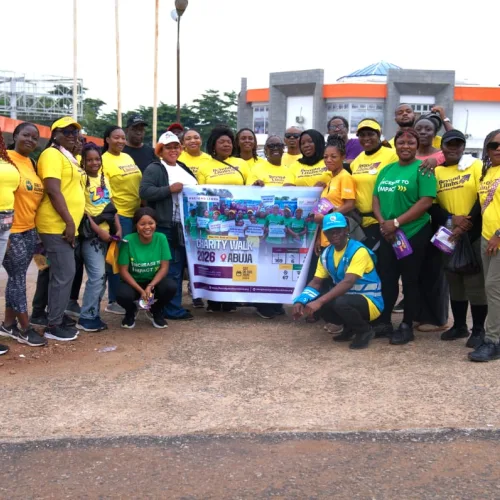
Meanwhile, stakeholders at the third annual Abuja walk organised by the Feet of Grace Foundation have called for stronger government support for persons living with limb loss and greater access to prosthetic and assistive devices.
The walk, which forms part of activities marking the foundation’s 10th anniversary, was used to raise awareness about the challenges faced by amputees, particularly women and children, and to mobilise support for rehabilitation and mobility services.
A supporter of the foundation, Dr. Olusoji Adeniyi, said the organisation had supported hundreds of beneficiaries over the past decade, including through the provision and repair of prosthetic limbs, wheelchairs, scholarships and economic empowerment.
According to him, the foundation had so far provided 169 prosthetic limbs, supported 68 women with small and medium-scale enterprises, provided six motorised wheelchairs and nine student scholarships, while 67 limbs had been repaired, reaching about 319 beneficiaries overall.
He said the foundation was planning to establish a rehabilitation and prosthetic fabrication facility estimated at N100 million, which would enable assistive devices to be locally produced and made available to more beneficiaries.
“The N100 million is just the seed funding. It is not a lot of money,” Adeniyi said, explaining that comprehensive rehabilitation could cost between N15 million and N20 million per beneficiary in some cases.
He expressed the hope that the proposed centre would eventually grow into a much larger facility, with funding increasing to about N1 billion within five to 10 years.
Adeniyi also urged government agencies, particularly the National Commission for Persons with Disabilities, to support organisations working with amputees through grants and institutional partnerships.
He said such interventions should go beyond providing prosthetic limbs to helping amputees regain independence and participate fully in society.
Also speaking, a representative of the Network of Female Professionals in Water Supply, Sanitation and Hygiene (FEMWASH), Fatima Usman, said the organisation joined the walk to highlight the challenges women and girls with limb disabilities face in accessing menstrual hygiene facilities.
Usman said persons with limb disabilities often encounter difficulties accessing toilets without ramps or handrails and may require assistance to change sanitary products.
She warned that inability to change sanitary towels regularly could expose women and girls to urinary tract and reproductive infections.
She said, it is period dignity, not a luxury; it is a fundamental human right, stressing the need to address the menstrual hygiene challenges of women living with limb disabilities.
For beneficiaries, access to prosthetic devices has significantly improved their ability to participate in everyday activities.
One of the beneficiaries, Zureil Eboh, said her prosthetic device had enabled her to “walk, run” and participate in activities like other children.
Her father, Dan Eboh, said Zureil was born without a right leg and that the family eventually contacted the founder of Feet of Grace Foundation, Mrs Irene Olumese, who referred them to The Irede Foundation for assistance.
He appealed to the government to establish a mechanism for identifying persons with disabilities and subsidising or funding prosthetic and other assistive devices, which he described as prohibitively expensive.
He said Zureil’s prosthetic device needed to be replaced approximately every year to 18 months as she grows.
The Abuja Coordinator of Feet of Grace Foundation, Babafunke Fagbemi, also urged the government to strengthen partnerships with non-governmental organisations working to improve the lives of amputees.
She said government could achieve more by recognising and collaborating with organisations already providing support to persons with limb loss.
“Government alone cannot do it. So partnering with organisations like Feet of Grace will actually allow us to go the extra mile,” Fagbemi said.
The foundation, established in 2013 and operating in Abuja since 2017, has continued to advocate greater access to mobility support, rehabilitation and economic opportunities for amputees and persons living with limb disabilities.
Comments
Start the conversation about this story.