





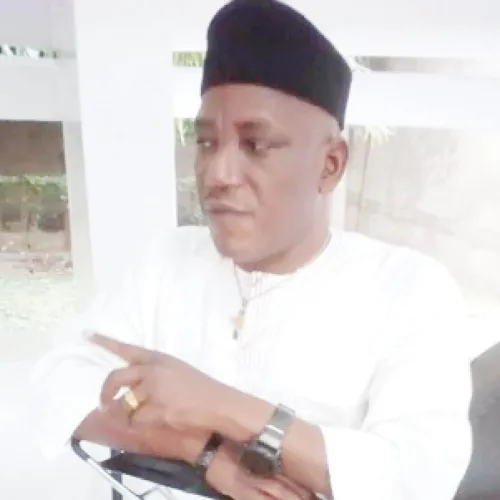
Former Minister of Youth and Sports, Mr Solomon Dalung, a chieftain of the African Democratic Congress (ADC), speaks with Tribune’s North Central Bureau Chief, Isaac Shobayo, on the state of the opposition, the absence of political ideology, ADC’s agenda and other national issues.
The opposition appears fragmented. What does this say about the state of opposition politics in Nigeria?
The fragmentation of the opposition reflects certain tendencies. First, some elements within the opposition may simply be pursuing personal ambition rather than the national interest. Secondly, some of them may even be financed or sponsored by the party in government in order to present a disorganized front, which would discourage Nigerians from making a strong political decision in 2027.
These may well be the factors at play. They are driven by ego, selfishness, and a lack of patriotism. Otherwise, a patriotic opposition would look at the plight and predicament of the people, unite, close ranks, and confront the government with the aim of changing it. Not everybody can become president, but there is a role for everyone to play in government in order to change the country.
Looking at politics today, there seems to be no clear-cut ideology, with everyone seeking the presidency appearing to share the same philosophy and focus. What are your thoughts?
Well, I don’t think the issue of a lack of ideology is a contemporary one. It has been the case since the return of this republic, so I do not see it as one of the factors shaping the current situation.
However, when it comes to the mission statements of the various presidential aspirants, their policy focus, and their campaign promises, they may all sound similar. But I think what we lack in Nigeria is not the absence of manifestos, ideology, or even a good Constitution. What we lack is the political will to provide leadership. Even if you have ideologically oriented leaders who lack the political will to pursue the fundamental principles of their ideology, we will end up in a situation even worse than where we are now. President Tinubu presented himself as an ideological politician. For a very long time, he identified with progressive politics. But today, as president, he is more reactionary than any other president we have had in Nigeria. So, the issue of ideology or political principles in Nigeria ultimately depends on the political will of leaders to pursue them. Ideology should not be used as a cover to mislead or deceive the people.
Every election season seems to bring the same promises. Candidates say they will do the same things, yet the country keeps returning to square one. What is your opinion on this?
Well, you’ve actually identified the problem yourself. They all know the problems confronting Nigeria. What is lacking is the political will to solve them.
ALSO READ: Why I underwent traditional cleansing after Oloolu masquerade incident — TikToker
So, every election cycle, they repeat the same promises. But if we have a leader with the political will to act, to address the issues and tackle the problems, things can change. Take General Murtala Mohammed, for example. He spent only six months in office, yet he left behind a landmark legacy that we are still discussing and benefiting from today.
So, I don’t think the fact that all of them promise the same things is the real issue. Rather, it is evidence that they understand Nigeria’s problems but are unwilling to deal with them. They simply want to acquire power to advance their personal ambitions and interests.
The general feeling, especially within the APC, is that you are too critical of President Tinubu. Why are you so critical of him, considering that both of you once operated within the same political fold?
Well, you don’t expect the APC to say anything different from what they have said. But what exactly is their parameter for concluding that I am too critical of the president? By what standard? I have been like this since 2005. If they are only now complaining because of this president, then it simply means this president is the worst, and that is why I am more critical of him than any other president.
Yes, we came from the same political background. We founded the APC. I travelled across the country campaigning for the party, and I was one of those who persuaded Nigerians to trust the APC. So, I have even more reason than most people to be critical because I am a stakeholder who went around assuring Nigerians that we were going to change the country. Instead, we have changed Nigeria from better to worse. Why, then, should I not criticize the president?
He has presided over the highest revenue generation in Nigeria’s history, yet he has also borrowed more than previous administrations. Should I be singing his praises or pretending that everything is fine?
Are you not concerned that this government may decide to look into your record as a former minister?
Why should I be afraid of the government probing my tenure? Accountability is one of the essential ingredients of democracy. If the law finds me wanting, then I should face the law because it is the same law that protected me while I was in office.
If the law questions my conduct, why should I be afraid? I am not afraid of anything. If I am found wanting, then the law should take its course. Those who fear accountability are not leaders; they are merely political bandits. A true leader understands that the law protects him while in office. If, after leaving office, the law asks questions about how he exercised that authority, he should be prepared to answer.
Some people argue that with 31 APC governors, President Tinubu has already secured victory in the 2027 election. What is your take?
Well, I don’t know how they arrived at that conclusion. If he has already won, then he doesn’t need to campaign.
If having the support of 31 governors guaranteed victory for Tinubu, he wouldn’t be as desperate as he appears to be. You can see the level of desperation. In 2022, they presented what many described as a “fake bishop” to endorse his vice-presidential candidate. This time around, he has invited the Catholic Bishops’ Conference of Nigeria. That tells you Tinubu is in trouble because the so-called fake bishop cannot help him this time.
If the support of 31 governors truly guaranteed victory, he would be confident enough not to sponsor crises and litigation within opposition political parties. He would allow the parties to remain stable and let democracy take its natural course.
If Tinubu was truly comfortable, why did he tell the Catholic Bishops’ Conference that he would not be intimidated by the opposition? By making such a statement, he is acknowledging the opposition as a force. Even though the opposition has not done much yet, such expressions reveal serious concern.
So, he knows that the support of 31 governors does not automatically mean victory in 2027. Nobody should be deceived. As for those making such claims, many of them know that saying those things comes with rewards. You cannot blame people for trying to protect their means of livelihood.
Are you saying the governors are no longer with the people?
It’s not me saying that the governors are not with the people. The facts speak for themselves. If the governors were truly with the people, how do you explain what happened in Delta State, where the protocol officer of a sitting governor was allegedly beaten after saying that Tinubu was the best president Nigeria has ever had? This happened in the South, not in the North, so nobody can reduce it to regional politics or claim that only northerners are against Tinubu.
If the governor truly had the support of the people, why didn’t they listen to him? Why would they allegedly assault his protocol officer? So, I think we should be realistic about what we are saying.
Finally, what does your party intend to bring to the table in 2027 to change the current narrative in Nigeria?
The African Democratic Congress (ADC) has already presented its manifesto to Nigerians. One of the major pillars of that manifesto is accountability. Leaders will be held accountable. Nobody will be above the law, and nobody will be allowed to rule with impunity.
The ADC also intends to address Nigeria’s economic and security challenges through home-grown solutions rather than excessive borrowing. If Nigeria needs money, we should encourage production. Once production increases, the economy will become more stable. An economy cannot achieve sustainable stability through continuous borrowing, which is the approach the Tinubu administration has adopted.
Beyond that, ADC has a broad range of policy proposals. I want to tackle youth development head-on by engaging young people, mentoring them, opening opportunities for them, and creating an environment where they can realize their potential. We also want to encourage the emergence of a new generation of leaders by giving young people the opportunity to take responsibility and provide leadership for their country.
Comments
Start the conversation about this story.