






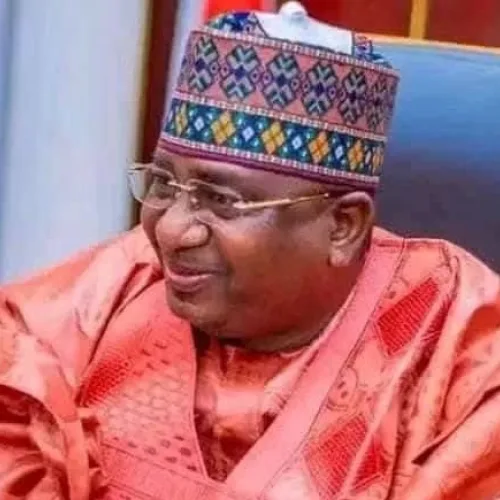
The Governor of Kebbi State, Dr. Nasir Idris (Kauran Gwandu), has attained the ripe age of 61. To the rest of us who have witnessed how impactful his years on earth have been, it is only natural to join other well-meaning Nigerians in celebrating such an uncommon achiever.
Since assuming office on May 29, 2023, Governor Idris has steadily cemented his legacy as a promise keeper. From Birnin Kebbi to Argungu, through Ambursa, Yauri, Jega, Koko and Danko/Wasagu, his administration has become synonymous not merely with promises of progress but with tangible projects that have altered the developmental landscape of Kebbi state.
Healthcare has witnessed remarkable improvements. Education is enjoying renewed attention. Agriculture has received unprecedented support. Security has continued to benefit from strategic government’s intervention. Infrastructure is expanding at an impressive pace. Welfare services have remained a priority, while culture and tourism have once again become instruments of economic and social development.
The Nasir Idris story is not a perfect narrative. No administration is. Yet, it is a story that continues to unfold in a manner that inspires confidence, suggesting that Kebbi people may someday look back and commend themselves for placing their trust in a leader who has largely matched his words with action.
Healthcare perhaps offers one of the clearest examples of this transformation. Governor Idris inherited a health sector that required urgent intervention. Many public hospitals had deteriorated infrastructure, inadequate equipment, and insufficient manpower. Rather than lament the situation, his administration embarked on one of the most comprehensive healthcare improvement programmes the state has witnessed in recent years.
General hospitals across the state have undergone extensive rehabilitation and upgrading, while more than 120 primary healthcare centres have either been constructed, renovated or equipped to improve access to quality healthcare in both urban and rural communities. These interventions have significantly expanded healthcare delivery and brought essential medical services closer to the people.
Recognising that infrastructure alone cannot deliver quality healthcare, the administration also embarked on an aggressive recruitment drive that brought more than 1,800 health professionals into the state’s healthcare system. Doctors, nurses and other medical personnel now complement improved facilities, creating a stronger foundation for effective healthcare delivery.
Perhaps one of the administration’s most enduring legacies in the sector is the establishment and commissioning of the Kauran Gwandu College of Nursing and Midwifery Sciences in Ambursa. Beyond increasing training opportunities for aspiring healthcare professionals, the institution represents a long-term investment in the state’s human capital. It ensures that Kebbi will increasingly produce the skilled manpower needed to sustain its healthcare system for generations.
Education has enjoyed a similarly refreshing revival. Governor Idris, himself a lifelong education advocate and former labour leader, appreciates the transformative power of learning. His administration has therefore invested substantially in educational infrastructure through the construction and renovation of schools, the provision of learning facilities and the expansion of access to quality education.
Scholarship programmes have continued to receive government support, enabling hundreds of Kebbi students to pursue higher education within Nigeria and abroad. Simultaneously, investments in classrooms, mega schools and teacher recruitment have strengthened the state’s educational foundation and demonstrated a commitment that extends beyond political rhetoric.
Yet, if there is one sector where Governor Idris has most visibly connected with the ordinary people of Kebbi State, it is agriculture. For generations, agriculture has remained the backbone of the state’s economy. Governor Idris clearly understood that supporting farmers meant supporting virtually every household in Kebbi. Consequently, his administration launched policies that directly addressed the needs of farmers rather than relying solely on speeches about food security.
Through the Kaura Agricultural Development Agenda (KADAGE), government support has reached farmers in all parts of the state. Thousands have benefited from free fertilisers, improved seedlings, agrochemicals and modern farming inputs designed to increase productivity and reduce production costs.
The administration’s agricultural interventions have grown consistently. In 2026 alone, the government distributed 110 truckloads of fertiliser alongside 100 metric tonnes of improved seeds to approximately 120,000 farmers, reinforcing earlier interventions that had already supplied tractors, agricultural machinery and other mechanised farming equipment across Kebbi state.
These investments are not merely seasonal political gestures. They represent a deliberate strategy to restore agriculture as the engine of Kebbi’s economy, improve rural incomes and strengthen food security both within the state and across Nigeria.
The result is a government that increasingly understands that sustainable development begins by empowering those who cultivate the land and make food available to the rest of the people in the state and beyond.
The physical transformation taking place across Kebbi state is perhaps the most visible testament to Governor Idris’ development agenda. Infrastructure is often the first evidence citizens point to when assessing the performance of any administration, and in this regard, the Kauran Gwandu administration has left little room for doubt.
From the construction and rehabilitation of township roads to major inter-community road projects, the government has continued to open up communities, ease transportation and stimulate economic activities. The Birnin Kebbi–Ambursa Road stands as one of the administration’s signature projects, significantly improving access to surrounding communities while enhancing the movement of people and goods.
Equally important are the ongoing and completed works on the Koko–Dabai–Zuru Road, the Shanga–Yar Besse Road, the Jega–Nasarawa–Kyarmi–Galbi Road, the dualisation of the Old Argungu Bypass, as well as several township roads in Birnin Kebbi, Yauri and other parts of the state. These projects are not isolated interventions; they form part of a deliberate strategy to connect communities, facilitate commerce and create an enabling environment for investment.
Complementing these road projects is the completion of the ultra-modern Bola Ahmed Tinubu State Secretariat. For years, successive administrations had attempted to complete the project without success. Governor Idris not only completed the imposing edifice but also put it to use, providing civil servants with a modern and conducive working environment befitting a twenty-first-century public service. Beyond its architectural appeal, the secretariat represents efficiency, institutional continuity and confidence in governance.
No meaningful development can thrive in an atmosphere of insecurity. Governor Idris recognised this reality from the onset and has consistently demonstrated that security remains a shared responsibility between government, security agencies and local communities.
His administration has continued to provide logistical support to the military, the police, the Nigeria Security and Civil Defence Corps and other security agencies operating within Kebbi state. Vehicles, operational equipment and other forms of assistance have strengthened security operations, particularly in vulnerable communities. The government has equally maintained close collaboration with federal authorities in facilitating additional deployments to areas requiring reinforced security presence.
Although insecurity remains a national challenge, Kebbi has continued to witness appreciable improvements in several communities, enabling farmers to gradually return to their farms and businesses to operate with renewed confidence. This restoration of confidence is perhaps one of the administration’s quiet but significant achievements.
Governor Idris has also demonstrated that governance extends beyond roads, schools and hospitals. It equally involves preserving history, promoting identity and creating economic opportunities through culture and tourism.
The successful revival of the internationally acclaimed Argungu International Fishing and Cultural Festival remains one of the defining moments of his administration. After years of suspension occasioned largely by security concerns, the festival returned in grand style, attracting national and international attention, boosting tourism and reaffirming Kebbi’s place on Nigeria’s cultural map.
The significance of the festival extends beyond colourful displays and traditional fishing competitions. Its recognition by UNESCO underscores its global cultural value, while its successful revival has reopened economic opportunities for local artisans, traders, hospitality operators and countless small businesses whose livelihoods depend on tourism.
Leadership is often measured not by the volume of promises made but by the evidence left behind. In barely three years, Governor Nasir Idris has built a record that cuts across virtually every critical sector of governance. From healthcare to agriculture, education to infrastructure, security to tourism, his administration has consistently demonstrated a willingness to translate campaign promises into measurable outcomes.
Certainly, challenges remain. No honest observer would argue otherwise. Development is a continuous journey rather than a destination, and Kebbi still has aspirations that demand sustained commitment. Yet the true test of leadership lies not in attaining perfection but in maintaining clear direction and measurable progress. By that standard, Governor Idris has acquitted himself commendably.
As he celebrates his 61st birthday, the occasion is more than a personal milestone. It is an opportunity for Kebbi people to reflect on the trajectory of their state since May 2023 and to assess whether governance has moved closer to the aspirations of ordinary citizens. Judging by the evidence on the ground, many would answer that question in the affirmative.
Politics, ultimately, is a contract between the electorate and those entrusted with public office. When that contract is honoured through visible performance, prudent management of public resources and sustained investment in the welfare of the people, it naturally strengthens the bond between the governed and their leaders.
It is for this reason that conversations about the 2027 governorship election increasingly point in one direction. While the electorate alone will decide when the time comes, Governor Idris appears to have positioned himself strongly for another mandate by allowing performance to speak louder than political rhetoric. Across Kebbi state, there is a growing belief that continuity would consolidate the gains already recorded and accelerate the pace of development.
Indeed, one good turn deserves another. If the people of Kebbi state eventually choose to renew the mandate of Governor Nasir Idris, it will not merely be a reward for political loyalty. It will be an endorsement of a leadership that has sought to justify the confidence reposed in it through service, delivery and a demonstrable commitment to building a more prosperous Kebbi.
As Kauran Gwandu marks his 61st birthday, the celebration is therefore not only about the passing of another year. It is a celebration of purposeful leadership, tangible achievements and the enduring hope that the best chapters of Kebbi state’s development story are still being written.
Kera, a journalist, writes from Abuja.
Comments
Start the conversation about this story.