





•‘Nobody collected ₦400,000 from her. Let her husband print the receipt and bring it out. We are waiting’
Ibadan is home to numerous celebrated masquerades, including Ayélabọ́lá, Ìpọ̀nríikú, Alágangàn, Alàpáńsánpá, Olúǹládé, Atìpàkọ́, Abìdíẹlẹ́gẹ̀ẹ́, Godogódò, Fẹrẹbíẹkùn, Aníkúlápò, Lọ́baníkà, Tẹ̀lẹ́biitan, Gbẹ́bọlájà and the royal masquerade, Òyì. Yet Olóòlù occupies a particularly revered place in the city’s cultural heritage. Each year, it emerges from its ancestral home at Òde Ajé under customs preserved for generations and traditionally sanctioned by the Olúbàdàn of Ibadanland.
Before this year’s outing, custodians once again reminded residents and visitors not to photograph or record the sacred procession. That warning itself became a subject of heated debate online. Some argued that such restrictions are almost impossible to enforce in a society where virtually everyone carries a smartphone capable of recording high-definition video. Others countered that respect for cultural and religious beliefs should not depend on whether outsiders personally subscribe to those beliefs.
For days, Facebook, TikTok, WhatsApp and X had been awash with claims that a young Ibadan woman had secretly filmed the revered Olóòlù masquerade thereby violating an age-old taboo, undergone traditional rites of appeasement and eventually died. The story spread with remarkable speed. Videos circulated. Opinions hardened. Many who had never met Wasila Wasiu concluded that the matter was settled.
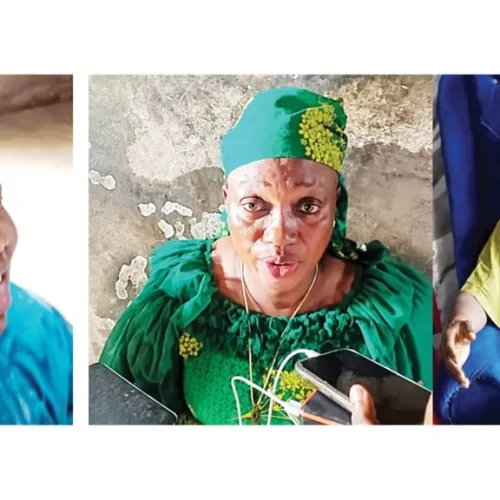
But when the Saturday Tribune visited her family home in the Kọlọkọ Oju Odo area of Ibadan, on Wednesday, the woman whose death had been announced repeatedly online was very much alive. Her survival, however, did not erase what she and her family said they had gone through. Instead, it opened the door to a far deeper conversation: one that reaches beyond a single viral video into the uneasy meeting point of sacred Yoruba traditions and an era where nearly every event is instantly documented, shared and debated online.
“She never recorded the masquerade”
Wasila’s mother, Mrs Sekinat Wasiu, a woman who got widowed three years ago, firmly rejected the central allegation that ignited the controversy.
“My daughter merely posted a video of the few people left after the crowd had dispersed, informing her TikTok followers that Olóòlù had passed our area.
“She did not film the Olóòlù masquerade. Some adherents accused her of recording them and came to take her because she uploaded the video,” she told Saturday Tribune.
ALSO READ: Why I underwent traditional cleansing after Oloolu masquerade incident — TikToker
According to Mrs Wasiu, she had warned her daughter not to leave home when she learnt the sacred procession would pass through the neighbourhood.
“Oloolu passed our area on Wednesday. I called my daughter, who stays at Atolu, Oremeji, and warned her not to go to her shop because the procession would pass there on Thursday.
“Her husband had given her money to buy petrol for their generator so she could remain at home. She later told me she didn’t know what made her still go to the shop.”
“She posted the vans and the crowd after the procession had gone, telling people that Olóòlù had passed and advising others to be careful,” she said.
She maintained that what her daughter recorded was not the sacred masquerade itself.
Arrest, negotiations and traditional appeasement
Mrs Wasiu recalled that shortly afterwards, traditional worshippers arrived at her daughter’s shop in large numbers.
“They came with many Marwa tricycles. They said she was wanted at Agugu Police Station. I begged them on my knees, but they insisted.”
According to her, Wasila spent about two days in police custody before the family secured her release. She was quick to note, however, that the police neither assaulted nor mistreated her daughter during the period. The controversy, she said, did not end with the bail.
“The moment we secured her release, the masqueraders took her into their vehicle, insisting she must be taken to Òde Ajé.”
What followed, according to the family, was a traditional reconciliation process. Mrs Wasiu claimed the family was instructed to purchase ritual items from Bode Market before proceeding.
“I was told to use my own hands to shave my daughter’s hair while praying for her,” she said, struggling to hold back tears.
“I was disgraced. If they had done everything privately, perhaps it would have been easier. Today, I cannot walk freely without people mocking me.”
She further alleged that the family paid substantial sums during the reconciliation.
“The traditional worshippers initially demanded ₦500,000 in addition to the ritual materials. We pleaded with them because I sell bread for a living.
“We eventually agreed on ₦400,000, which my daughter’s husband paid through OPay after obtaining a cooperative loan. I still have the receipt.”
“I am alive.”
Wasila herself had previously granted interviews which have also been circulated all over social media to dispel the rumours of her death. She had insisted the reports of her death were entirely false.
“I thank God that I am alive,” she had said.
She explained that she was upstairs near her shop when the procession passed.
“What I recorded were the Amotekun vehicles and people gathered on the road. I did not record the Olóòlù masquerade.”
According to her, some Tiktokers later advised her to delete the video and she obliged.
Despite deleting the clip, she said, Olóòlù adherents later arrived at her shop, leading to her arrest before the matter was eventually resolved through traditional channels. She also stated that police officers at Agugu Police station did not assault or threaten her while she remained in custody.
A dramatic turn during the interview
As the interview with Nigerian Tribune progressed, events took an unexpected turn. Family members had initially said Wasila was away at her residence in Atolu. Moments later, loud coughing and shouting erupted from inside the house. She began vomiting and briefly lost consciousness as relatives rushed into the room. Reporters and neighbours joined family members in helping to revive her before she regained consciousness.
Shortly afterwards, her mother made some calls in tears and was instructed that Wasila should be brought to Ọja’ba to see a traditional figure. The emotional scenes underscored the strain the controversy had placed on the family, irrespective of where public opinion stood.
The custodians respond
When contacted by Saturday Tribune via telephone, the Apẹ̀nà to the Olúaye Oba Ogboni Agbaye, popularly known as Abija, one of the key custodians of the Olóòlù masquerade dynasty at Ode Aje, (name withheld), maintained that every necessary traditional rite had already been performed.
“Everything required for appeasement has been done,” he said.
“All that was done for her were prayers and appeasement. She should be fine.”
His remarks reflected the position of many adherents who believe the reconciliation process was intended to restore spiritual harmony rather than punish the young woman.
Also responding, the Mọ́gàjí of ÒdeAjé and OlúAyé of Ọba Ògbóni Àgbáyé, Chief Fájuyì, blamed those he described as “Islamic extremists” for fuelling the controversy surrounding the Olóòlù masquerade. He insisted that Olóòlù “is not an Islamist masquerade,” but “brings peace” and “purifies Ibadan city.”
Chief Fájuyì claimed the traditional institution had evidence that Wasila recorded sacred aspects of the procession, including “the person who held the skull and the person who carried the skin,” adding that such actions attract traditional consequences.
He maintained that the young woman admitted to recording the procession voluntarily, stressing that “nobody forced her to say it.”
According to him, she later told them “it was a mistake,” while the police observed that “she couldn’t eat” during the period.
He said appeasements were done for her so that she would be fine. He said she was told not to have a bath till the next day because of the appeasement to be done overnight.
“And they bought a pig, a goat, a pigeon, a tortoise and some other things.
“Nobody collected ₦400,000 from her. Let her husband print the receipt and bring it out. We are waiting.
“We were the ones who begged her husband because the man said he was divorcing her. I was there and called him and begged him,” he said.
He further said traditional leaders intervened to reconcile the family after the incident.
“We all have our children. We begged our people. They bailed her and brought her here for appeasement,” he said, adding that her mother, grandmother, husband and other relatives participated in the appeasement rites.
Chief Fájuyì alleged that after her release, “some Alfa called her and she began saying other things.”
Maintaining that the traditional custodians had been truthful, he said, “If we lied against her, may the Olóòlù masquerade judge us all.”
“This land was established by a masquerade. It is our tradition, he insisted.
” Responding to reports of possible legal action, he said, “They said they want to take us to court. We are waiting.”
Comments
Start the conversation about this story.