





The federal government has intensified its efforts to improve the quality of instructional materials in schools, announcing stricter measures against the use of unapproved textbooks while introducing a merit-based process for evaluating and selecting learning resources.
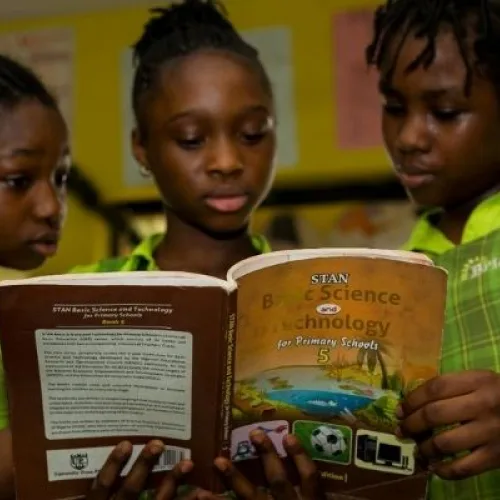
Tunji Alausa, the minister of education, made this known recently at the unveiling of the National Textbook Ranking System, a policy that restricts public primary, junior secondary and senior secondary schools to nationally evaluated and approved textbooks from September 2026.
The minister emphasised that the federal government will blacklist schools, publishers and authors found using or distributing unapproved textbooks in public schools, as part of a new education reform targeted at lifting learning standards nationwide.
Folasade Boriowo, the director of press and public relations at the Federal Ministry of Education, disclosed this in a statement when she revealed that the minister said that the framework introduces, for the first time, a merit-based and transparent process for selecting instructional materials, aligned with global standards.
“The policy is aimed at strengthening curriculum delivery, improving learning outcomes, weeding out substandard textbooks and rebuilding public trust in the country’s education system,” the minister noted.
A National Textbook Ranking and Selection Committee, with representatives from key education agencies and independent experts, has been set up to drive the process.
The committee will work alongside the Nigerian Educational Research and Development Council (NERDC) to assess titles that have already secured NERDC licensing, before forwarding the top-ranked textbooks for ministerial sign-off.
NERDC licensing, the minister clarified, will no longer be sufficient on its own to guarantee classroom use. Every licensed textbook must now scale a national evaluation and ranking process, score at least 70 per cent, and meet defined academic, pedagogical, technical and quality benchmarks before approval is granted.
Read also: Customs intercepts rifle parts, N373.8m cannabis cargo as election security risks rise
Only the top performers will make the cut, with each subject capped at six to 10 approved titles depending on curriculum needs.
To soften the cost impact on the publishing industry, the government has cut assessment and ranking fees. The per-page assessment fee drops to N1,500 from N2,000, while the ranking fee per title falls to N750,000 from N1 million. Publishers who paid under the old fee structure will be refunded, with NERDC coordinating reimbursements.
Textbooks cleared under the new system will hold approval for a minimum of three years, the ministry said, to give schools stability in curriculum planning.
NERDC and other regulators will monitor enforcement. From September 2026, only textbooks vetted and approved under the ranking system will be authorised for use in public schools across the country.
Alausa warned that non-compliant schools, publishers and authors risk sanctions, including blacklisting, for continued use of unapproved materials.
The ministry said the reform underscores the federal government’s commitment to equipping Nigerian learners with quality instructional materials that support better teaching and learning outcomes.


Charles Ogwo is a proactive journalist, driving education, and business innovations for over 10 years. He leads initiatives leveraging tech to enhance storytelling and build topnotch performing team. Charles is passionate about harnessing technology to inform, engage and empower communities.
Comments
Start the conversation about this story.